
Dolmens — Ancient Megalithic Structures


This article is devoted to a phenomenon known as dolmens. These mysterious structures are found all over the world, built in many different ways — yet they share one thing in common: no one can say for certain who built them, or why.
Table of Contents
I’ve conducted my own research, studying many dolmens — and today, I want to show them to you. But before anything else, I’d like to start with my own classification.

Classification of Dolmens
I propose to classify dolmens by their method of construction. Some dolmens are assembled from separate stone slabs. Others, less common, are built from large stone blocks. And the third type — to me, the most mysterious — are dolmens carved entirely out of a single solid piece of rock.
It was this type that made me question what kind of technologies the ancient builders possessed. Constructing a dolmen from slabs seems logical, though it’s undeniably hard labor: the massive plates had to be fitted with remarkable precision — a true feat of engineering. Yet still, that process seems comprehensible.

Building a dolmen from blocks also appears plausible, although in some cases the blocks are simply gigantic (I’ll talk later about Cueva de Menga). For instance, the dolmens Harmony and Hidden Possibilities were assembled from separate blocks without any mortar. The blocks are massive, but theoretically a human could achieve this — investing time, selecting matching stones, trimming and polishing where needed, and composing the structure. Still, one question remains: why?
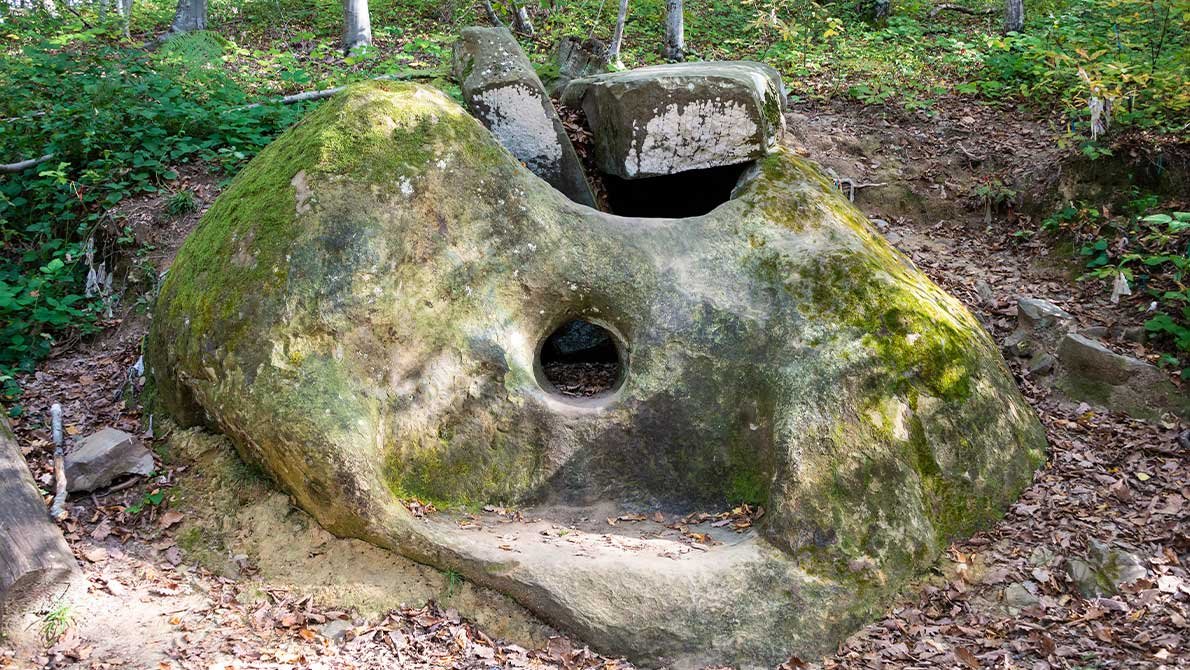
Then there are dolmens like Mother’s Heart, which you can see in the video above. This one was made differently: it’s a single solid stone covered by a lid. In other words, the ancient builders took an enormous chunk of rock, removed everything unnecessary, and produced the dolmen’s body — later capping it with a roof slab. Why they would go to such effort remains unclear. It’s an incredibly labor-intensive process.

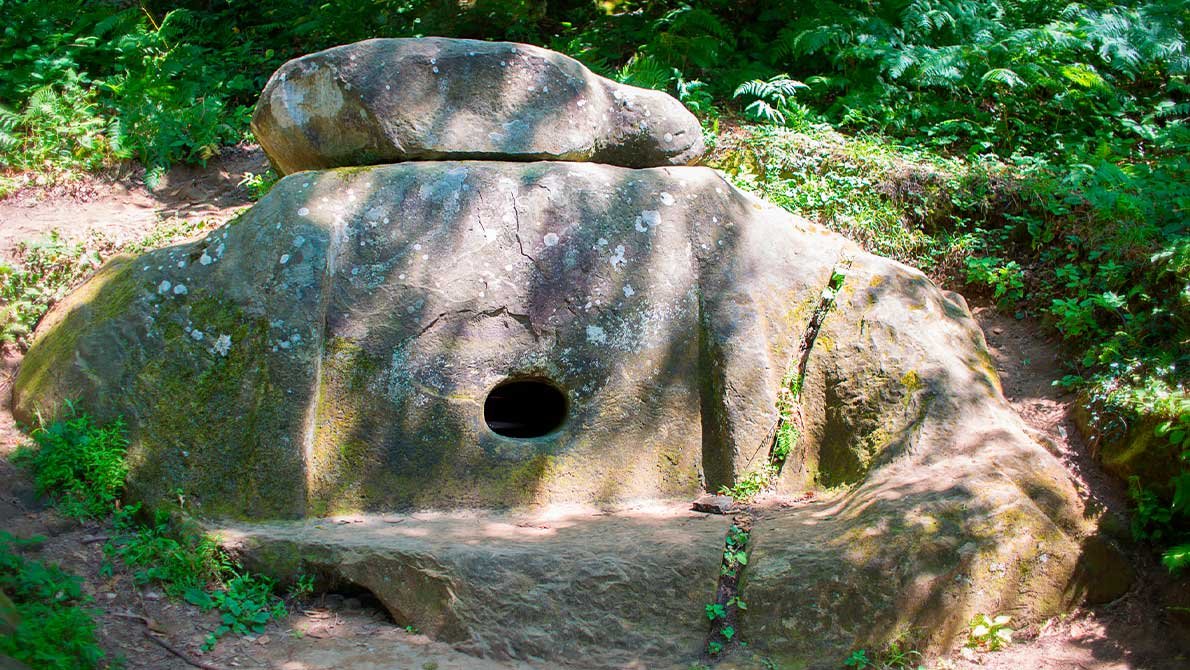
There are also dolmens carved directly into the bedrock — literally part of the mountain itself. Someone gave the rock the shape of a dolmen, carved the characteristic round entrance, and, apparently, removed the inner material through that same opening. That’s an immense amount of work! I believe it’s impossible to accomplish with primitive tools: you can’t fit through the hole, and what kind of instrument could carve out stone from the inside? Even with modern technology, such a task would be extremely difficult.
Yet these structures exist. Someone built them. And when I look at them, I get the impression that, for the ancient builders, this wasn’t a problem at all. They used a different kind of technology — one we no longer possess. They could build dolmens from slabs, from blocks, or carve them straight from the rock, and it seems that — in terms of effort — all these methods were equally accessible to them.
The Largest Dolmen in the World
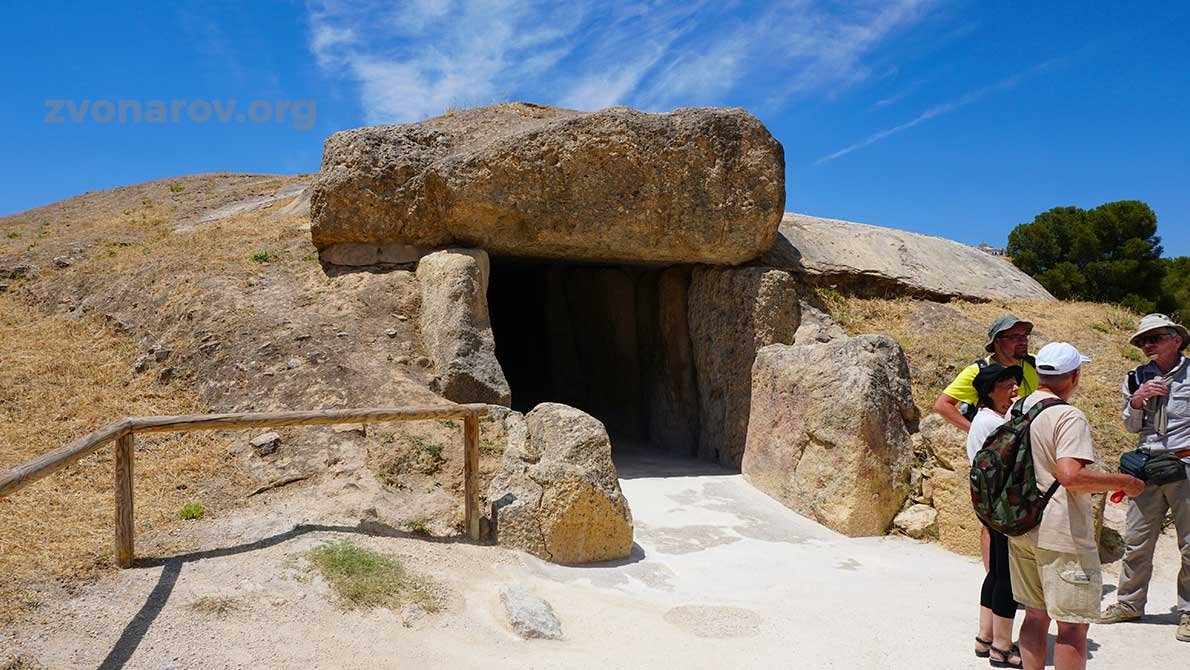
The photo shows the largest dolmen in the world — Cueva de Menga in Antequera, Spain. It’s made of enormous megalithic slabs. Look at its scale — several groups of tourists can easily walk inside at the same time.
Traces of human activity have been found inside this dolmen, which isn’t surprising: in my opinion, ancient people simply used it as a shelter, a storage space, or even a dwelling. But did they build it? That, I strongly doubt.
According to the official version, it was constructed sometime between 3800 and 3400 BCE — an era when people supposedly couldn’t even build proper houses. And yet here we have a dolmen made of blocks weighing up to 180 tons, fitted together perfectly without the use of any mortar.

In the same region there are two more dolmens — Viera and El Romeral. But the idea that all three were built merely as homes seems extremely unlikely.
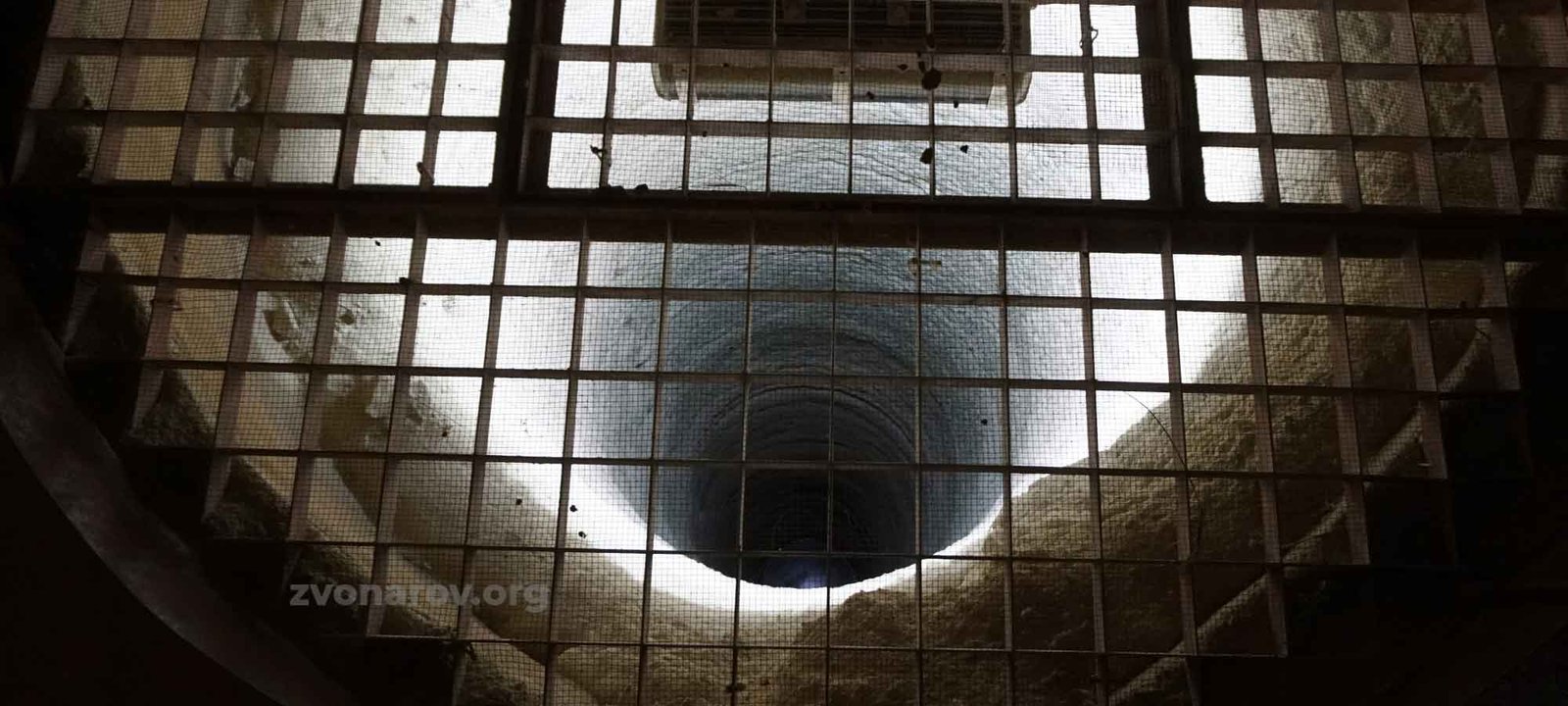
Another astonishing feature of the Cueva de Menga dolmen is that a vertical shaft, carved directly into the rock, descends from its inner chamber. It goes almost 20 meters deep — roughly the height of a seven-story building! Imagine that — in prehistoric times.
Even official historians admit that the origins of this structure remain unclear. Their conclusions are merely educated guesses, nothing more.

The Dolmens of Crimea
A large number of dolmens have also been discovered in Crimea. However, these Crimean structures differ notably from their Caucasian and other counterparts. They lack the typical round opening and, in essence, resemble completely enclosed stone boxes. Massive slabs were stacked into tidy rectangular chambers that in ancient times were known as “stone chests of the Taurois.”
Yet even today, they have not received official recognition: dolmens in Crimea remain almost entirely unprotected by law. Just a few decades ago, they weren’t even classified as archaeological monuments, and as a result, many were simply plundered. People dismantled them for building material — to use the stones in the foundations of their houses and dachas.

Most Crimean dolmens are missing their roofs — the easiest part to remove and carry away for construction. Nearly all of them are now open to the sky. According to one version, valuable objects may once have been stored inside, which could explain why many were looted.
In my view, it’s quite possible that such treasures were placed there not by the original builders, but by people of later eras who used these stone chambers to store their valuables.
The Purpose of Dolmens
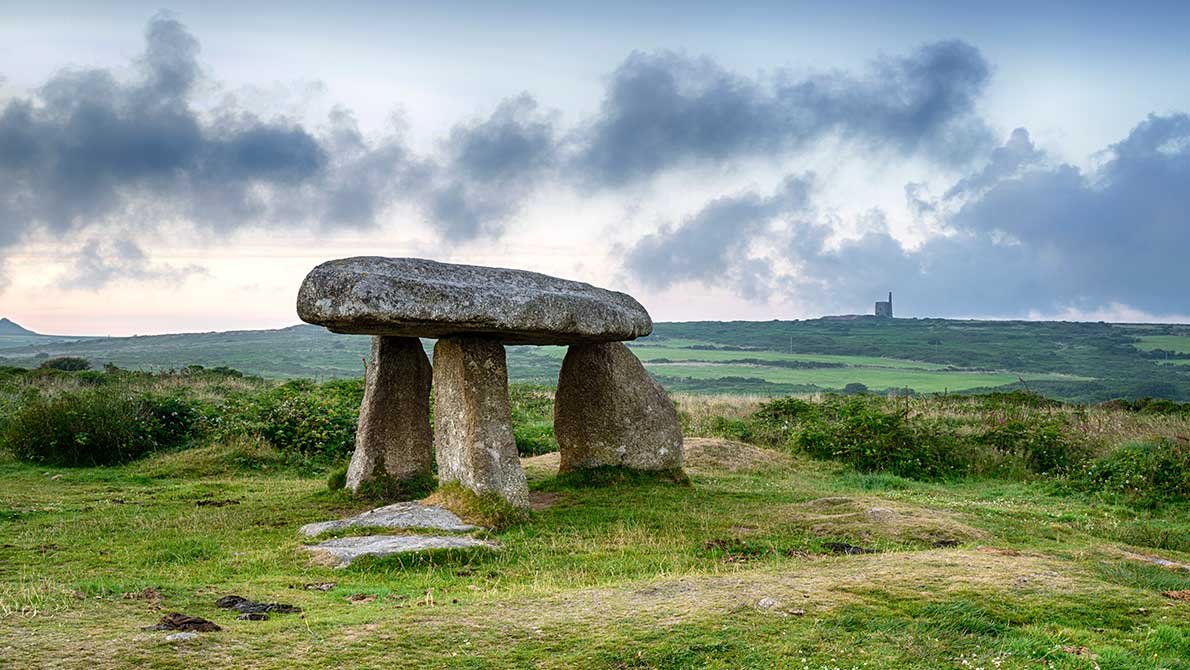
The official interpretation is that dolmens were burial structures. This conclusion is based on the frequent discovery of animal bones and human remains inside them. Yet such an explanation feels too superficial.
More likely, people of later times — not understanding the true purpose of these stone constructions — regarded them as sacred and used them for burials. This, probably, explains the bones found inside: not because dolmens were originally built as tombs, but because they were reused that way.
So what are these structures, really? No one knows for sure. There are countless theories — from mythical tales of dwarf dwellings to hypotheses about high-tech devices or esoteric “energy portals.” Since no convincing explanation exists, every version remains on the table.

My personal theory is that a dolmen is a technical device. I’m convinced its purpose was neither habitation, nor storage, nor burial.
Perhaps in the future we’ll discover how stone constructions of this shape interact with sound, light, or magnetic fields — and what such interactions might produce. It’s not impossible that a dolmen served as the casing for some kind of communication or energy-transfer system.

To understand how easily meaning can be lost over time, imagine a modern telephone booth. Suppose a catastrophe occurs, centuries pass, and future people — having lost all technology — stumble upon a strange metal box.
They might assume it’s a sacred site and begin using it for burials. After all, it’s clearly man-made, and compared with their level of development, it couldn’t have been built by them.
That’s exactly how I see the situation with dolmens. Their true purpose remains unknown. They could have been devices for communication, energy conversion, or something entirely different. All we have today are hypotheses.
Some researchers call dolmens “places of power,” while others suggest more down-to-earth uses — such as food storage. Supporting this latter theory are dolmens that still have preserved stone plugs.

I was lucky enough to find one such example myself — on Mount Tsygankovo in the Krasnodar region. It’s an extraordinary place.
Even local guides claimed that seeing a dolmen with its original plug was impossible: all had been stolen long ago or kept in museums. Yet I managed to find one — and capture it in photographs.
There’s a popular folk hypothesis claiming that in winter, dolmens served as a kind of primitive refrigerator — meat was placed inside, sealed with a stone plug, and kept cool, safe from animals.
It’s a rational explanation, yes, but far too simplistic. The structure of a dolmen is far too sophisticated for mere food storage. Besides, dolmens exist in regions with hot climates where meat wouldn’t last even a few days.
So dolmens remain one of the greatest mysteries of the ancient world — silent witnesses to technologies whose meaning we have yet to understand.
Symbols and Technology
The so-called “Village of Dolmens” is one of those places where you can literally feel the breath of antiquity. Nestled among hills and forests, it’s filled with enigmatic stone structures standing side by side.
Their designs vary, yet they share a striking feature: there are no inscriptions, numbers, or symbols that could link them to any known writing system. Only occasionally do we find rare markings — elegant and deliberate, created with a sense of precise form.
To me, that’s another argument that these structures weren’t ritualistic, but rather technical in nature.
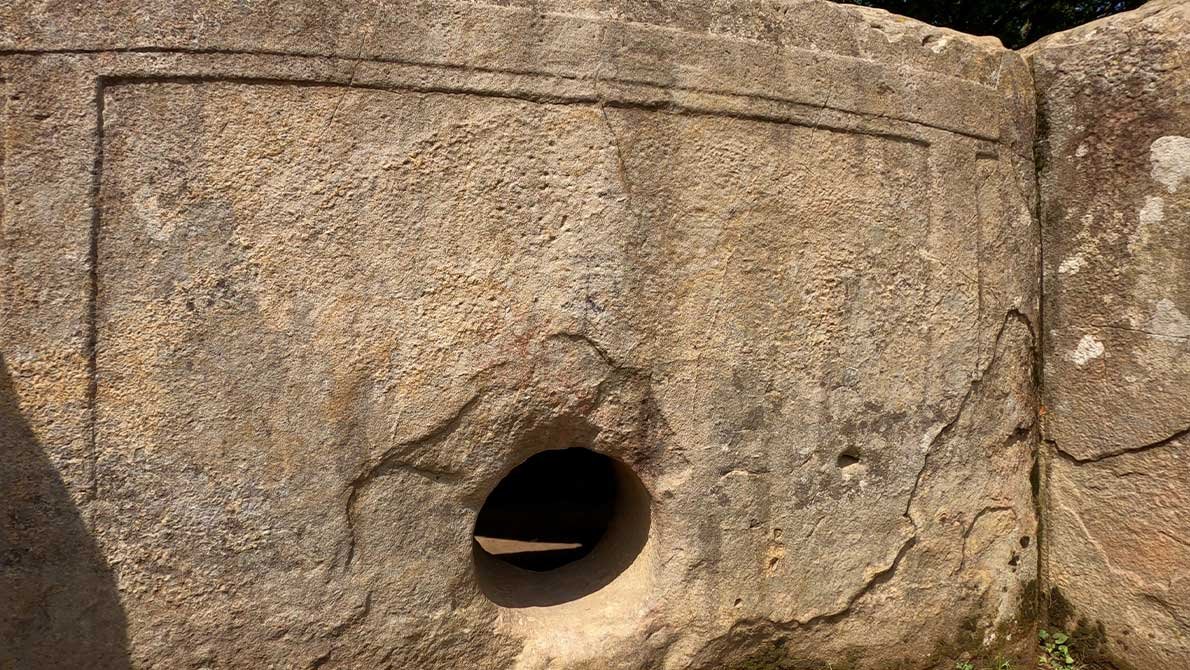
On one of the slabs, for instance, carved symbols are visible. They could easily have been scratched or etched — that would’ve been much simpler. But the ancient craftsmen chose another way: they removed the entire top layer of stone, leaving only the raised lines of the symbols intact.
That’s an enormously labor-intensive process. Why complicate it so much? They could’ve just scratched the marks, and the result would’ve looked the same. Yet evidently, for the builders of that era, this was no difficulty at all. They must have possessed technologies that allowed them to peel away stone layers with astonishing ease.
How exactly they did it remains unknown. Some speculate they used a tool resembling a laser, capable of removing thin layers of rock. Others support the “plasticine theory” — suggesting that stone could temporarily soften, allowing for effortless shaping before hardening again.
All of these are merely hypotheses based on observation. No one truly knows how such precision was achieved. And while some researchers claim to have it all figured out, I remain skeptical. For now, these structures continue to stand as one of humanity’s most unfathomable enigmas.
There’s an interesting study in which a researcher overlaid a map of dolmen locations onto a geological fault map. I haven’t personally verified it, but the idea deserves attention. According to his data, the dolmens of the North Caucasus form chains that follow tectonic fault lines — like beads strung on invisible threads.
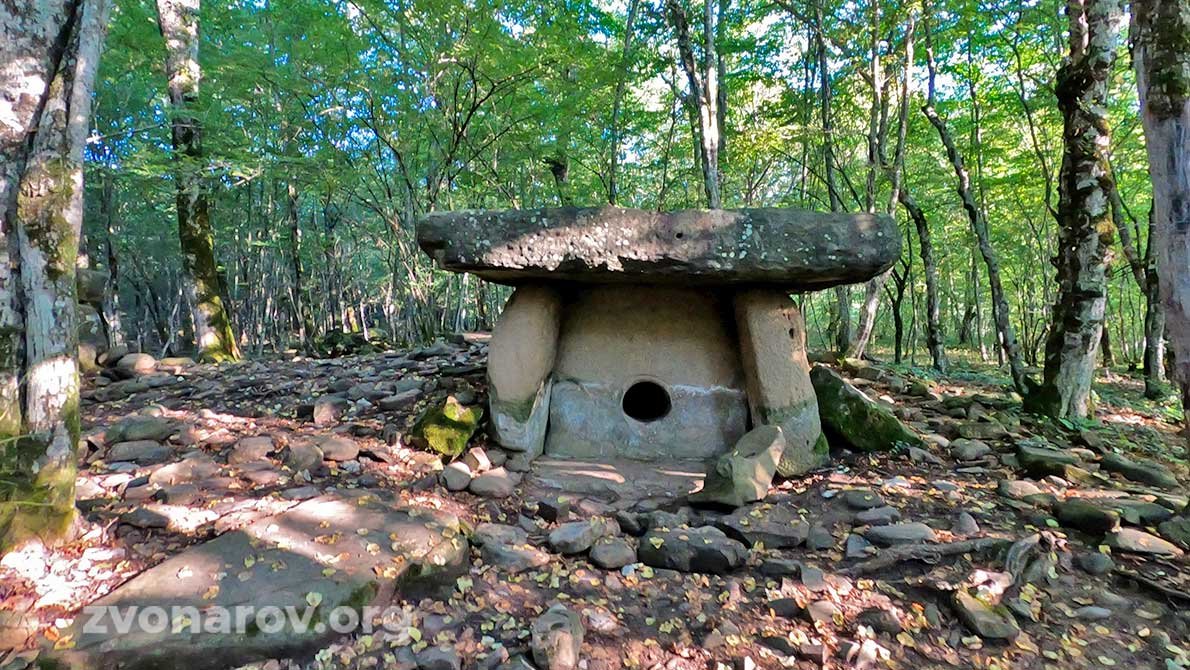
Today, most dolmens are hidden in remote areas — in dry riverbeds, dense forests, or high on hills far from roads. Reaching them isn’t easy.
But there are exceptions — those that have become tourist sites. And that’s certainly encouraging. The state is slowly beginning to recognize the importance of this ancient heritage, taking measures to preserve it and make it accessible.
During the Soviet era, the situation was quite the opposite. Dolmens were often destroyed — bulldozed during road or field construction. Because they weren’t classified as historical monuments, their stones were freely dismantled for fences, foundations, even garages. Astonishingly, this happened not so long ago.

In Europe — for example, in Spain — dolmens have long been protected by the state and recognized as part of cultural heritage. Entire tourist complexes have been built around them, and thousands of people visit every year to see these ancient stone portals.
In the countries of the former USSR, however, attitudes toward dolmens are only beginning to change. In Crimea, unfortunately, the situation is still dire: many dolmens remain buried under soil and grass, neglected and unguarded. Anyone can simply walk up and dismantle them.

Some of these dolmens now stand within modern settlements — surrounded by houses, fences, and outbuildings.
Yet they remain unique witnesses of the distant past, monuments that deserve protection.
I sincerely hope that over time, the situation will change — that dolmens will finally be recognized by the state as part of our megalithic heritage.
These are truly extraordinary structures, created by unknown masters of a forgotten era. They must be preserved, studied, and passed on to future generations.
That concludes my personal view. Now, let’s turn to what official science has to say about these mysterious stone constructions.
Geography of Dolmens
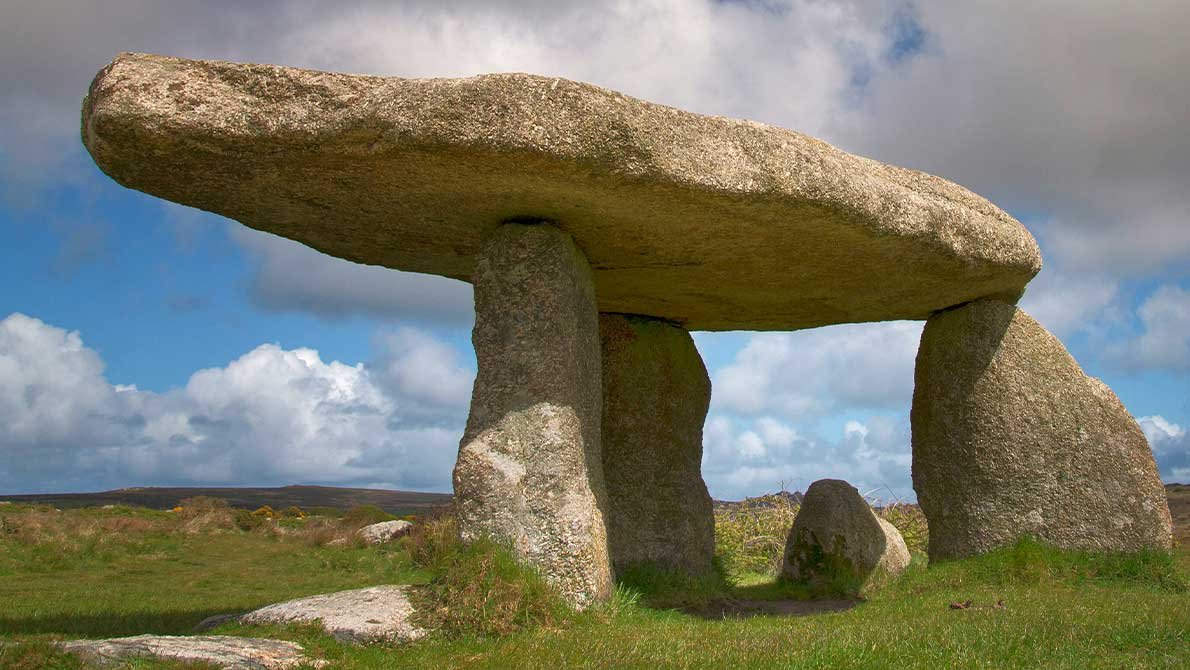
Dolmens are spread across a vast territory — from the Atlantic Ocean to East Asia and the Middle East.
In Europe, major clusters are known in France, Spain, and Portugal; in Ireland and Britain; and also in Denmark, Germany, and Sweden.
In Asia, one of the largest global concentrations is found on the Korean Peninsula, where dolmens (goindol) make up a significant share of all known monuments of this type and are included on the UNESCO World Heritage List (Gochang, Hwasun, and Ganghwa).
In the Middle East, dolmens are recorded throughout the Levant — including in Jordan (the Murayghat region) — and are dated to the Early Bronze Age.
In Russia, dolmens are widespread in the Western Caucasus — in the Krasnodar Territory, Adygea, and Abkhazia — where local traditions and terminology around these monuments are well documented.
Dolmens are also known in Turkey (Eastern Thrace, Kars Province, and the Mid-Euphrates–Cilician Arc) and in India, where numerous megaliths — including dolmens — have been identified in the Nilgiri Hills and throughout the southern peninsula.
Structure and Architecture of Dolmens
In academic archaeology, dolmens are classified by architectural type: simple slab chambers, composite constructions, corridor-shaped forms, and monolithic designs.
The basic scheme includes vertical orthostats forming the walls of a chamber and a massive capstone covering it. Frequently, an entrance hole and a stone “plug” are present, and in more complex examples, a short passageway or dromos.
Local stone materials — sandstone, limestone, granite, or quartzite — were typically used. Sizes vary from compact chambers to massive monuments with roofs weighing tens of tons.
In many regions, the entrances are oriented toward specific directions — often east or southeast — integrating the architecture into the builders’ ritual and symbolic worldview.

The Official Scientific Interpretation
According to the prevailing academic consensus, dolmens served primarily as burial monuments — collective or clan tombs. This interpretation is supported by finds of human remains, pottery, ornaments, and other artifacts within their chambers.
Their emergence is linked with the development of settled agricultural societies, growing social hierarchy, and the strengthening of ancestral cults. Many dolmens show evidence of repeated burials over extended periods.
Other proposed functions — ritual or astronomical — are generally viewed as secondary, complementary to their main funerary role.

Symbolism and Orientation
The consistent eastward orientation of many dolmens is often interpreted as reflecting ideas of cyclical renewal and rebirth — concepts central to late Neolithic and Bronze Age belief systems.
The circular opening in the front slab or entrance panel is thought to symbolize a “passage” between the world of the living and the world of the ancestors.
Moreover, the deliberate placement of dolmens on prominent landscape features suggests their role as territorial markers and sites of ancestral rites.

Dolmens in Folklore and Myth
Folklore surrounding dolmens is extraordinarily rich and persistent.
In France (Brittany), gallery graves and dolmens are called La Roche-aux-Fées — “the Rock of the Fairies.” Legends say they were built overnight by supernatural beings, and lovers come to test their bond by counting the stones together.
In Portugal, the very terms anta, Forno dos Mouros (“Oven of the Moors”), and Pedra dos Mouros (“Stone of the Moors”) preserve ancient associations with mythical “Moorish” builders — legendary craftsmen of megaliths.
In Ireland, portal tombs are often known as “Diarmuid and Gráinne’s Beds,” after a legend of two lovers who slept at different dolmens while fleeing their pursuers. These stories connect dolmens with fertility and marriage.
In Wales and Cornwall, many dolmens are called quoit or “Arthur’s Stone,” linked to King Arthur’s feats.
In Denmark, the term jættestue means “giant’s room,” describing dolmens as dwellings of mythic giants — a theme also found in the Netherlands with hunebedden.
In Korea, dolmens (goindol, meaning “supported stone”) are both scientific heritage and national symbol, woven into education and museum culture.
In Jordan, dolmens appear in local toponymy as “stone tombs” associated with Early Bronze Age burials.
In Russia’s Western Caucasus, local names survive: in Abkhazia — psaun (“house of the soul”), among the Circassians — ispyun or spyun, and among the Kabardians — isp-uné.
In 19th-century Russian folklore, they were called “bogatyr huts,” “grandfather’s houses,” or “devil’s huts” — a reflection of how people sought to attribute their creation to supernatural powers.
In Turkey, where dolmens are found in Eastern Thrace, Kars, and along the Middle Euphrates, they are popularly known as ancient tombs, while scholars emphasize regional variations in form and chronology.
Across all these cultures — fairies, giants, heroes, “Moors,” “houses of souls” — the recurring themes are ancestry, fertility, passage between worlds, and the enduring power of ancient builders.
Conclusion
Dolmens are majestic and mysterious megalithic monuments of deep antiquity — silent guardians standing on the border between myth and history. Their true purpose, age, and construction methods remain shrouded in mystery.
Perhaps within these stone structures lie answers about civilizations that existed long before recorded history. The secrets they hold may one day help us understand the forgotten knowledge of the ancient world.
I will continue my research, expanding the catalog with new discoveries and dolmen sites — a direction I’ve long wished to pursue.
The only thing holding me back from exploring the more remote monuments is the financial side of fieldwork.
So, if you’d like to support the project, any contribution will go directly toward future expeditions, and I’ll be sure to share the results with you.
Thank you for reading.
This was Zvonarov — stay tuned, and see you next time.