
Sodom and Gomorrah — The Main Secret of the Dead Sea

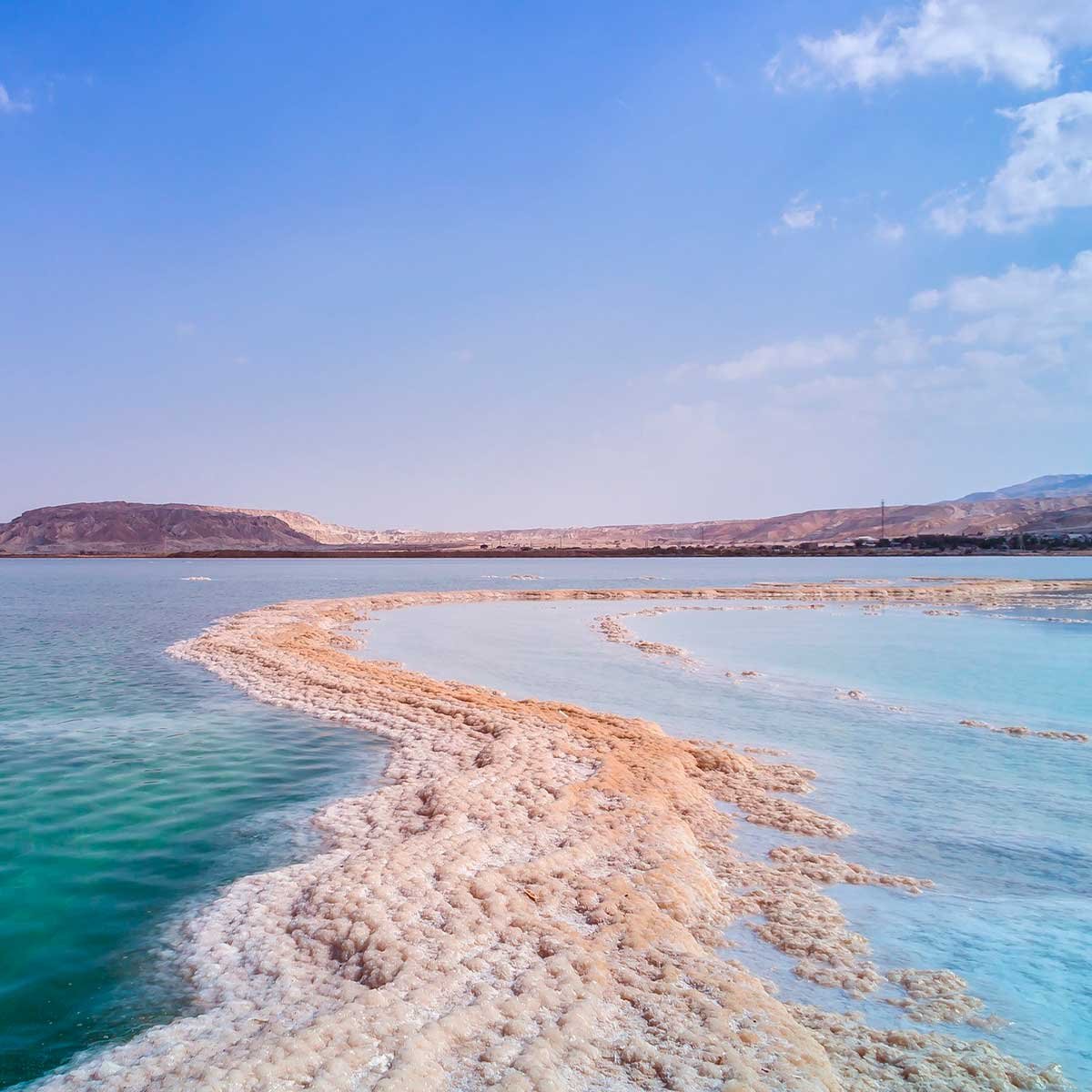
The Dead Sea was once a freshwater lake, but as a result of the use of weapons of mass destruction in ancient times, it turned into the highly saline body of water we see today.
Sounds crazy? Maybe. But in this article, I’ll present numerous facts that might completely change how you see the history of this region. Let’s start with the main point — the cities of Sodom and Gomorrah.

Sodom and Gomorrah
We all know from the Bible that the cities of Sodom and Gomorrah were destroyed by God for the sins of their inhabitants.
I suggest looking at this story from a research-based perspective, relying on physical evidence that can still be observed in this area.
Genesis 19:24–25:
“Then the Lord rained down burning sulfur on Sodom and Gomorrah—from the Lord out of the heavens. Thus He overthrew those cities and the entire plain, destroying all those living in the cities—and also the vegetation in the land.”

That’s what the Bible says — and not only the Bible. Many other ancient texts tell the same story. But the most fascinating part is that we can actually find physical evidence that supports these accounts. That’s what we’ll discuss in this first part.
I’ve already published a detailed description of my expedition route on my website (available via this link), but let’s briefly go over two of the key facts again.
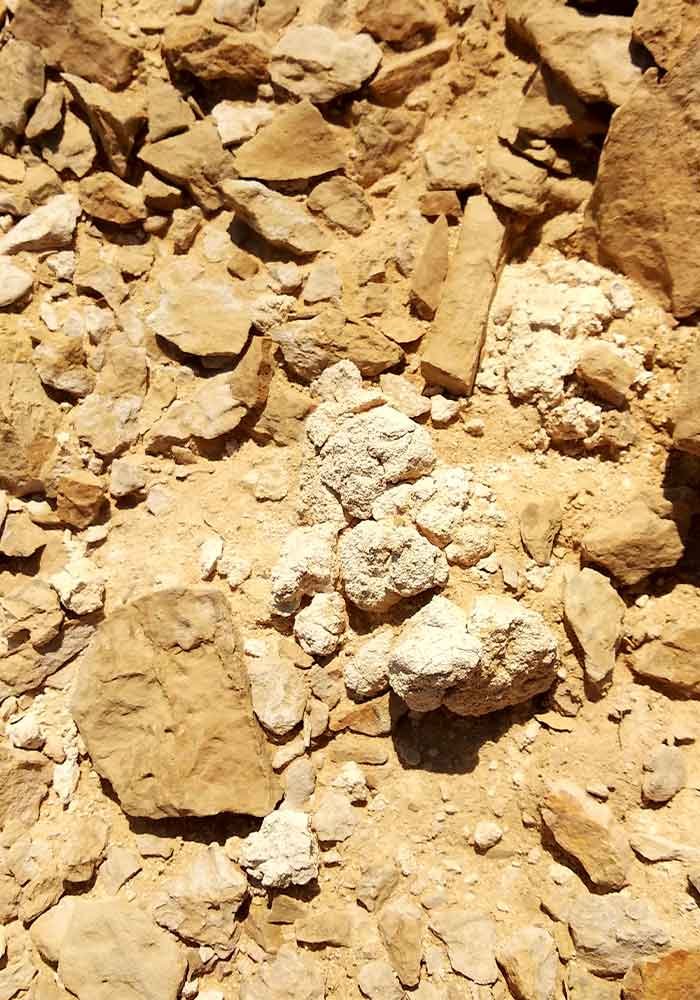
Sulfur
Fact #1 — A massive amount of sulfur on and beneath the surface.
The entire region around the Dead Sea is covered in sulfur. In nature, sulfur rarely appears in such a pure and concentrated form — especially on the surface. Yet here, it’s literally everywhere. The local chalk formations are saturated with sulfur, easily recognizable by its distinctive smell.
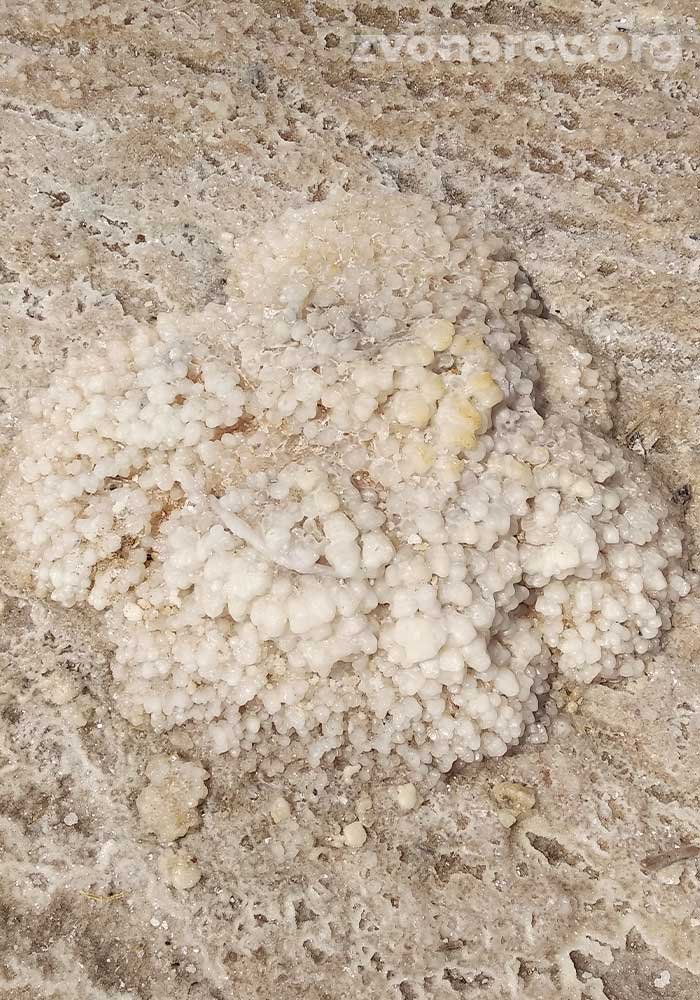
In the very area traditionally associated with Sodom and Gomorrah, small white sulfur balls can be found that ignite easily when exposed to a lighter. The concentration of sulfur here is off the charts.
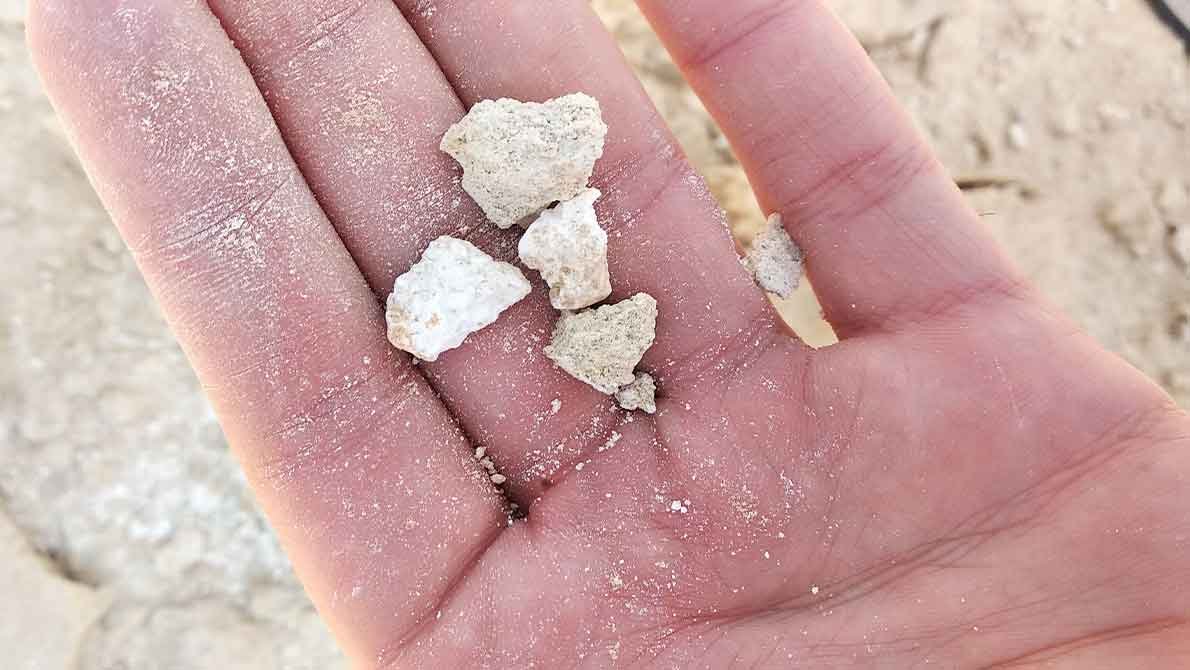
Rainwater washes sulfur-saturated chalk down the slopes and carries it throughout the region, eventually draining into the Dead Sea — the lowest point on Earth’s surface.
Admah, Zeboiim, and Bela (Zoar) — lesser-known neighboring cities mentioned alongside Sodom and Gomorrah — were also said to have been destroyed by burning sulfur. Imagine the combined area of five cities, even modest ones — that’s approximately the size of the territory where enormous quantities of this unnatural sulfur can be found.

Craters
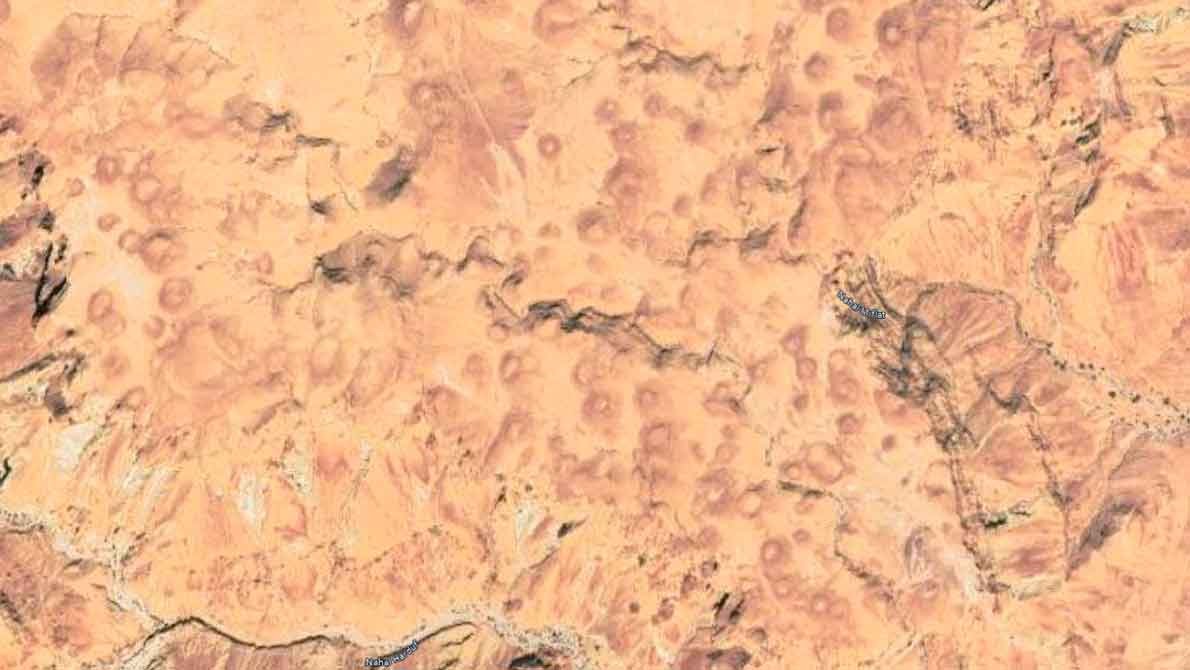
Fact #2 — The presence of numerous craters.
These are not erosion pits or natural sinkholes — they look much more like blast craters.
The locations of these craters match precisely with areas rich in sulfur. There are many of them, and they’re clearly visible on Google Maps. If you want to find sulfur, look there. While sulfur is scattered everywhere, the highest concentrations are found near these craters.
I personally explored this region, and in my view, what happened here was the use of advanced sulfur-based weaponry — a form of mass destruction technology whose residual traces anyone can still observe firsthand.
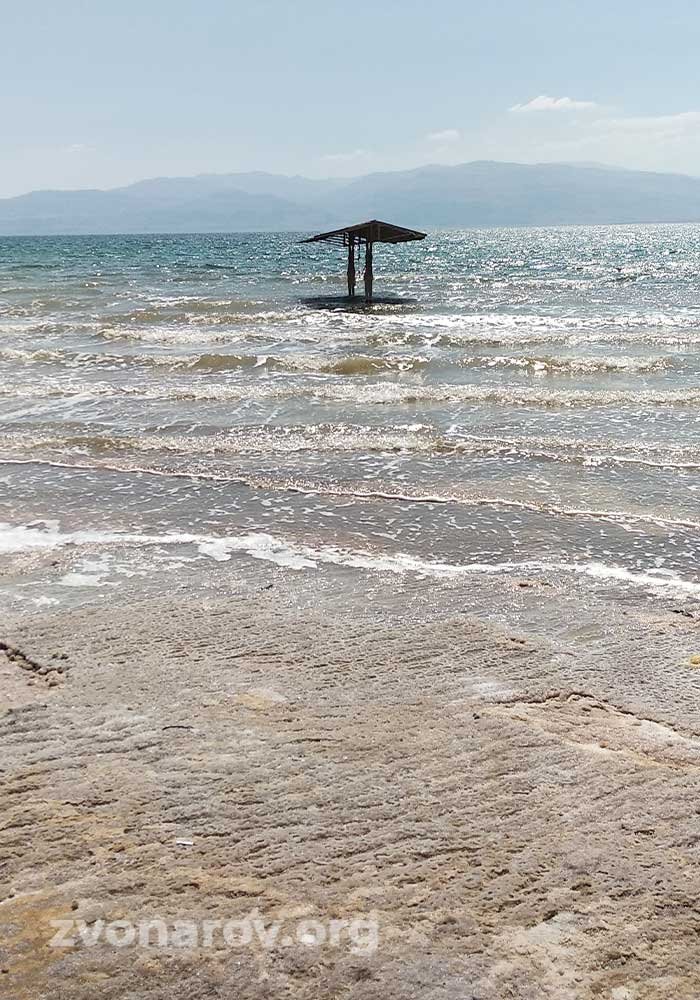
The Dead Sea
One of the central arguments supporting my conclusion is that the Dead Sea was once a freshwater lake.
First, at least five cities (according to the EDSP model (EB III–IV) — seven cities; according to the Middle Ghor model (MB I–II) — seven to nine cities plus settlements) existed along its shores, which would have been impossible without access to fresh water.
Second, the Jordan River — the region’s main water artery — has always flowed into the Dead Sea, continuously supplying it with fresh water.
Upstream, about 130 kilometers to the north, lies Lake Kinneret (also known as the Sea of Galilee), which is and has always been a freshwater lake.
Seven Scientific Facts
Scientific Findings Supporting the Theory
- Core samples from the Dead Sea and nearby basins reveal thin, layered deposits of clay, limestone, and diatoms — typical of ancient freshwater lake systems.
- Late Pleistocene sediments (Lake Lisan, about 70–14 thousand years ago according to mainstream dating) contain layers of gypsum and calcite, which form under conditions of relatively low salinity.
- Geologists identify this ancient stage of the basin as Lake Lisan — the freshwater predecessor of today’s Dead Sea.
- Isotopic analyses (δ¹⁸O and δ²H) show distinct periods of water dilution, indicating the presence of freshwater or low-salinity layers — evidence of complex stratification in the ancient lake.
- In some Pleistocene intervals, chloride and bromide concentrations in bottom sediments were far lower than in the modern Dead Sea.
- During the Pleistocene, the region’s climate was much wetter: the Jordan carried more water, evaporation was lower, and the lake level remained stable for thousands of years — conditions typical of freshwater bodies.
- The level of ancient Lake Lisan was 200–270 meters higher than that of the modern Dead Sea, which is confirmed by preserved terraces and ancient shorelines containing carbonate deposits (calcite, aragonite, and chalk limestone) that formed during low-salinity or freshwater phases.
Taken together, these provide a comprehensive paleogeographic and geological foundation confirming that the Dead Sea was once a freshwater lake.

My Research Conclusion
By now, you probably see where I’m going.
Based on all the collected data, here’s my conclusion:
In the area of the modern Dead Sea, sometime in the pre-Christian era (the exact date remains unknown), a catastrophic event took place — one that drastically altered the region’s landscape.
The large cities that once stood here were suddenly and violently destroyed. In my view, this destruction was caused by the use of sulfur-based incendiary weapons of mass destruction, combined with combustible gases.

The enormous freshwater basin partially evaporated under extreme heat. The cities — at least five of them (possibly seven or more including smaller settlements) — were completely incinerated (sulfur burns at 600–800 °C), and the remnants of that vast freshwater lake eventually turned into the saltiest body of water on the planet.
This transformation occurred as the byproducts of that sulfuric cataclysm washed down into the basin, annihilating everything along the eastern shore of the Dead Sea.
All of this, of course, clashes with the official version of history, according to which the people of that era were primitive and could not possibly have possessed such advanced weapons — despite clear evidence suggesting otherwise.
Maybe that’s exactly why the modern narrative still fails to explain why the Dead Sea’s salinity reaches 30–35%.