
Temple of Hathor, Dendera

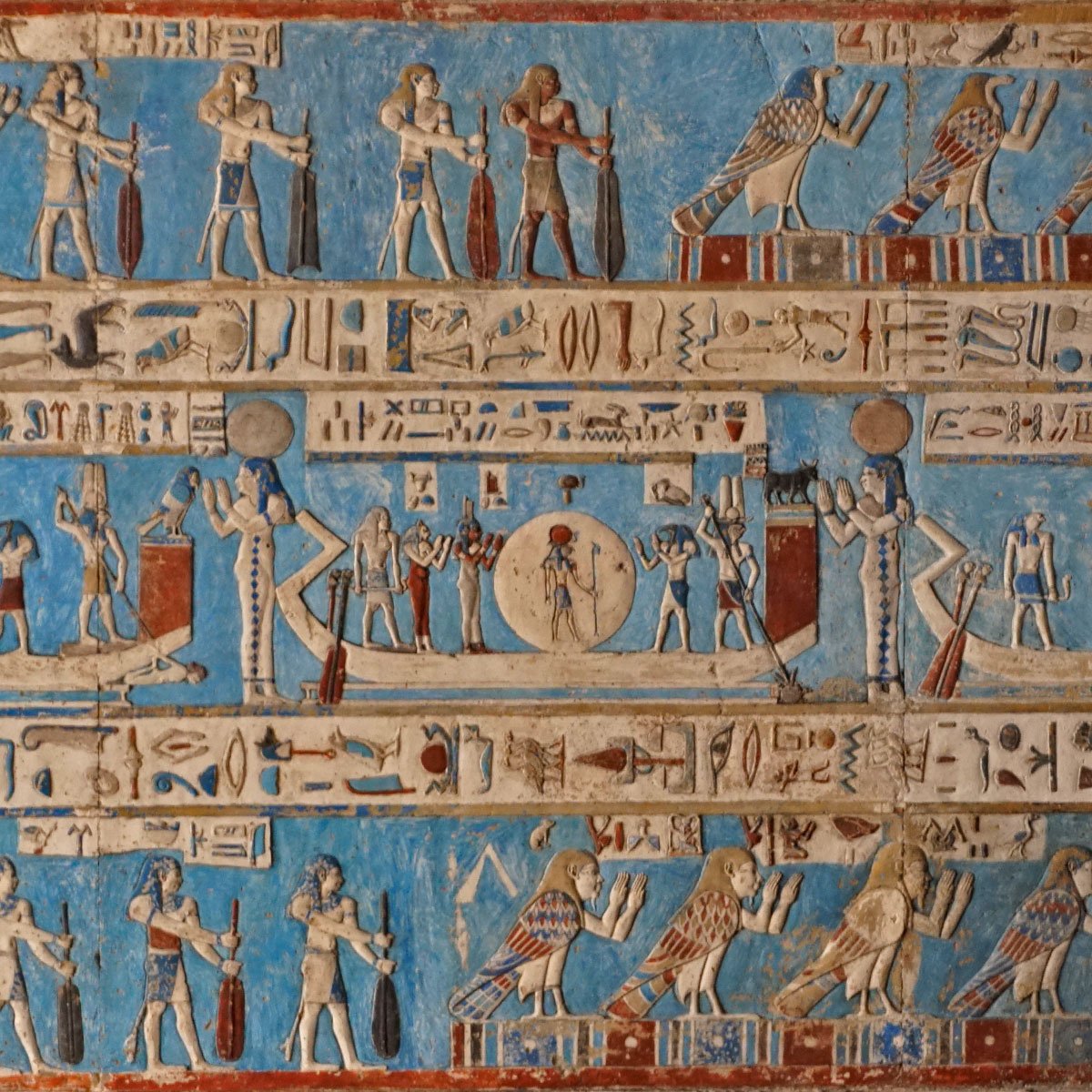
On the west bank of the Nile in Egypt, 60 kilometers from Luxor and 5 kilometers from the city of Qena, lies Dendera—the mysterious Temple of Hathor. In this article we will look at both the official version of its history and a number of ancient mysteries left to us by another civilization.
Table of Contents
Ahead are striking details that won’t leave you indifferent. Make yourself comfortable; by tradition, we begin with the official account.

Dendera — The Official Version of History
The Hathor Temple at Dendera is considered one of the best-preserved temples of Ancient Egypt from the late Ptolemaic and early Roman periods. It is dedicated to the goddess Hathor, patron of joy, love, music, femininity, and motherhood. In ancient Egyptian mythology, Hathor was also associated with the sky, sunlight, and the life-giving force, so her cult had deep roots and wide popularity throughout the country.
Construction of the current stone temple began in July 54 BCE under Ptolemy XII Auletes. Building and decoration continued in the time of Cleopatra VII and her son Ptolemy XV Caesarion, as well as under the first Roman emperors—Augustus, Tiberius, Domitian, and Trajan.

The structure is made of sandstone and is about seventy-nine meters long. The main facade is adorned with six massive columns topped by four-sided Hathor-headed capitals, each crowned with a relief depicting the goddess. The interior hypostyle hall rests on eighteen columns covered with detailed reliefs and hieroglyphic inscriptions. On the outer walls, depictions of Cleopatra VII and her son Caesarion offering gifts to Hathor have survived, underscoring the sacred bond between the ruling dynasty and the deity.
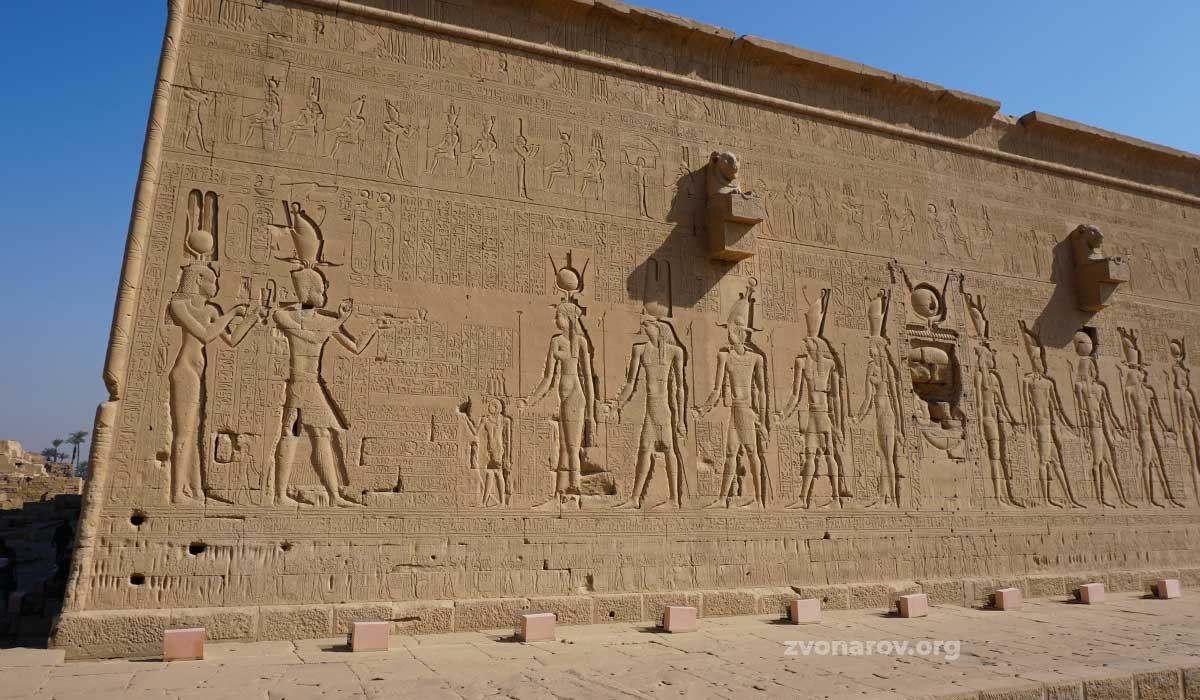
The entire temple precinct is enclosed by a rectangular mud-brick wall into which stone gates of the Roman period were later built. The complex includes a sacred lake and additional cult buildings, among which the small chapels and the birth house of the god Ihy—Hathor’s son—stand out. The extraordinarily rich relief and astronomical decoration of the interior halls makes this temple one of the most informative sources on the religious concepts of Egyptians of the Hellenistic era.
For European scholarship, the temple became known at the end of the 18th century thanks to the French expedition led by Napoleon Bonaparte, whose participants first documented its architecture and reliefs in detail.
Temple of Hathor — Five Main Mysteries
Now let’s move to the heart of the matter—beyond the official version of history—to elements of this temple that prompt us to think about the technologies, capabilities, and ideas of its ancient builders. Here, among stone vaults and reliefs, you can find enigmatic crypts with bas-reliefs depicting unclear devices; a staircase carved from a single piece of granite—contrary to common sense and to the technological capabilities of its time; the roof and the area around the temple, where traces of an unknown technology seem to show stone pressed in as if by a force that left depressions; the zodiac—an object of scholarly debate for centuries; and the marks of metal clamps joining stone blocks, looking as if they were created with techniques we would call modern.
The Crypt of the Temple of Hathor
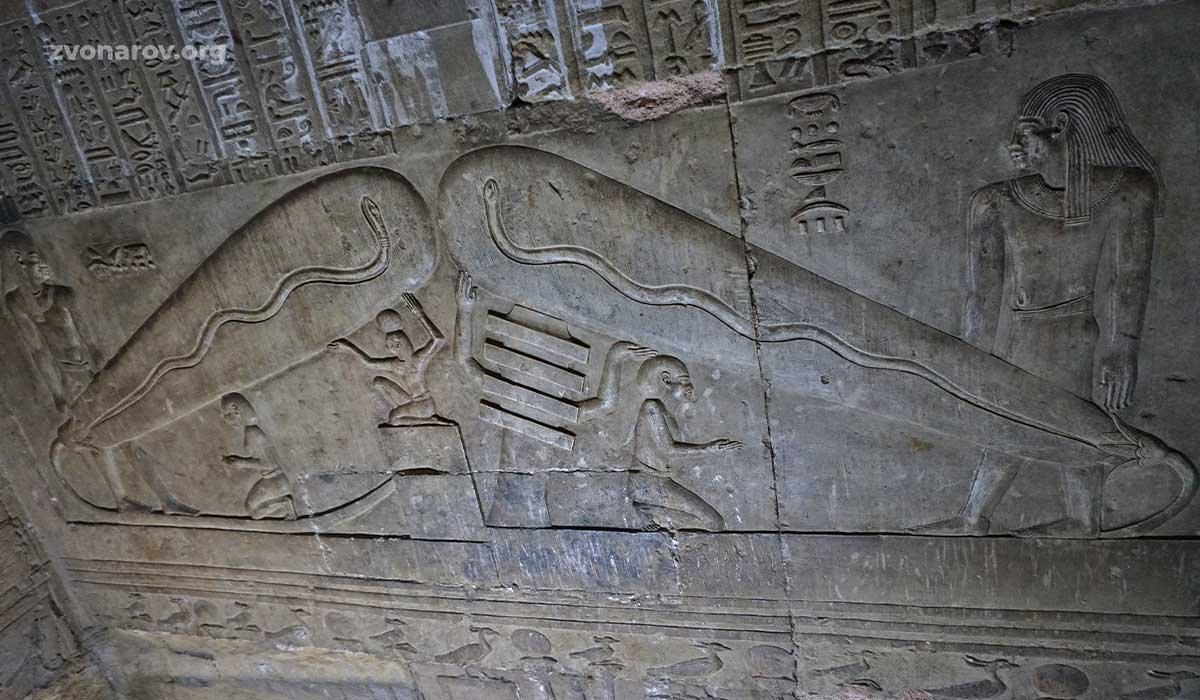
In the underground crypts of the Dendera Hathor Temple are reliefs that have been debated for more than a century. They show elongated oval forms with a serpent inside—officially interpreted as the birth of light: the god Harsomtus emerging from a lotus, with the pillar of djed—the symbol of stability—nearby.
Yet many researchers see in these images a resemblance to technical devices—peculiar lamps or sources of light. The crypt ceilings are not covered with soot, which casts doubt on the use of torches. The precision of the carving is astonishing: lines are perfect, depth is even, and there are no errors. Perhaps these are traces of ancient technology or knowledge lost by a civilization that preceded Egypt.
A Megalithic Granite Staircase
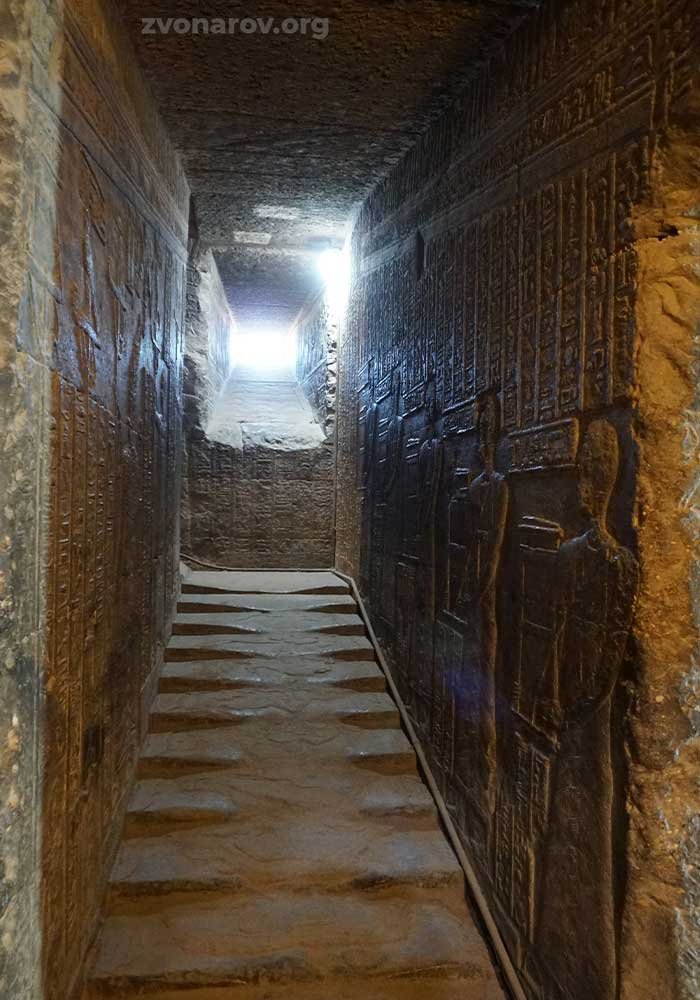
The staircase in the Hathor Temple is unique in that it is carved from a single block of granite, although the rest of the structure is made of sandstone. Such a labor-intensive approach seems impractical even by modern standards.
The surface of the stairs appears worn down or heat-softened—something that can’t be explained by ordinary wear: granite’s hardness is comparable to steel. These deformations make one wonder whether it was exposed to high temperature or energy of an unknown nature.
Traces on the Temple Roof
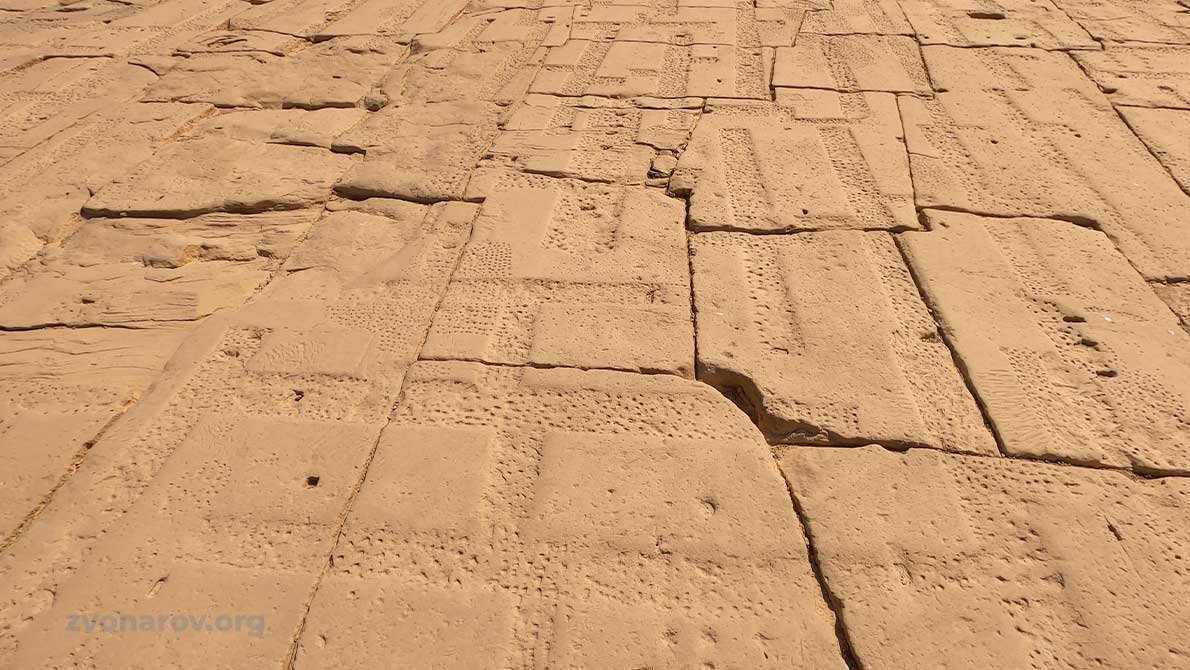
The roof is one of the most puzzling parts of the complex. On its surface are indented lines and impressions, as if the stone had been soft and subjected to pressure from massive structures. Modern science does not explain how such marks could be left—when heated, stone typically cracks rather than softens.
In addition, the roof is assembled from blocks of varying shapes, fitted with incredible precision without mortar. Such joinery requires exacting accuracy and effort, prompting speculation about technologies unknown to official history.
The Zodiac
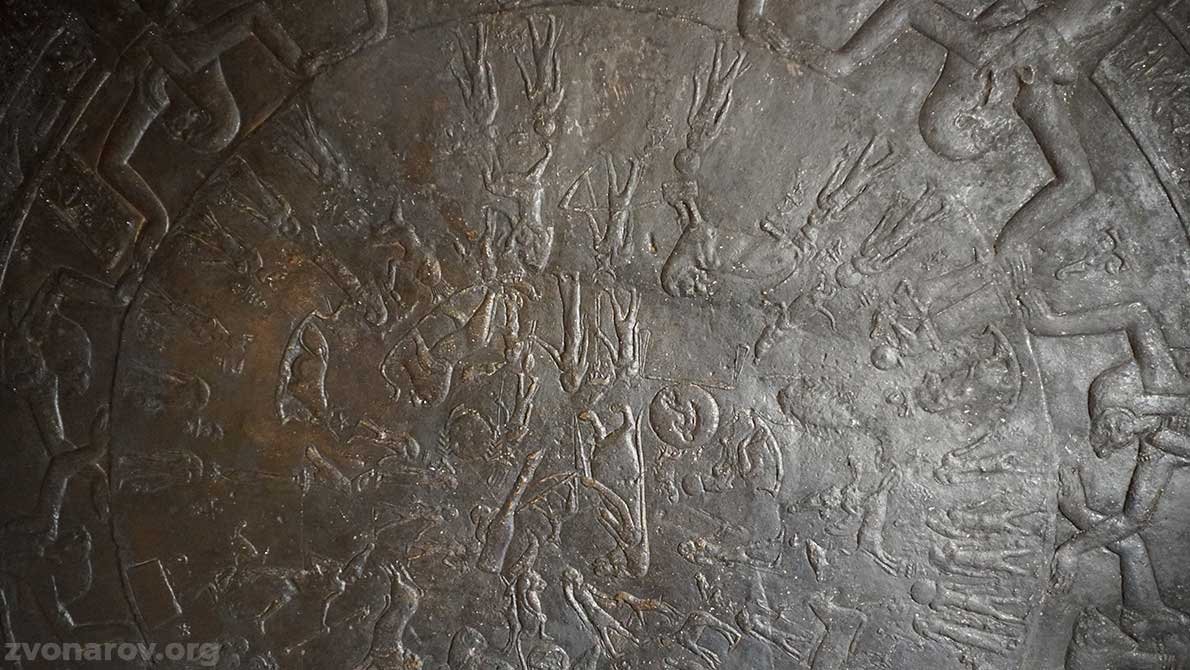
On the roof once stood the famous Dendera Zodiac — a circular relief depicting the twelve constellations, planets, and gods. The original, weighing about nine tons, is now in the Louvre; a precise copy remains on site.
Scholars consider it an astronomical calendar reflecting ancient Egyptian knowledge of celestial cycles. Alternative researchers, however, see in it a map of the night sky fixed 10–12 thousand years ago, long before the pharaohs. In that view, the zodiac may be a chronological marker or a “code” left by an ancient civilization.

Clamps
Grooves from metal clamps that joined stone blocks have been found on the floor and at the base of the temple. The metal was removed in later eras, but the traces remain. These elements were used to secure perfectly fitted slabs—though, at first glance, they might not have been necessary.
Similar metal connections are found worldwide—in Peru, India, Iran, Greece, and Malta. The forms and techniques are strikingly similar, as if belonging to a shared engineering tradition. This suggests the Hathor Temple, Dendera may have been rebuilt in the Ptolemaic era, while its foundations reach back to a far older, technologically advanced culture.

Dendera, Egypt — Overview of the Monument
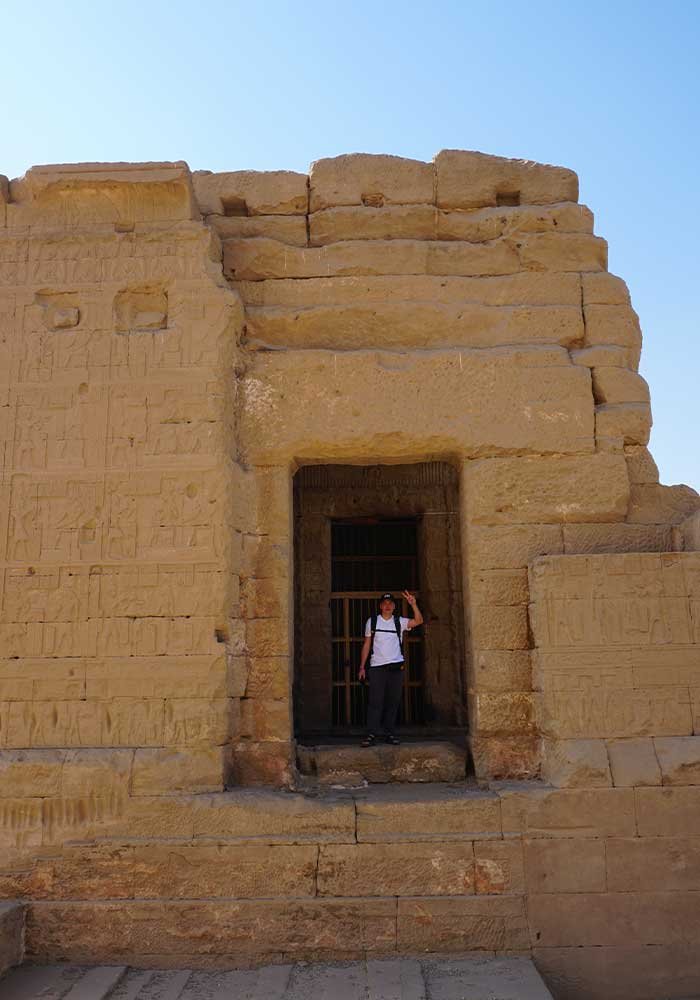
I want to share some additional reflections and my photographs of this temple complex (my Dendera Temple images). At the entrance we are greeted by magnificent gates, creating the impression that part of the structure was once destroyed down to its base. It seems to me that in deep antiquity there were far more unusual artifacts here. The painted ceiling and the hypostyle hall are a joy to behold—breathtaking in their splendor and scale.
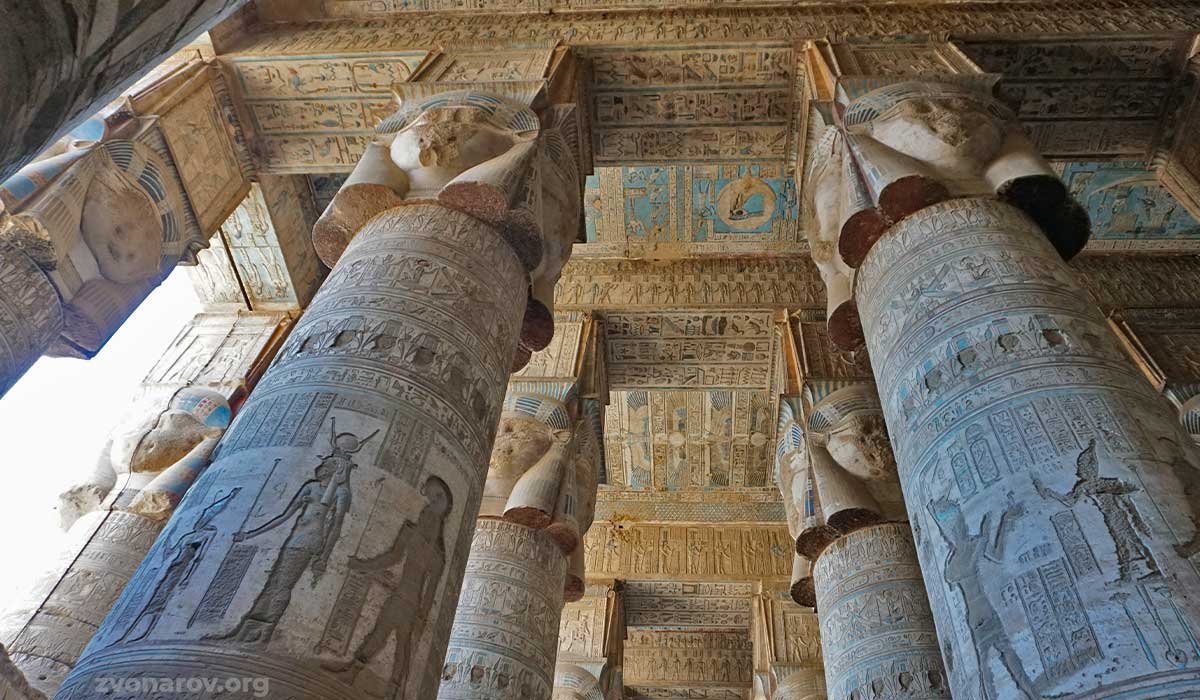
It’s also hard to miss that many bas-reliefs were deliberately defaced. The faces of many figures suffered in particular. One version holds that when Muslims later seized these lands, they systematically destroyed everything they deemed incompatible with their sacred beliefs. There are indeed many such traces of destruction all over Egypt.
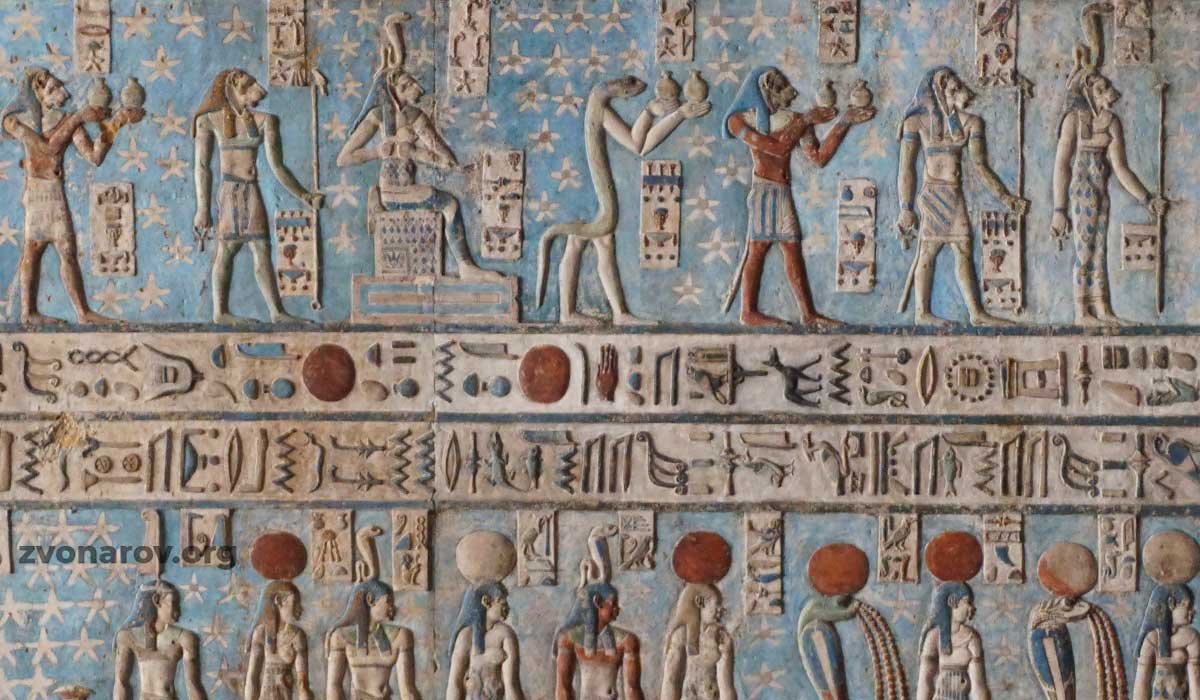
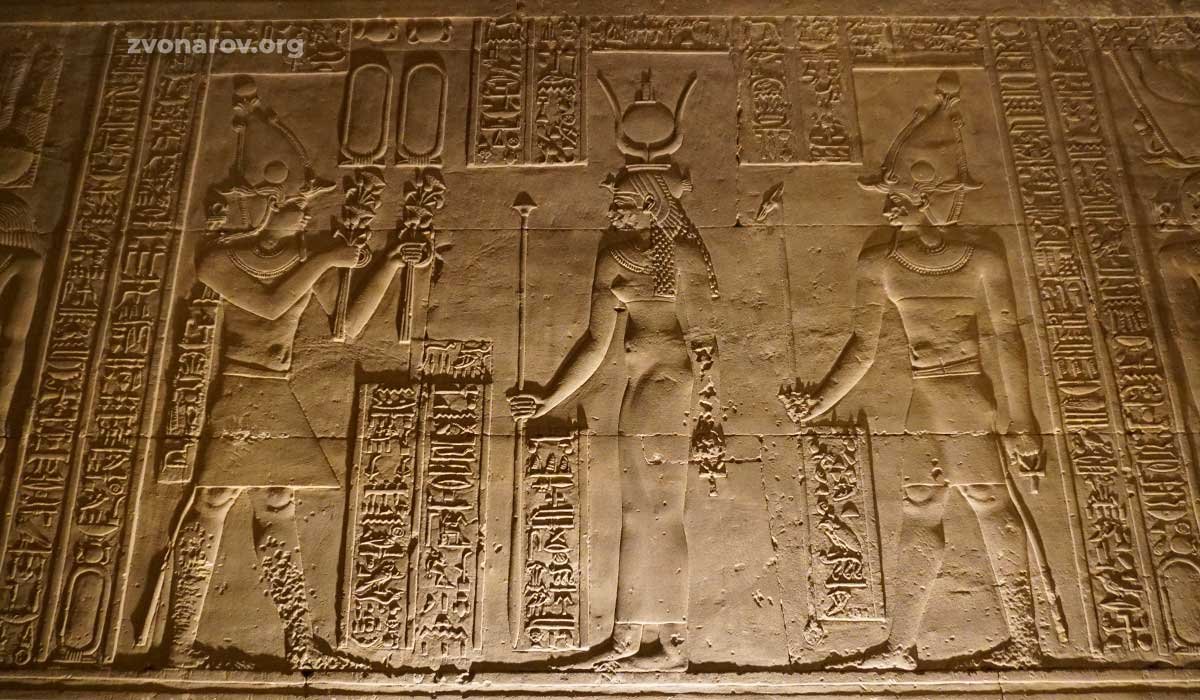
On the walls you can see a vast number of hieroglyphs and scenes that Egyptologists interpret as depictions of sacrifice. In my view, they have nothing to do with that. These scenes show processes we are not yet able to understand. The scale is mind-boggling. We see hundreds of similar images, but on closer inspection it becomes clear the actions differ slightly, as if we were looking at a film broken down into separate frames. Each chamber seems to reveal a new scene—a fragment of a single story.

The objects held by the figures on the walls are especially intriguing. In my opinion, these are not ritual or abstract items but quite specific technological components with definite properties. It looks as though ancient artists tried to show how these objects interacted with energy or light—and that is precisely what we see on reliefs scattered throughout the temple.
Above we discussed what I consider the five main mysteries of this monument, but if I had the opportunity to spend several days studying the temple, I’m sure even more thought-provoking evidence would emerge. I very much hope to return someday—Dendera, Egypt still holds countless artifacts I’ve yet to examine. On my last expedition I spent about two months in the country, but that’s clearly not enough to cover everything. Research requires time, effort, and of course resources. If you are able, please support the project. Your help will allow me to continue expeditions, study new artifacts, and share the results of these discoveries.

It’s also hard to overlook the sheer number of serpent images—they’re literally everywhere: on bas-reliefs, in hieroglyphs, on the walls and ceiling, on headdresses, in hands, and even underfoot. Some serpents have wings; others have human bodies or legs. These fantastic variations appear not only at Dendera but in many other temples across Egypt.

The Temple of Hathor is astounding. You can “watch” it like a movie, moving from wall to wall. Only the floor is undecorated—every other surface is covered in bas-reliefs, hieroglyphs, and scenes. Columns, ceilings, walls—everything is richly carved. It’s a colossal amount of work, a true masterpiece with no parallel anywhere in the world. The compositions impress with their conception and complexity, yet the key to understanding them, I believe, has been lost.

Despite the many statements by Egyptologists and independent researchers about what exactly is depicted in these scenes, the explanations remain conjectural. No scholar can say with certainty what we are actually seeing. A vast distance still separates us from the truth.

And at times you encounter figures here whose origins are utterly unclear. Yes, they seem to fall outside the general context, but when you see this repeatedly, you stop being surprised. You realize it isn’t accidental—the ancient artists intended it. What were they trying to show—an invented being or someone who truly existed in antiquity?

I sincerely hope that my research will someday help humanity move closer to unlocking this ancient knowledge. Perhaps we will find a key that becomes a starting point for a new turn in technology—or even a new field of knowledge—grounded in the legacy of highly developed civilizations of the past. After all, from Egypt sprang medicine, cosmetics, architecture, culinary traditions, and countless crafts. What happened here forms a foundation on which much of the modern world still stands. Everything we’ve been able to understand and draw from Egypt is still used in our daily lives. It’s a colossal body of knowledge and an incredible heritage that holds a key to understanding who we are and where we came from.
The Goddess Hathor
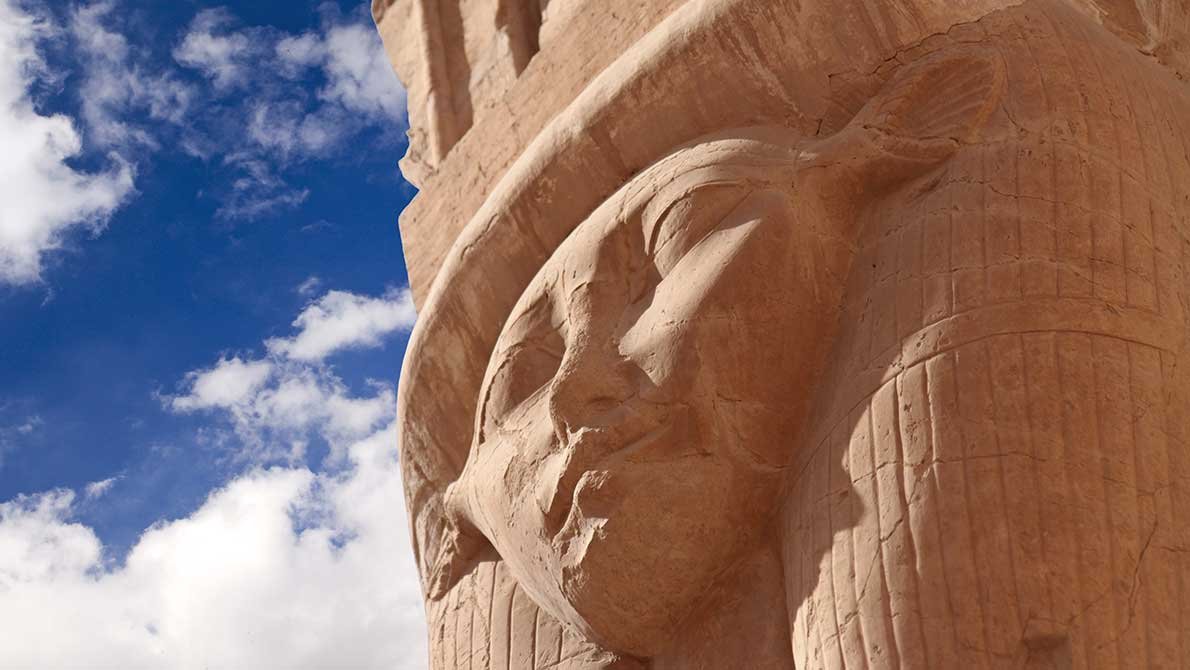
Perhaps this should have been written at the beginning, but better late than never. The goddess Hathor is one of the most enigmatic and multifaceted deities of Ancient Egypt. In her image are united love, motherhood, light, music, and a hidden knowledge of the world’s harmony. Her name translates as “House of Horus”—“she who gives shelter to the Falcon,” symbolizing the feminine energy in which the divine takes form and manifests in the world. Hathor was considered the daughter of the sun god Ra, the embodiment of light and joy, patron of women, music, and life.
In the temple at Dendera her face is repeated dozens of times—on columns, ceilings, and walls. Each image differs slightly, creating a sense of living presence. The architecture seems to become the goddess’s own body, and the temple a space filled with her energy. You can read more about the symbolism, hieroglyphs, and mysteries of Hathor at this link.

Conclusion
Dendera is not just another ancient Egyptian temple. It is a place where stone seems to preserve the memory of technologies and knowledge that don’t fit within the bounds of familiar history. Crypts with mysterious reliefs, the granite staircase, heat-softened areas on the roof, the zodiac frozen in time, and traces of metal clamps—all this creates the feeling that we are seeing not a religious sanctuary but a laboratory of a vanished civilization.
Today, standing among the columns of the Temple of Hathor, it’s hard to shake the sense that something more than priestly ritual once took place here. Perhaps in Dendera lies a key to understanding the true origins of human history—reaching much further back than the dates on museum placards. Egypt keeps its secrets, still waiting for their hour, and the Hathor Temple, Dendera is one of those places where these secrets can not only be seen but felt.