Ancient Metal Clamps

The ancient metal clamps found in the Dendera Temple reveal an astonishing level of Egyptian stonework. These metallic fasteners joined perfectly fitted stone blocks, defying modern understanding of their purpose and technology. Similar clamps appear in sites across the world — from Peru to India — deepening the mystery of why ancient Egypt remains so enigmatic.

Category:
Overview

This publication is dedicated to a fascinating phenomenon — the metal clamps found in ancient Egyptian temples. It should be said that such clamps can be found in ancient structures all over the world — not only in Egypt. Why are they so remarkable? Why do they deserve special attention? The answer is simple: because these clamps were metallic.

Today, in photos and videos, we usually don’t see them — because, in later periods, people living in these areas removed the metal, melted it down, and reused it for practical purposes. However, there are still many places where such ancient metal clamps have survived. Thanks to these examples, we know for sure that they were indeed made of metal. Their purpose was to fasten the stone blocks together. And yet, those blocks already fit perfectly — massive, tightly joined, immovable, forming an absolutely even surface. Still, the ancient builders decided to reinforce them further.

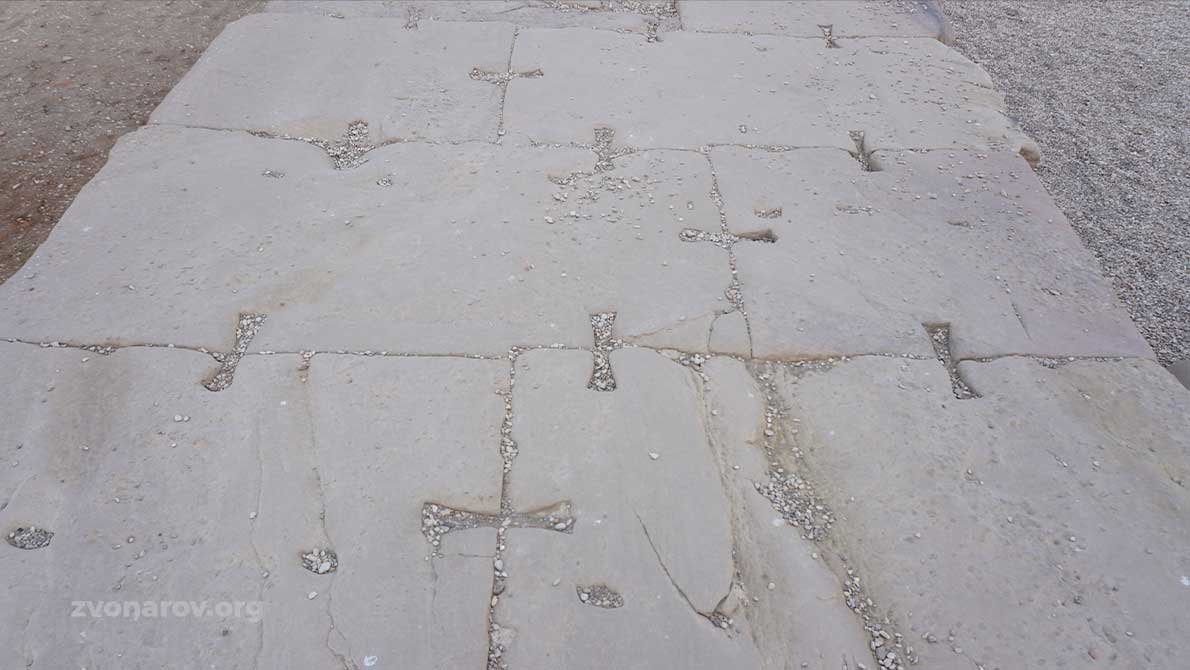
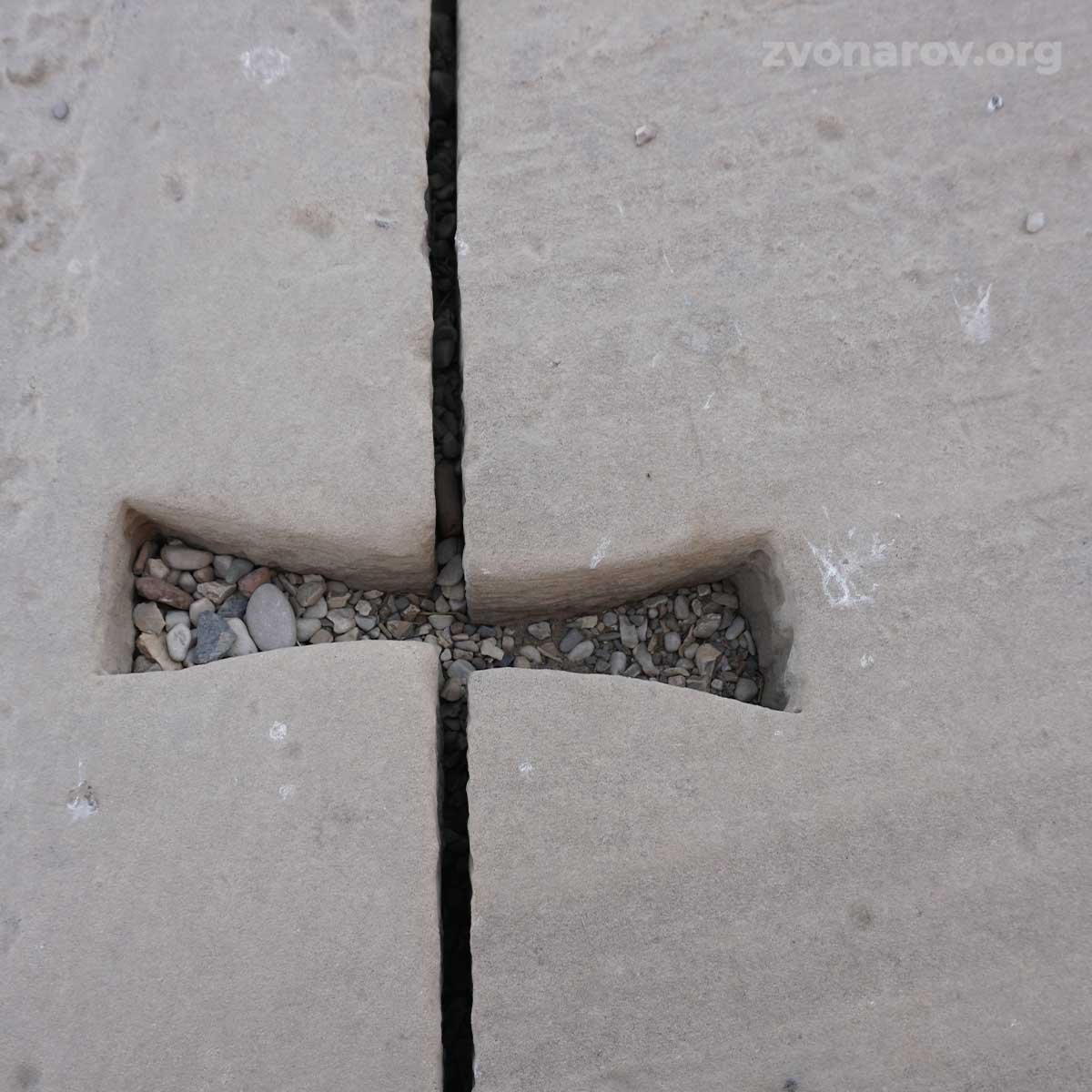
Slot for a metal joint on the lower temple platform in Dendera

Why? Perhaps to prevent the stones from shifting during earthquakes or strong vibrations. Or maybe these surfaces were subject to mechanical effects — vibrations from certain unknown devices that once stood upon these stones. Such vibrations, as I’ve shown in another publication, might have left distinctive marks on the temple roofs, for example, in the Temple of Hathor at Dendera — one of the great dendera temple mysteries.

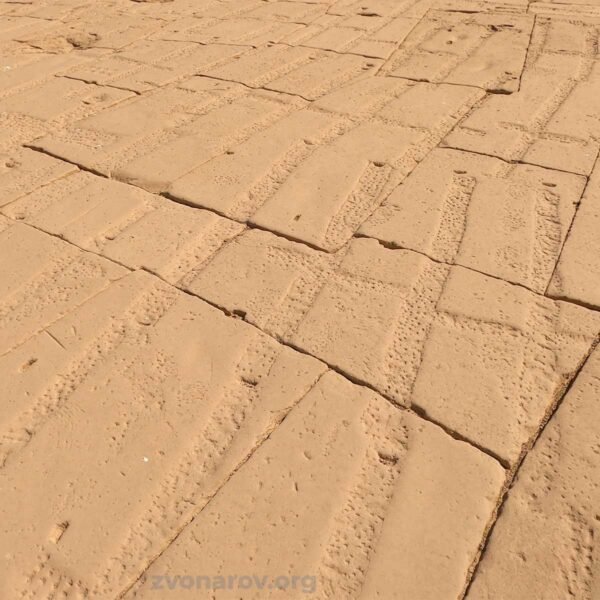
Holes and traces of ancient metal joints on slabs near the temple

But the most amazing thing is that similar clamps are found all around the world — in Peru, Malta, Greece, Turkey, Iran, India, and Egypt. In all these cases, we’re dealing with constructions that official archaeology dates to thousands of years before our era. The shapes of the grooves, the connection methods, and even the materials are astonishingly similar — as if they were made according to one shared engineering system.

That’s why I personally believe that the Temple of the Goddess Hathor was not originally built during the Ptolemaic or Roman periods, but merely rebuilt and expanded then. Its foundation, architectural concept, and block-joining technology belong to a much more ancient epoch — a time when these methods had a clear purpose, as part of an advanced Egyptian stonework tradition that later builders only imitated.

What are ancient metal clamps and where are they found?
Ancient metal clamps are small, purpose-cut connectors that tie adjoining stone blocks together. Their sockets look like dovetails or I-shaped grooves cut across a joint. Such ancient metal clamps are reported across cultures — in Egypt, Greece, Persia, and the Andes — and they complement ultra-tight joints rather than replace them. In contexts like Dendera, they sit within the broader tradition of precise Egyptian stonework.
What metals and techniques did builders use for these clamps?
Techniques vary by region and period. In Classical Greece, iron clamps were commonly sheathed in cast lead to isolate corrosion and distribute stress; in the Andes (e.g., Pumapunku), I-shaped grooves often held poured bronze alloys. In Egypt, clamp recesses include dovetail forms; evidence points to both metal and non-metal inserts depending on site and era. All approaches aimed to stabilize blocks within high-precision Egyptian stonework.
Why add clamps if the stones already fit perfectly?
Even immovable, ground-flat joints can creep under thermal change, settlement, or seismic pulses. Clamps act as hidden “stitches” that resist sliding and uplift across a joint. They also help structures recover after vibrations — one reason they appear in earthquake-aware zones and monumental roofs. This added redundancy helps explain many ancient metal clamps and feeds the broader interest in the dendera temple mystery around hidden engineering choices.
Is there evidence of clamp technology around the Temple of Hathor at Dendera?
The Dendera complex shows meticulous block joining and carefully managed roof loads. While surviving metal is scarce due to later reuse, clamp-style recesses and dovetail strategies are consistent with Egypt’s toolkit. Your referenced field observations about roof vibrations and wear patterns belong to the ongoing dendera temple mystery debate: they don’t claim machines, but they do highlight why engineers might overbuild with clamps despite tight joints.
Why is ancient Egypt so mysterious to modern readers?
Partly because elite projects used techniques that rarely survive in full: metals get scavenged, timber decays, and tool marks weather away. What remains are silent signatures — like dovetail sockets or precision roof joints — that raise the question why is ancient egypt so mysterious to us. When details vanish, hypotheses multiply, especially around concealed features such as ancient metal clamps that once worked inside seamless stone.
Were non-metal solutions used instead of clamps?
Yes. Builders often alternated methods: stone “dovetail keys,” hardwood butterflies, and vertical dowels worked alongside or instead of metal. In Greece, iron clamps and marble dowels could be combined; in Egypt, dovetail recesses may hold stone or metal depending on the build. The common logic is identical — tie courses together so precision masonry stays precise, a hallmark of enduring Egyptian stonework.
How can a visitor spot clamp evidence at Dendera today?
Walk slowly along roof and terrace courses, scanning joint lines for shallow transverse grooves (butterfly/dovetail outlines) and patched slots. Interiors and perimeter platforms sometimes preserve the clearest examples. Respect barriers and conservation rules; many recesses are at height or in fragile zones. Observing with this checklist adds context to the dendera temple mystery and connects it to global ancient metal clamps practice.
Comments

There are no comments yet.

Be the first to comment “Ancient Metal Clamps”

Your email address will not be published. Required fields are marked *