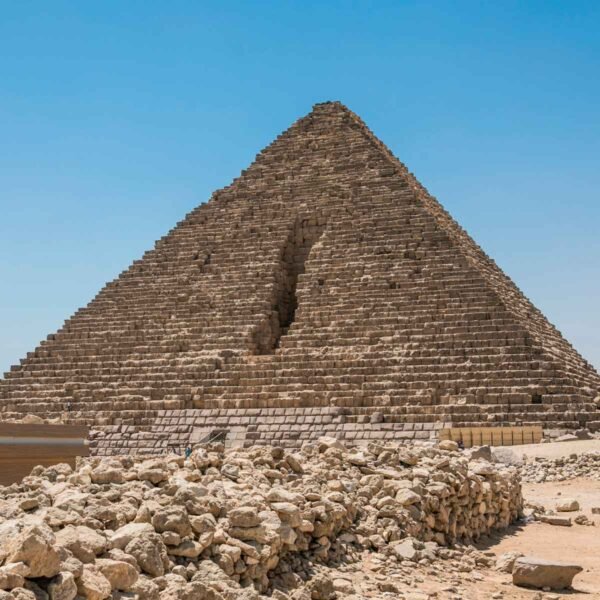
Bent Pyramid

The Bent Pyramid in Dahshur, Egypt, is one of the most intriguing monuments of ancient architecture. Its unusual shape, revealed in bent pyramid photos, makes it stand out among other pyramids. Inside, visitors can explore chambers and passages that still inspire debate. The bent pyramid plan continues to fascinate researchers with its complexity and mystery.

Category:
Overview

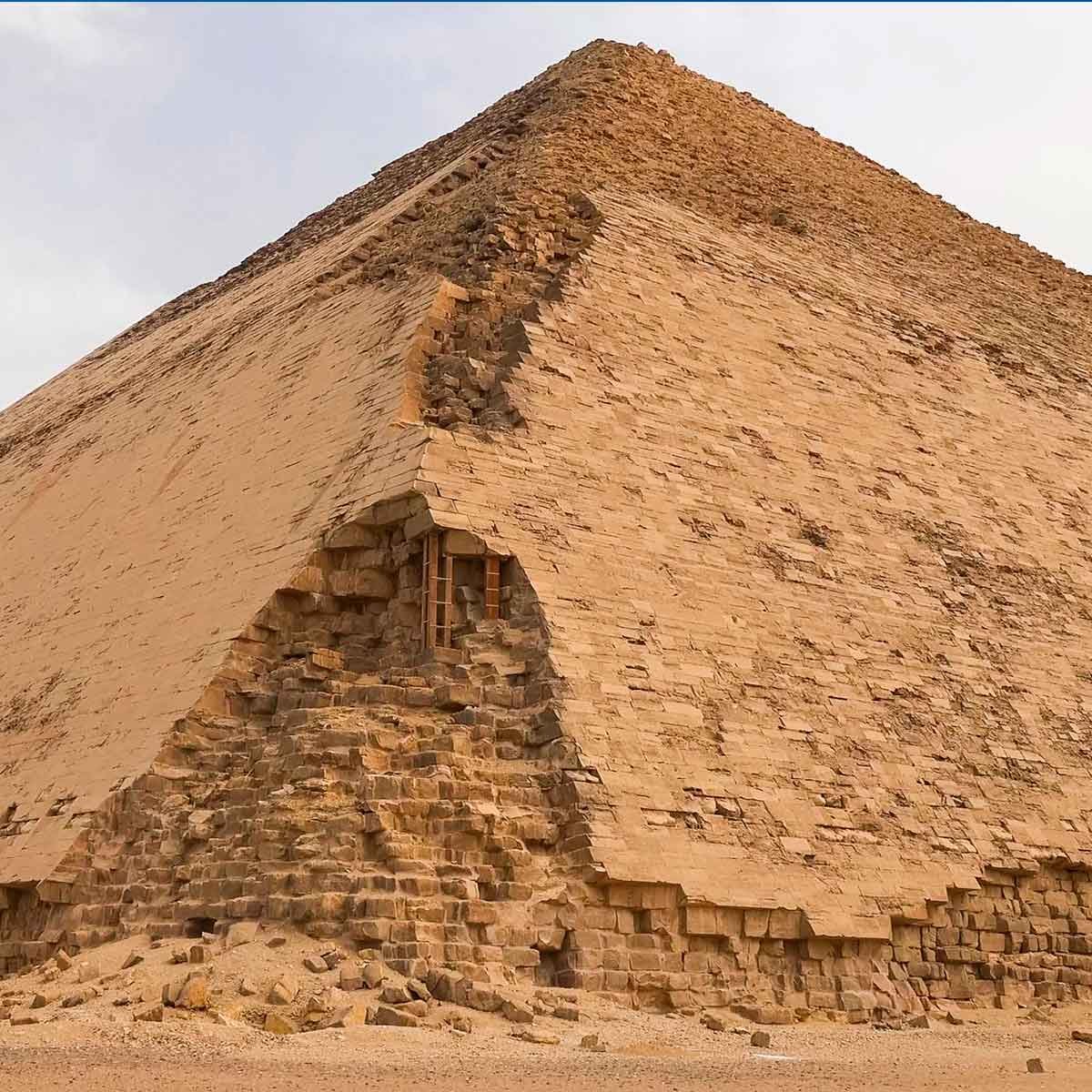
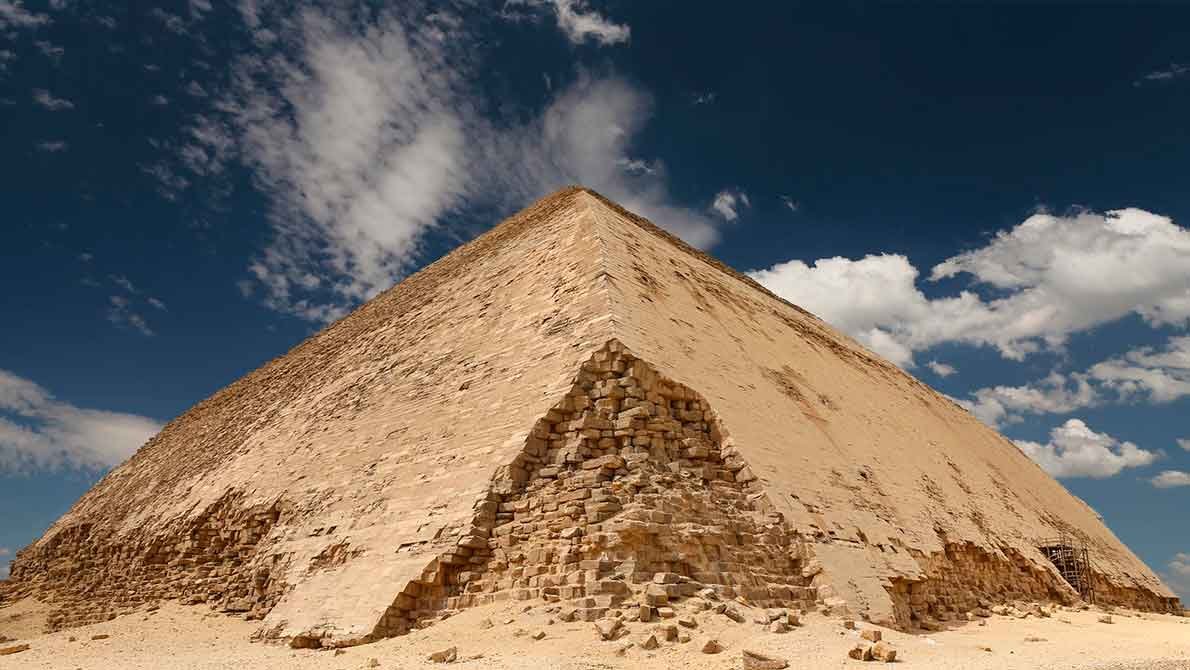
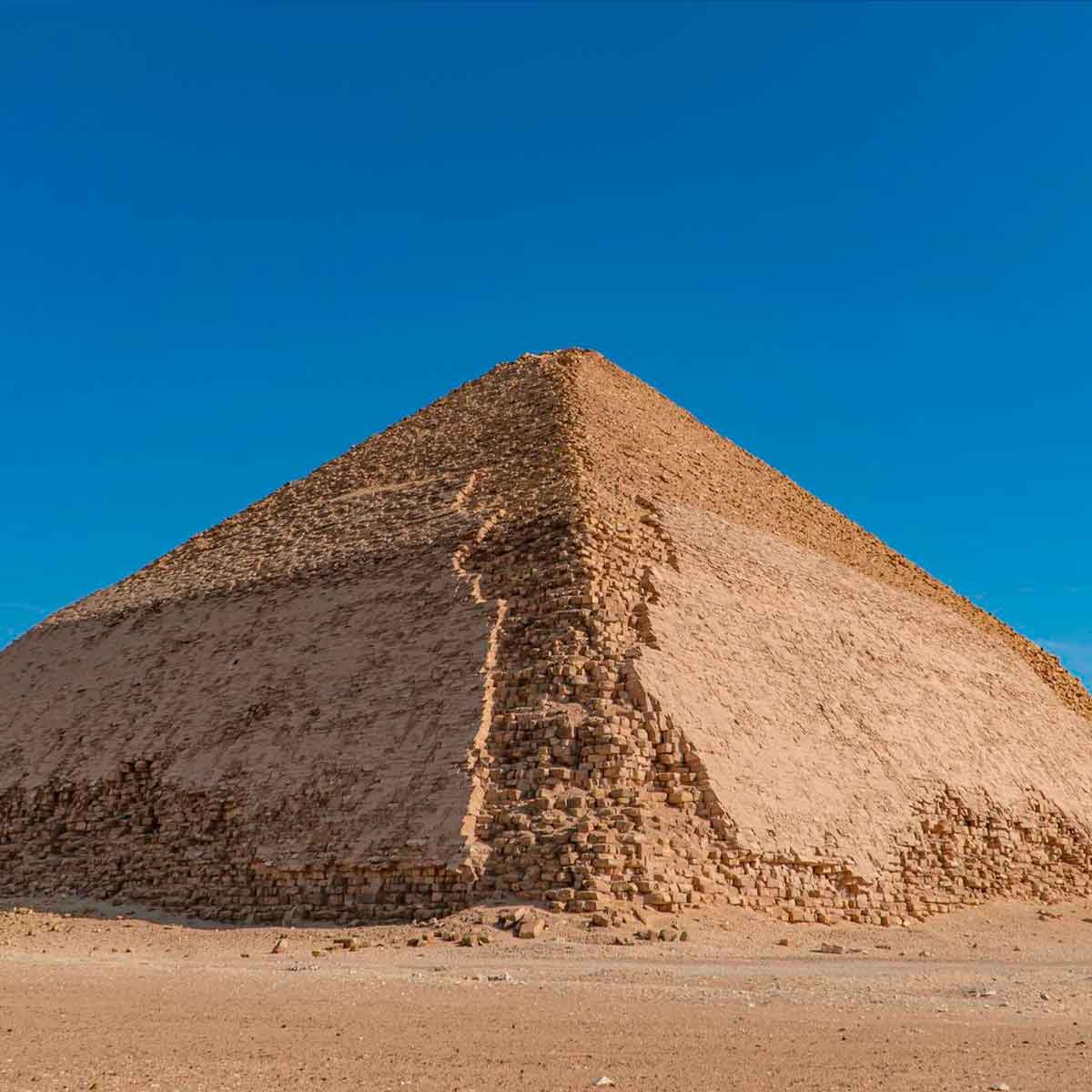
The Bent Pyramid in Dahshur is one of the most enigmatic structures of Ancient Egypt. Rising above the desert south of Cairo, it immediately stands out for its unusual form: its sides change angle halfway up, as if the pyramid bent during construction. The monument reaches more than 100 meters in height, and its base is nearly 190 meters across. It was once covered with fine limestone casing, part of which has survived, allowing us to imagine how these monuments looked in their prime.

According to the official version, the pyramid was built during the reign of Pharaoh Sneferu in the 26th century BC. Sneferu is regarded as one of the greatest builders of Ancient Egypt, the ruler who introduced the tradition of constructing true pyramids with smooth sides. His architectural projects paved the way for the famous pyramids of Giza, created by his son Khufu and his grandsons. The Bent Pyramid was Sneferu’s second funerary project after the failed pyramid at Meidum. It was meant to serve as a majestic tomb, but archaeological evidence suggests the pharaoh was ultimately buried in the nearby Red Pyramid.

The reasons behind its strange form remain unclear. Archaeologists believe construction errors were the cause. At first, the pyramid was built at a steep angle that made the structure unstable. To prevent collapse, the architects changed the design mid-construction and continued building at a gentler angle. This gave the pyramid its distinctive broken profile. In this sense, the Bent Pyramid was an experimental project where engineers tested new solutions. The lessons learned were fully applied in the Red Pyramid, which became a perfect example of ancient architecture.

Bent Pyramid facade under clouds

Independent researchers often point out that the Bent Pyramid has two entrances leading to different sets of chambers — a feature unique among Egyptian pyramids. Inside, the corridors and burial rooms bear traces of reconstruction: in some places the masonry is precise, while in others it looks rough and hastily altered. This suggests that the builders repeatedly modified the project and may even have faced partial collapses. Some archaeologists conclude that these accidents made the pyramid unsuitable as the pharaoh’s final resting place.

Modern studies confirm that the structure suffers from significant deformations. Wooden beams and later reinforcements were installed to prevent further damage. The lower chamber has a vaulted ceiling reaching 17 meters high — one of the earliest examples of such a construction in Egypt, designed to distribute the enormous weight of the stone. Entrances were blocked with heavy portcullises to protect the tomb from robbers. Yet, no sarcophagus has ever been found inside.

Excavations around the pyramid revealed a vast complex: a temple, a paved causeway, an enclosure wall, and even traces of gardens that once flourished near the tomb. Archaeologists also discovered a large residence with decorated walls and precious ornaments, possibly the home of the chief architect or members of the royal household. These finds show that the Bent Pyramid was not only a burial monument but also a sacred center dedicated to the cult of Sneferu.

Today, the Bent Pyramid remains one of the most mysterious monuments of Egypt. It represents the transition from early experimental attempts to build monumental stone structures to the creation of truly perfect pyramids. Though it never served as Sneferu’s tomb, this “failed” pyramid became an invaluable source of knowledge for later generations of builders and a lasting symbol of the challenges and achievements of ancient Egyptian engineering.

Where can I find bent pyramid photos?
Bent Pyramid photos are available in many travel guides and online archives, showing its unique double-angled shape. Tourists visiting Dahshur often capture images from different perspectives, highlighting both the smooth lower slope and the sudden change of angle near the top. These images help illustrate why the monument is one of the most unusual pyramids in Egypt.
What can be seen inside the bent pyramid?
The bent pyramid inside reveals narrow passageways and two separate burial chambers, a rare feature among Egyptian pyramids. Visitors describe steep descending corridors leading to hidden rooms, giving insight into ancient engineering. The interior atmosphere is cool and mysterious, enhancing the sense of stepping back into history.
Where is the entrance to the bent pyramid?
The bent pyramid entrance is located on the north face, following the traditional orientation of Old Kingdom pyramids. A second entrance can also be found on the west side, which is unusual and adds to the pyramid’s distinctive design. These access points allow exploration of its chambers and corridors, reflecting experiments in royal tomb construction.
How many chambers are inside the bent pyramid?
The bent pyramid chambers consist of two main rooms placed at different levels. One chamber lies beneath the base, while the second is located higher within the structure, connected by inclined passages. This unusual design demonstrates architectural experimentation, offering valuable information about early pyramid building techniques.
Is there a bent pyramid plan available?
Yes, researchers have created detailed bent pyramid plan diagrams, showing its dual-angle slopes, inner passages, and chambers. These plans are often included in archaeological studies and museum exhibitions, helping visitors visualize the pyramid’s unique structure. They also reveal the complexity of its design, distinguishing it from later smooth-sided pyramids.
Why is it called the bent pyramid?
The bent pyramid earned its name because of its unusual appearance: the slope changes halfway up, creating a noticeable bend. This alteration is believed to result from construction adjustments, possibly to avoid structural collapse. Today, the bent profile makes it one of the most recognizable monuments in Egypt and a popular subject for study.
Comments

There are no comments yet.

Be the first to comment “Bent Pyramid”

Your email address will not be published. Required fields are marked *