Dendera Lamp

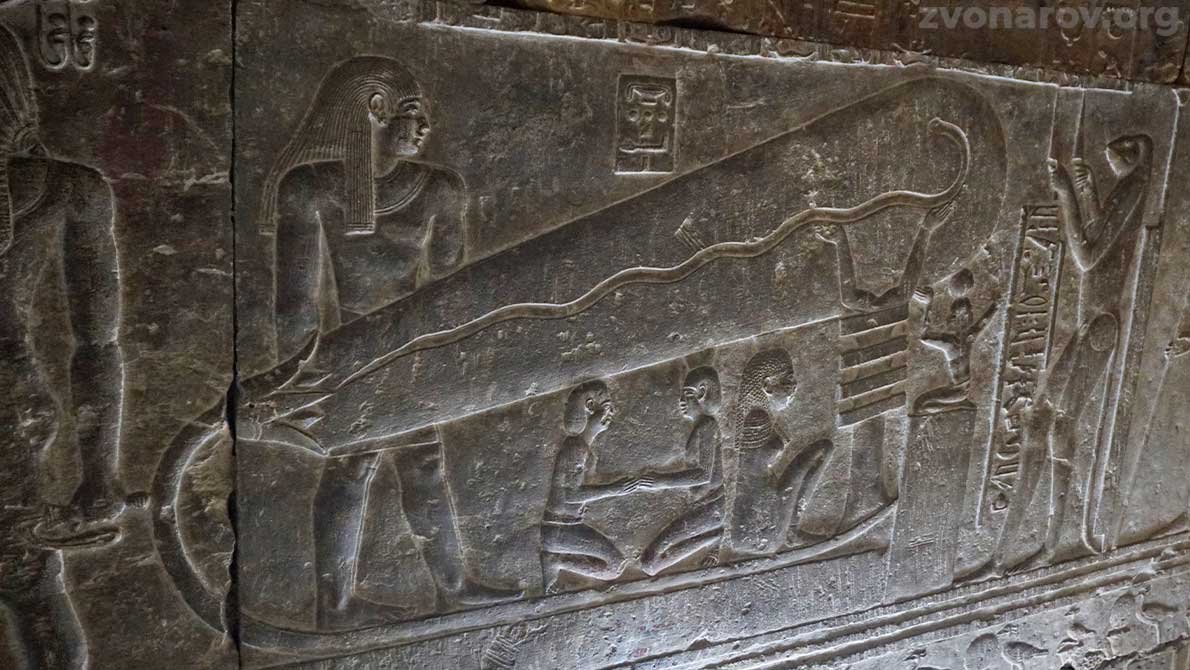
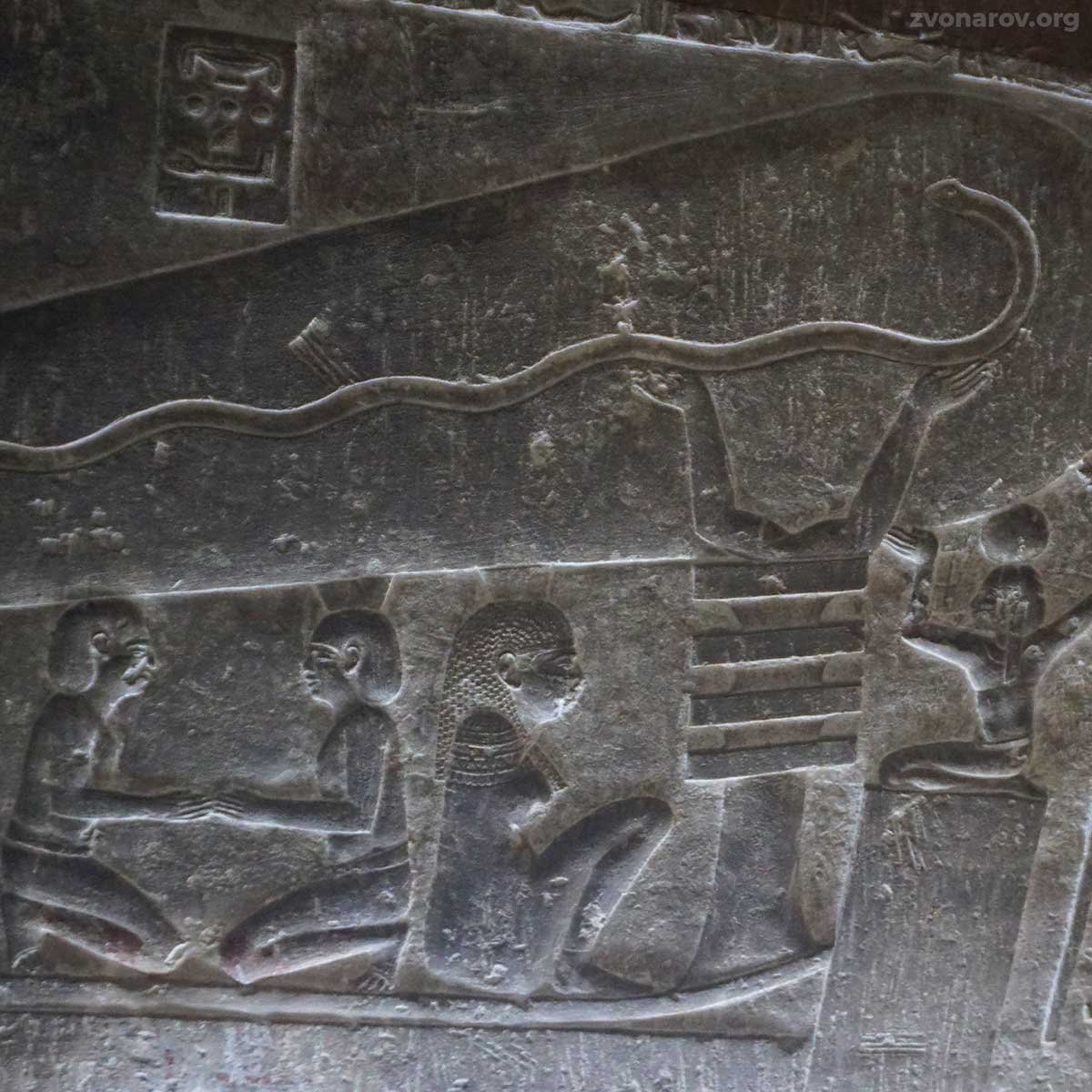
The so-called Dendera Lamp, located in the underground chamber of the Temple of Hathor in Dendera, Egypt, remains one of the most debated artifacts in history. The bas-reliefs depict serpent-shaped forms inside elongated ovals that resemble ancient light sources. This crypt, hidden beneath the temple, still fascinates researchers with its precision, mystery, and the absence of soot on its walls — a true enigma of ancient craftsmanship.

Category:
Overview

Temple of the goddess Hathor, Dendera, Egypt. This underground chamber is truly something unique and otherworldly. Once inside, it feels as if you are no longer on Earth but somewhere beyond. What is depicted here, how it is crafted, and how often similar images appear across Egypt — all of it is astonishing.

Section of the relief depicting the Dendera Lamp inside the crypt

Photographs of the bas-reliefs found in this crypt have circled the world. This place has long been a source of debate and disagreement among Egyptologists and has given rise to numerous theories that divided scholarly opinion. Yet, on one point they all agree: what is depicted on the walls undeniably resembles a schematic of a technical device. Let’s look at it carefully, step by step.

There are several interpretations of what exactly is shown on the crypt’s walls. According to the official Egyptological explanation, the scene represents the god Harsomtus — a manifestation of Horus the Child — emerging as a serpent from a lotus flower. The lotus symbolizes the birth of light, energy, and life, while the serpent embodies divine power manifested in the material world. The djed-pillar seen nearby is considered an ancient symbol of stability and eternity, the emblem of Osiris and the support of the universe. In this view, all these elements form part of a complex cosmogonic system — a myth about the rebirth of light and the world itself.

Ancient carvings and hieroglyphs on the walls of the underground chamber

However, not everyone is satisfied with this explanation. There is also a so-called “technical” version, according to which the scene does not represent mythology at all but some kind of device — something resembling a lamp or a source of light. At first glance, this hypothesis may seem fantastic, yet it has gained wide popularity in modern culture. Supporters of this interpretation point out that the oval shape with the elongated serpent inside strikingly resembles a glass bulb, while the djed-pillar looks like a cable or insulator. Moreover, the ceilings of the crypt are not covered with soot, even though the interior is almost completely dark. If the ancient craftsmen had worked with oil lamps or torches, traces of smoke should have remained.

There is also a third explanation — the so-called alternative version. Its supporters believe that this is not merely a symbolic scene but an encrypted depiction of ancient technology once used by a highly developed civilization predating Egypt. According to this theory, the reliefs may represent a kind of documentation or monument transmitting knowledge about the interaction between energy and matter. Attention is also drawn to the very technique of execution — the reliefs are not carved into the stone but raised above it. To achieve such a result, the artist had to remove the background, leaving the figures protruding. This is an extremely demanding process that allows for no mistakes: one wrong cut, and the work would have to start over.
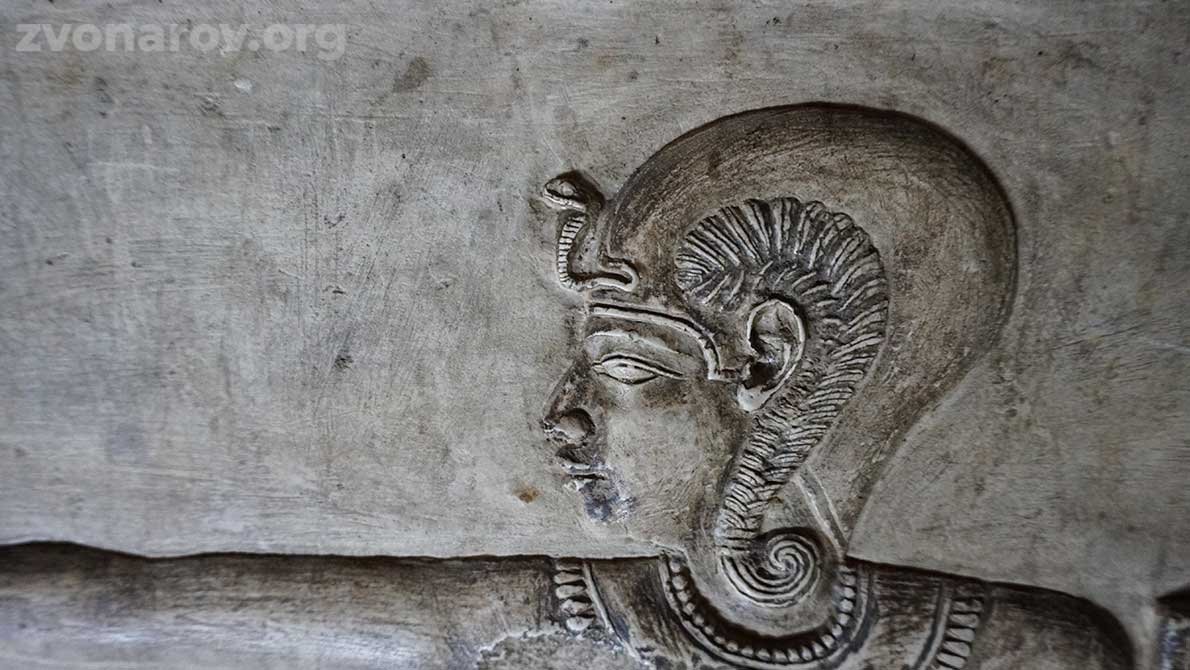
Carved portrait of the Egyptian goddess Hathor in the underground temple

The fact that all lines are perfect, proportions precise, and relief depth consistent across the entire surface makes one wonder how ancient artisans could achieve such refined accuracy. There are no traces of rough tools, chips, or corrections. It seems as though the carvings were made with a method capable of cutting stone with mathematical precision.

Interestingly, similar images appear not only in Dendera but also in other Egyptian sites, although here their concentration and quality surpass everything known elsewhere. Perhaps that is why the crypt of Hathor has become the focal point of alternative studies and debates — it simply does not fit into the conventional framework of Egyptian art.

Relief carving showing the Dendera Lamp scene with Egyptian gods

Whatever the true meaning behind these depictions, one thing is clear: the underground chamber of Hathor’s temple in Dendera was crafted with a level of mastery that still astonishes modern specialists. Every line, every curve, every millimeter of relief reveals a deep understanding of the material and an extraordinary culture of stonework. Perhaps here, in these subterranean halls, at the meeting point of light and darkness, lies one of the oldest mysteries of humankind.

What is the Dendera Crypt beneath the Temple of Hathor?
The Dendera Crypt is an underground chamber located beneath the Temple of Hathor in Dendera, Egypt. It contains a series of remarkable bas-reliefs often referred to as the “Dendera lamps.” These intricate carvings depict scenes that some interpret as mythological, while others believe they represent advanced ancient technology or symbolic expressions of light and energy.
Why is the underground chamber of Dendera so mysterious?
This underground chamber is mysterious because its bas-reliefs do not fit neatly into traditional Egyptian iconography. The depictions show elongated bulb-like forms connected to what appear to be cables or energy sources. The lack of soot on the ceilings, despite the absence of natural light, adds to the enigma—raising questions about how the crypt was illuminated during its creation.
What are the main theories about the so-called “Dendera lamps”?
There are three main theories. The Egyptological interpretation says the reliefs show the god Harsomtus emerging from a lotus flower, symbolizing rebirth and light. The technical theory suggests the shapes represent electrical lamps or ancient devices. The alternative theory claims the carvings encode knowledge from a lost advanced civilization that understood energy and matter on a deeper level.
How were the Dendera Crypt bas-reliefs carved with such precision?
The reliefs are raised above the stone surface, meaning artisans had to remove the background instead of carving into it—a labor-intensive process requiring incredible skill. Every line and proportion appears mathematically precise, with no tool marks or corrections. This level of craftsmanship continues to puzzle modern researchers studying ancient stonework techniques.
Can visitors access the underground chamber today?
Yes, parts of the Dendera Temple complex, including some of the crypts, are open to visitors. However, access can vary depending on ongoing conservation work and local regulations. Tourists are advised to check with official guides or the site’s management before visiting the underground chamber to ensure safe and permitted entry.
Is there evidence of similar depictions elsewhere in Egypt?
Yes, similar motifs appear at other Egyptian temples, but none are as concentrated or as finely executed as those in Dendera. This suggests the Dendera crypt played a special role—perhaps as a sacred space dedicated to the mysteries of light, energy, and divine creation. Its uniqueness continues to attract scholars and alternative researchers alike.
What makes the Temple of Hathor in Dendera important for alternative researchers?
The Temple of Hathor, with its underground crypts and the so-called Dendera lamps, is central to alternative historical studies. Researchers consider it a possible link between ancient Egyptian spirituality and forgotten technologies. Whether symbolic or technical, the precision and symbolism of these carvings embody one of the greatest unsolved mysteries of ancient Egypt.
Comments

There are no comments yet.

Be the first to comment “Dendera Lamp”

Your email address will not be published. Required fields are marked *