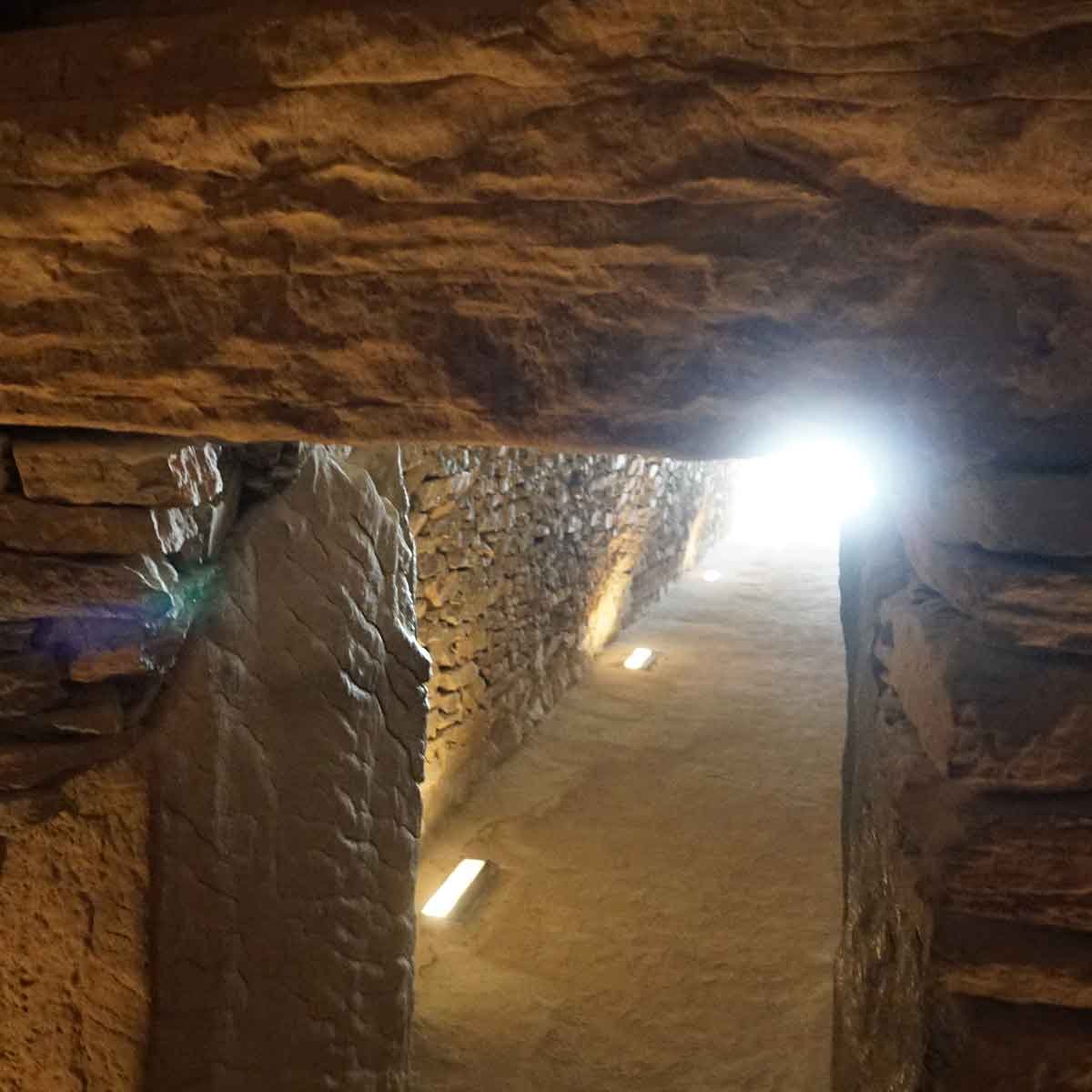
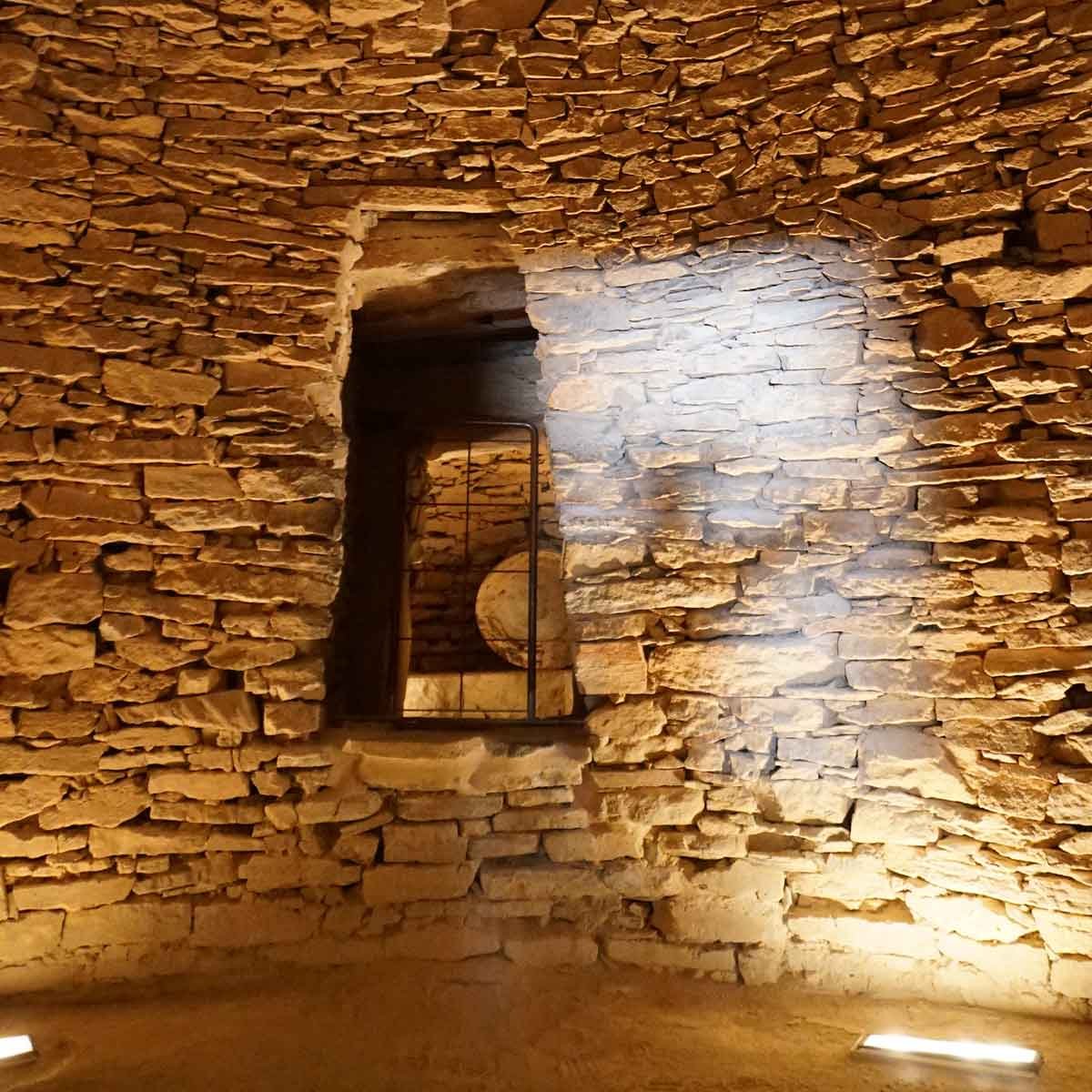
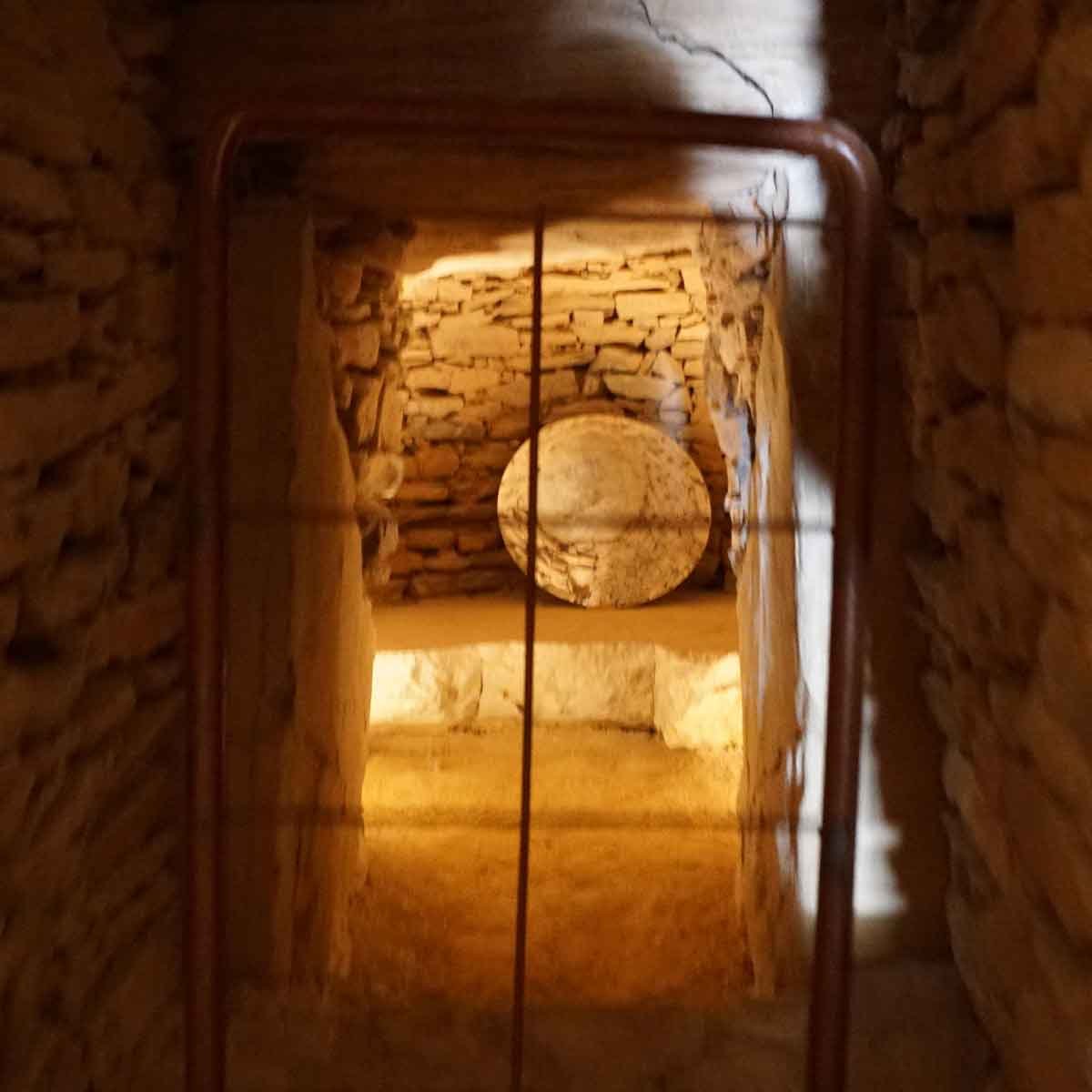
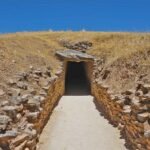
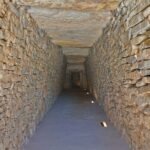
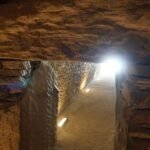
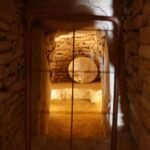
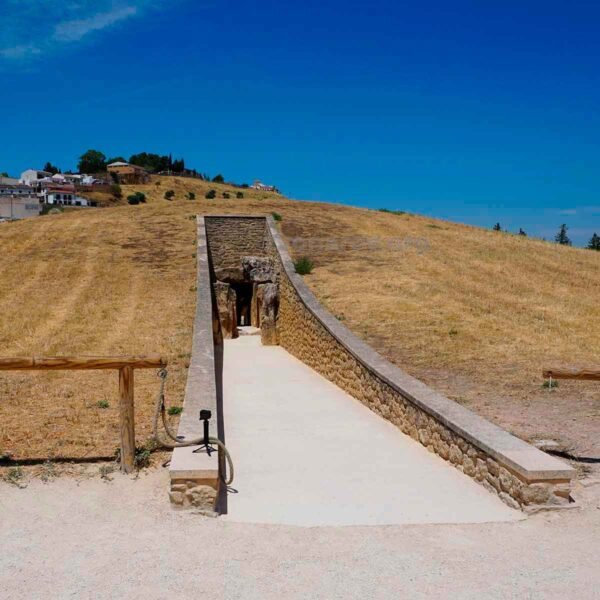
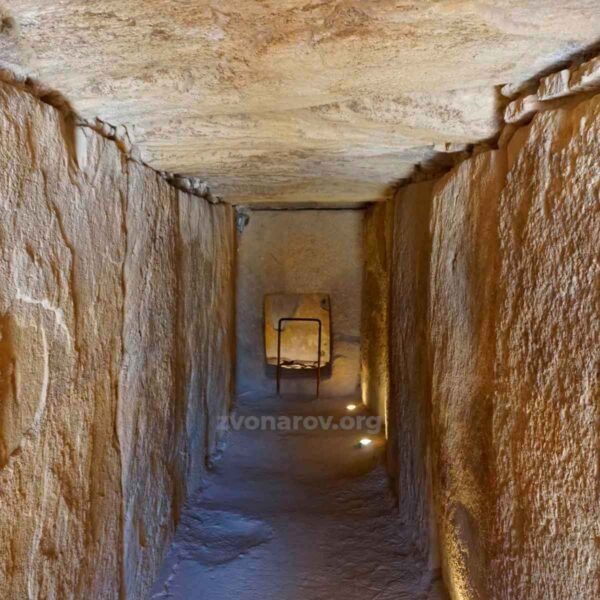
The free-standing Dolmen El Romeral reveals its megalithic blocks beneath a covering of smaller stones. Today it is a tourist site open to visitors. When visiting, special attention should be paid to the dolmen’s ceiling, its floor, and the door lintels, all built from massive stone slabs without the use of mortar. The monument ends with a chamber that is closed to the public, but a mirror has been placed inside so visitors can appreciate the construction of its ceiling. Photographs taken within also allow a closer look at these architectural details.
One of the unique aspects of this dolmen is its orientation. Unlike the neighboring Menga and Viera, El Romeral is not aligned with the sun but rather with the El Torcal mountain range. This has given rise to many theories suggesting that the dolmen may have served not only as a burial site but also as a sacred place connected to the surrounding landscape and the symbolic power of the mountains.
The dolmen was discovered in 1904 by brothers Antonio and José Viera Fuentes. Initially it was known as “Sepulcro del Cerrillo Blanco.” Since then, the monument has been studied, partially restored, and reinforced, yet it still holds many mysteries — from the methods used to build its false dome to the true purpose of its secondary chamber.
Today El Romeral is listed as a UNESCO World Heritage Site as part of the Antequera Dolmens ensemble. Official archaeology provides dates and interpretations, but in reality we do not know who built it, how, or why. This uncertainty makes it especially captivating for anyone interested in the enduring mysteries of the ancient world.













There are no comments yet.