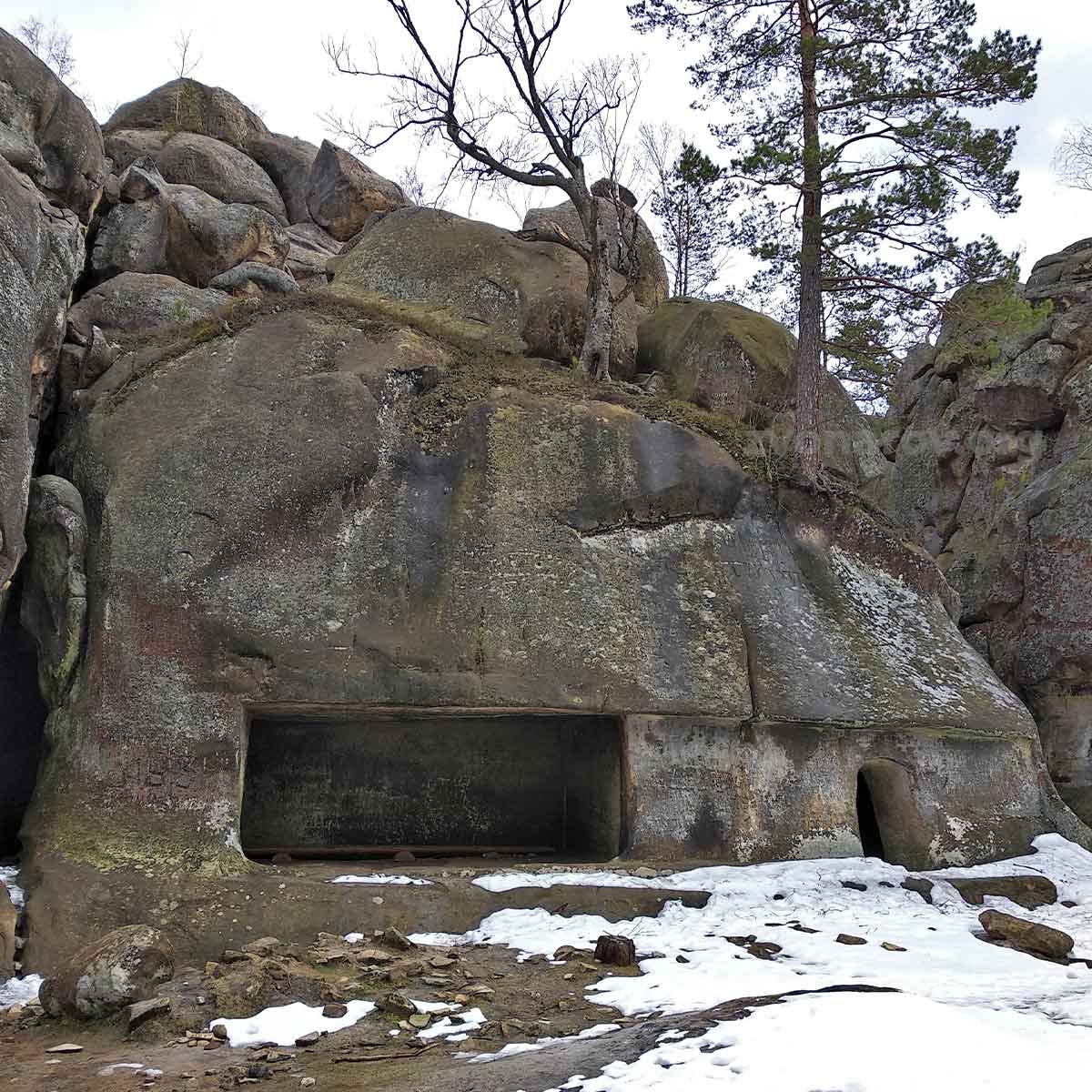
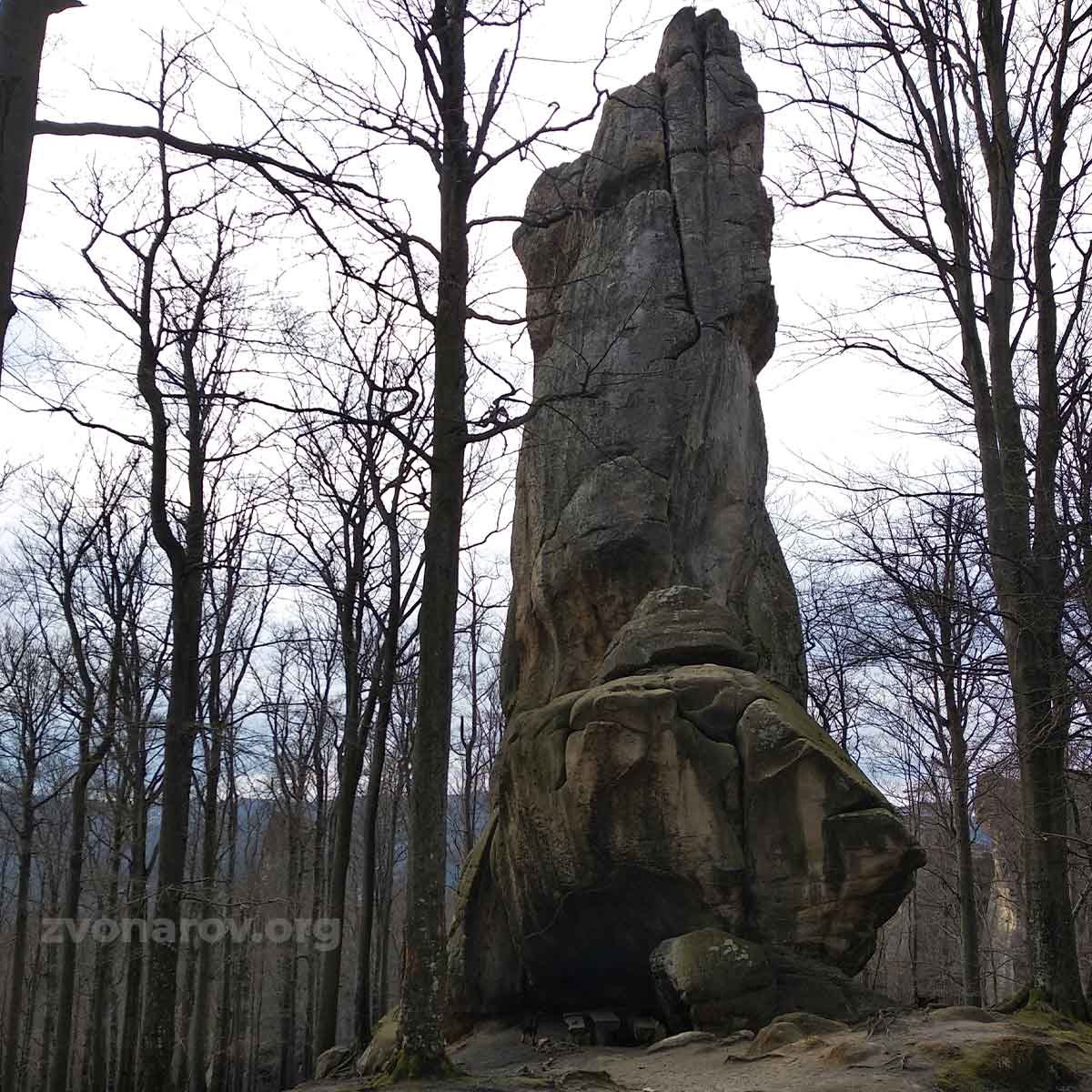
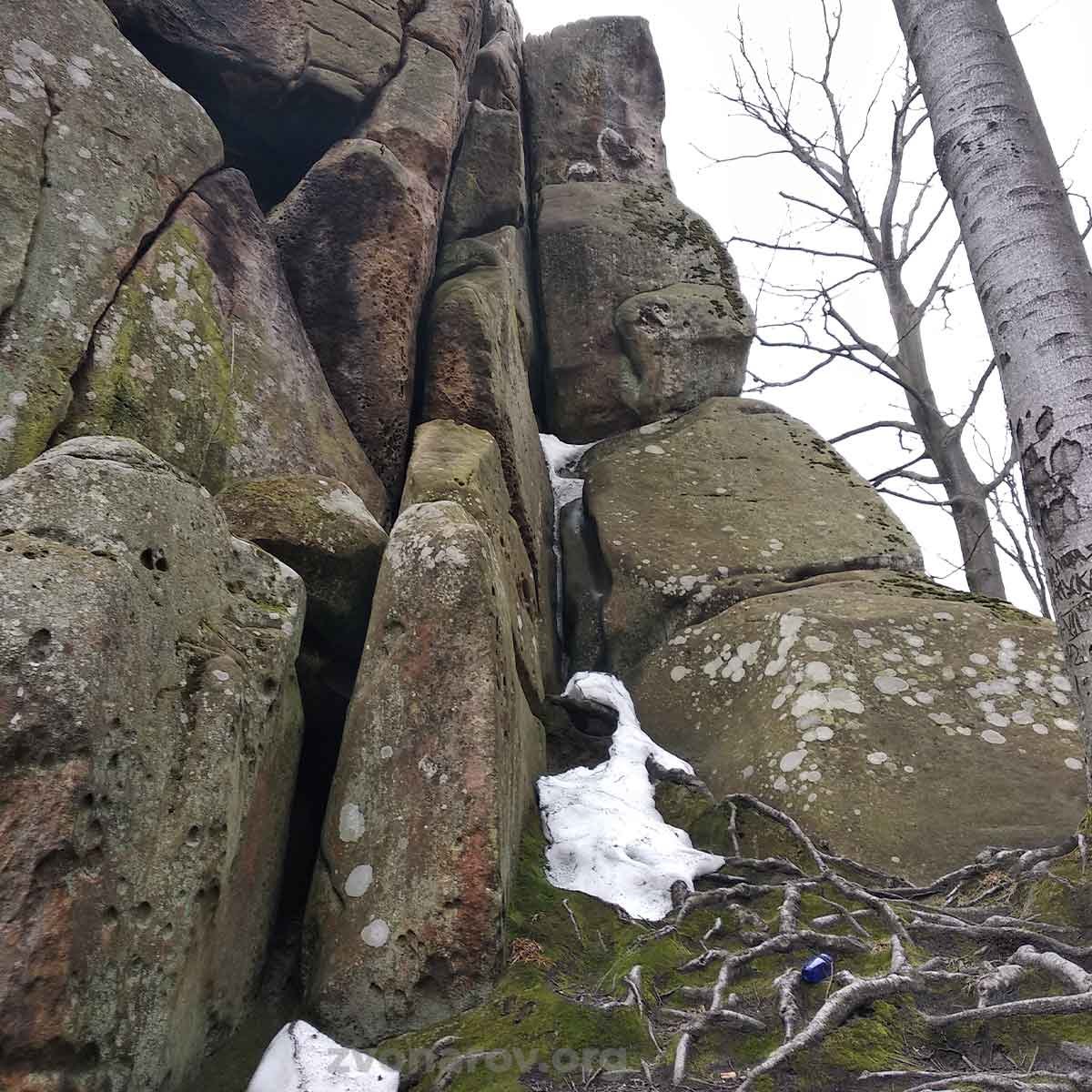
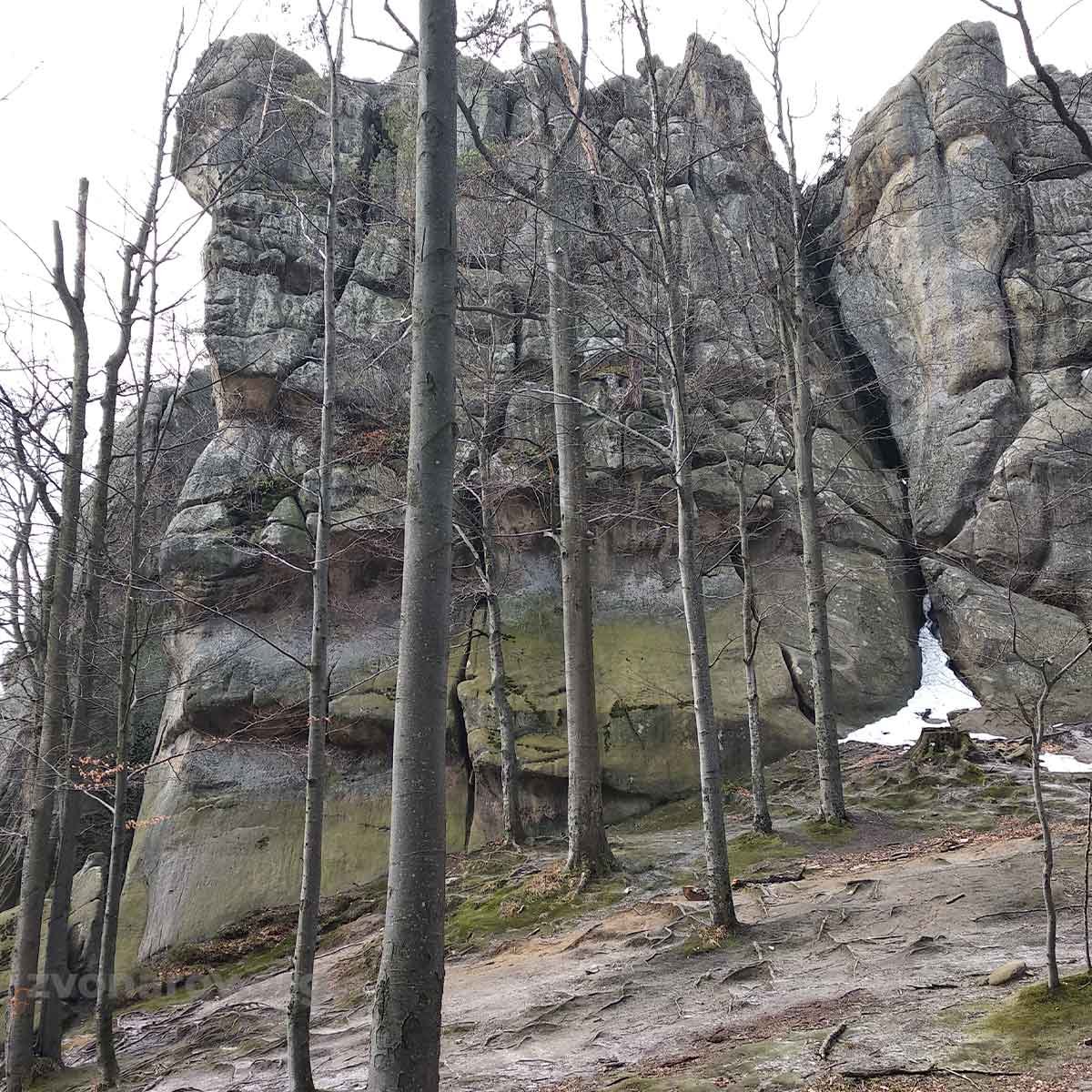
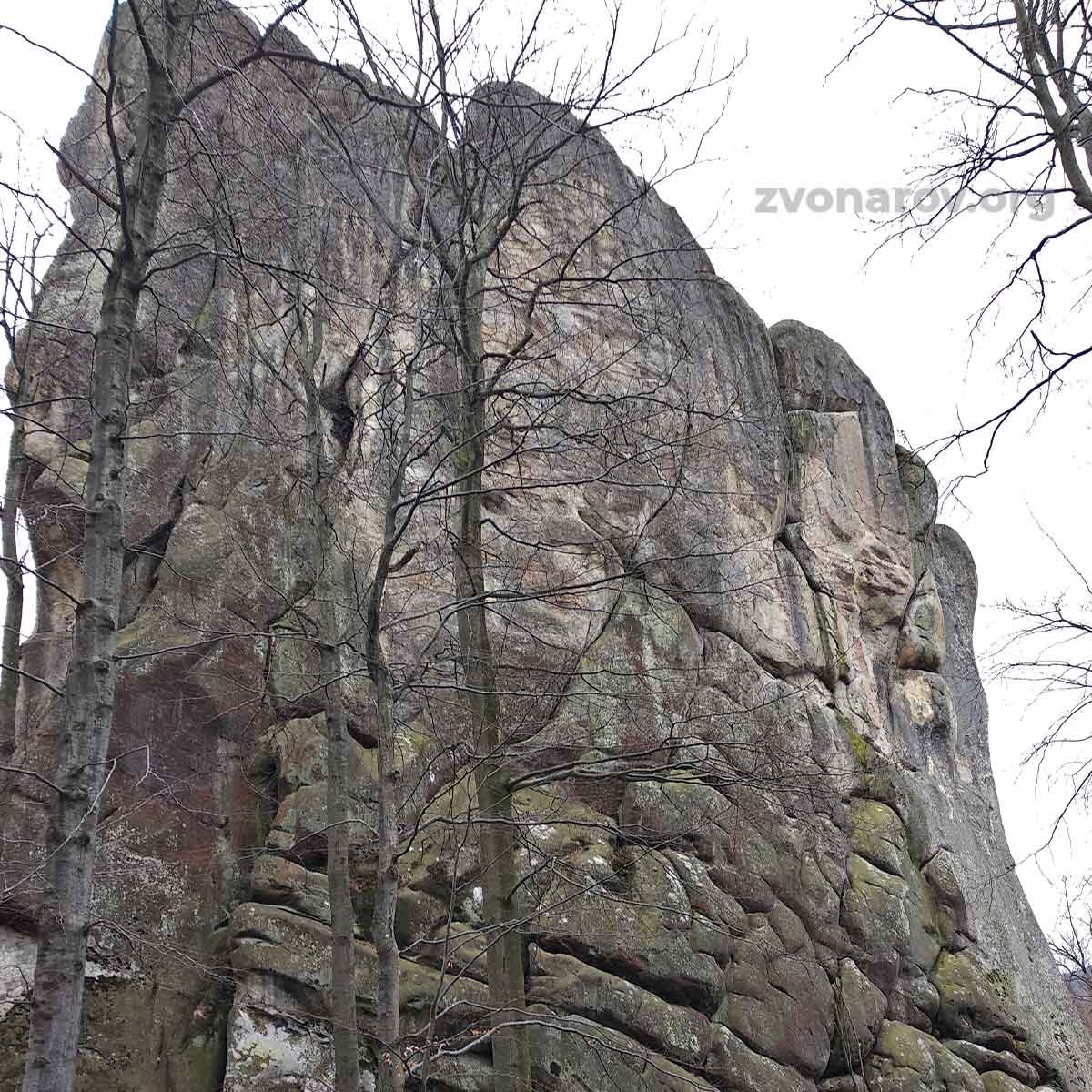
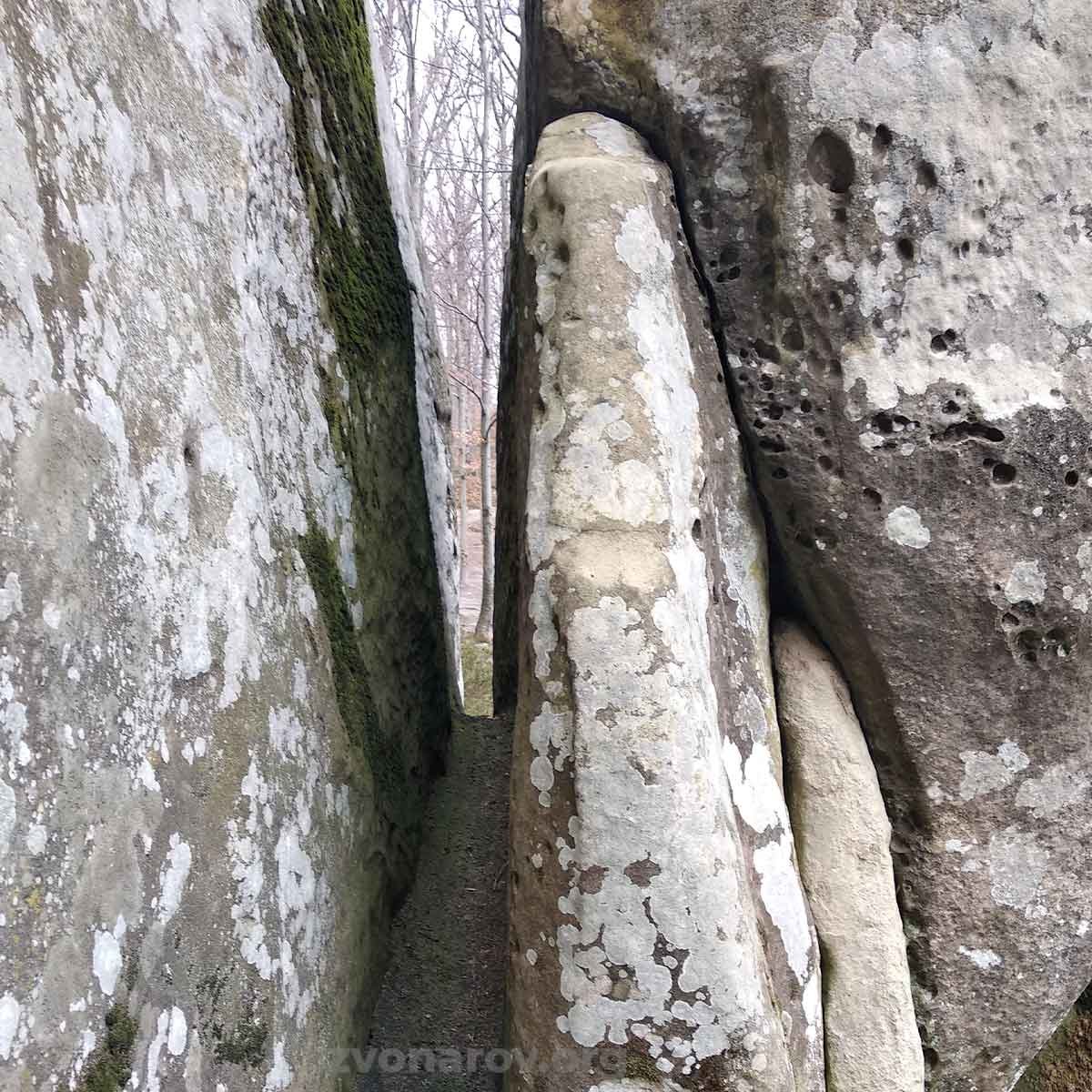
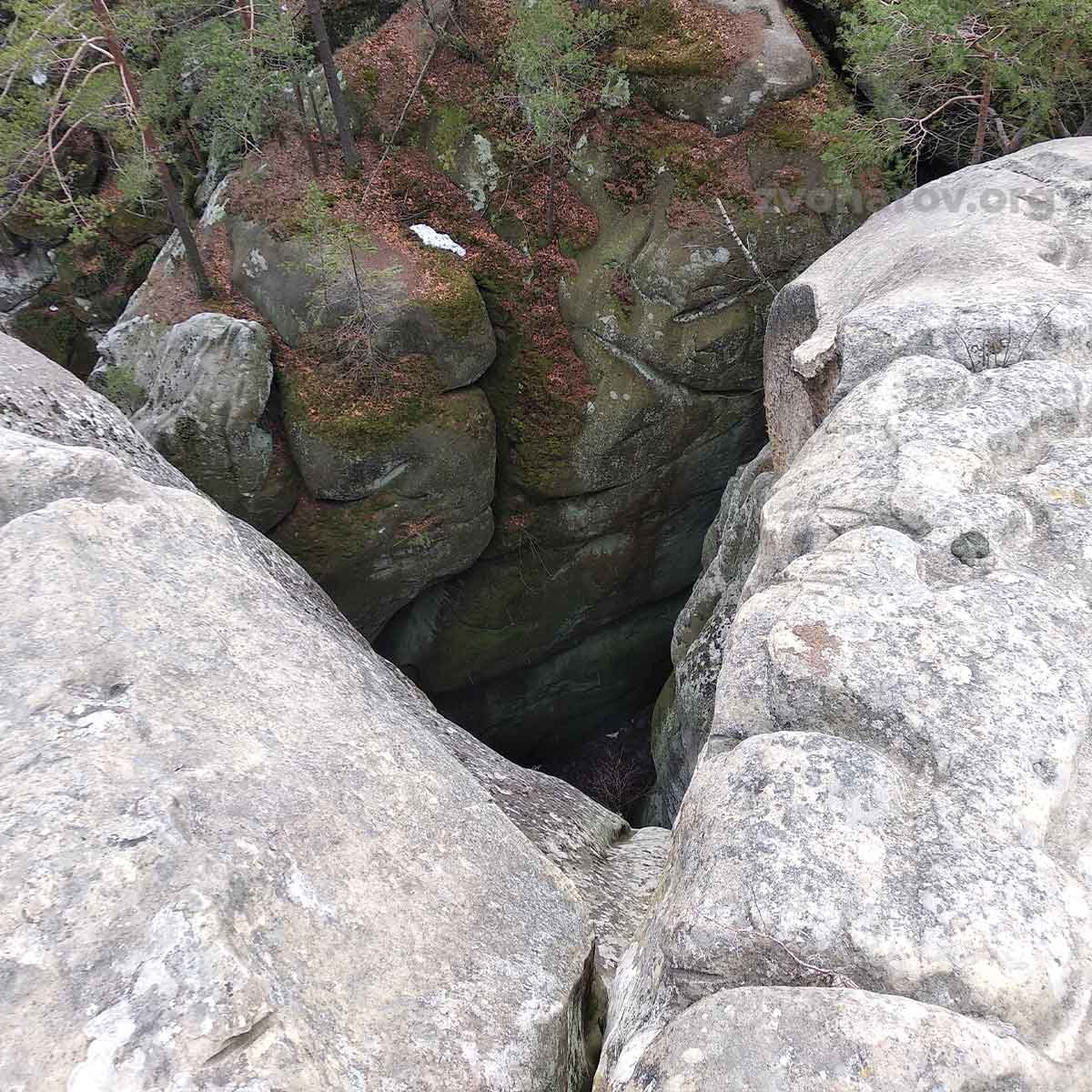
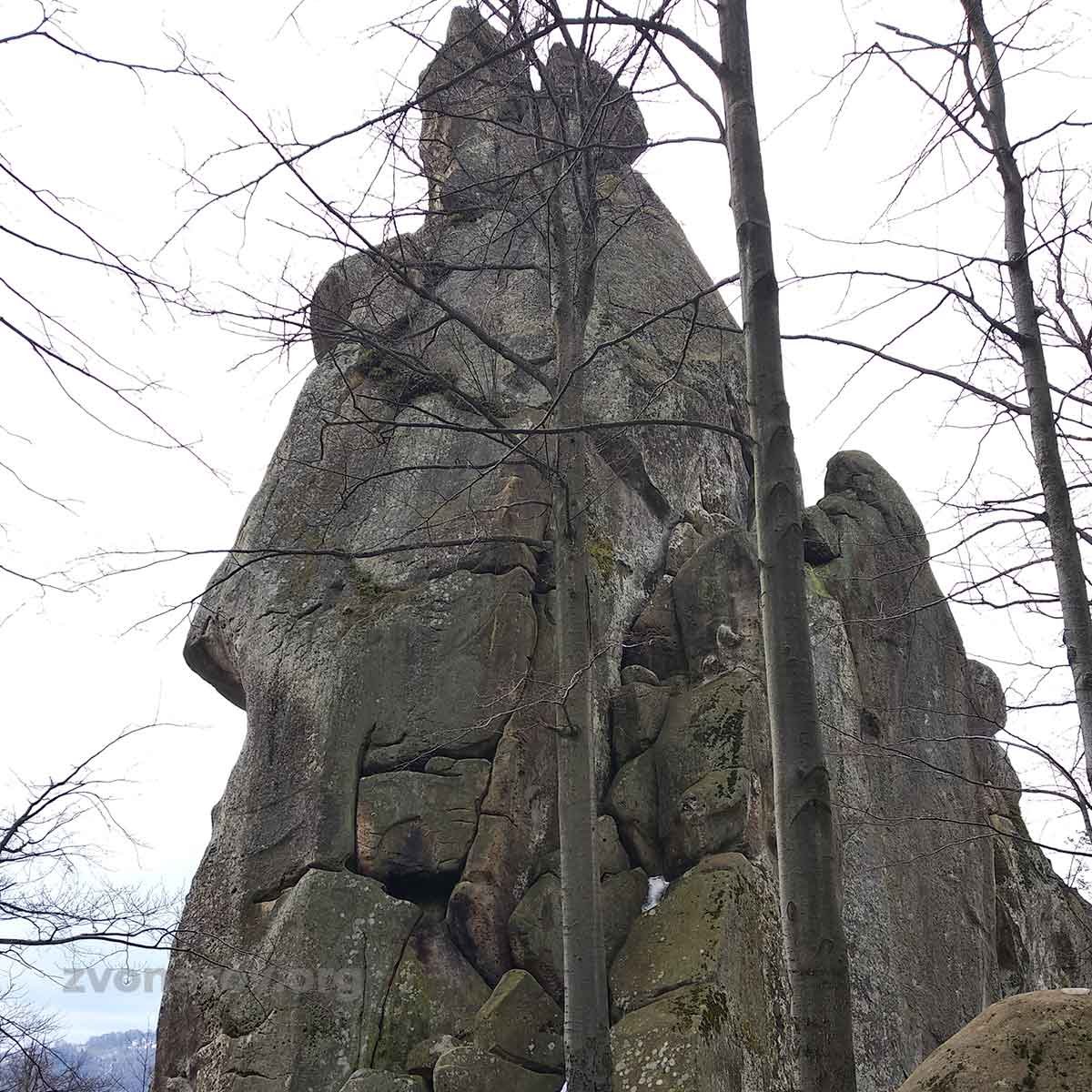
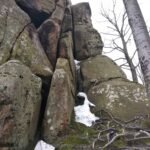
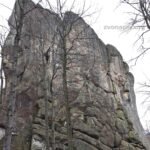
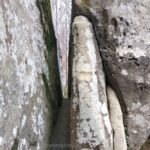
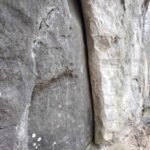
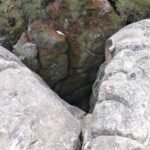
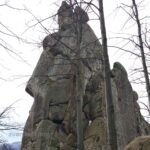
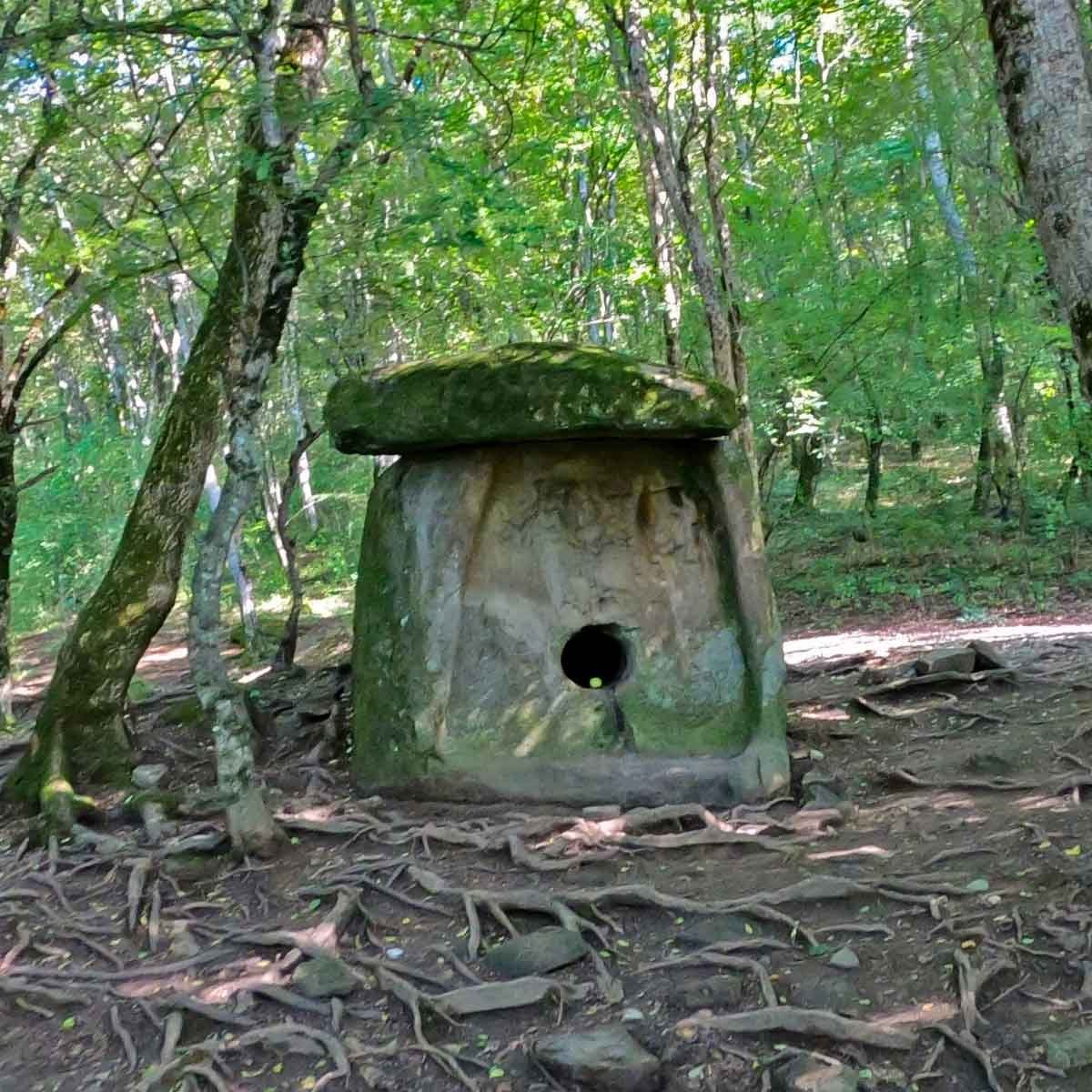
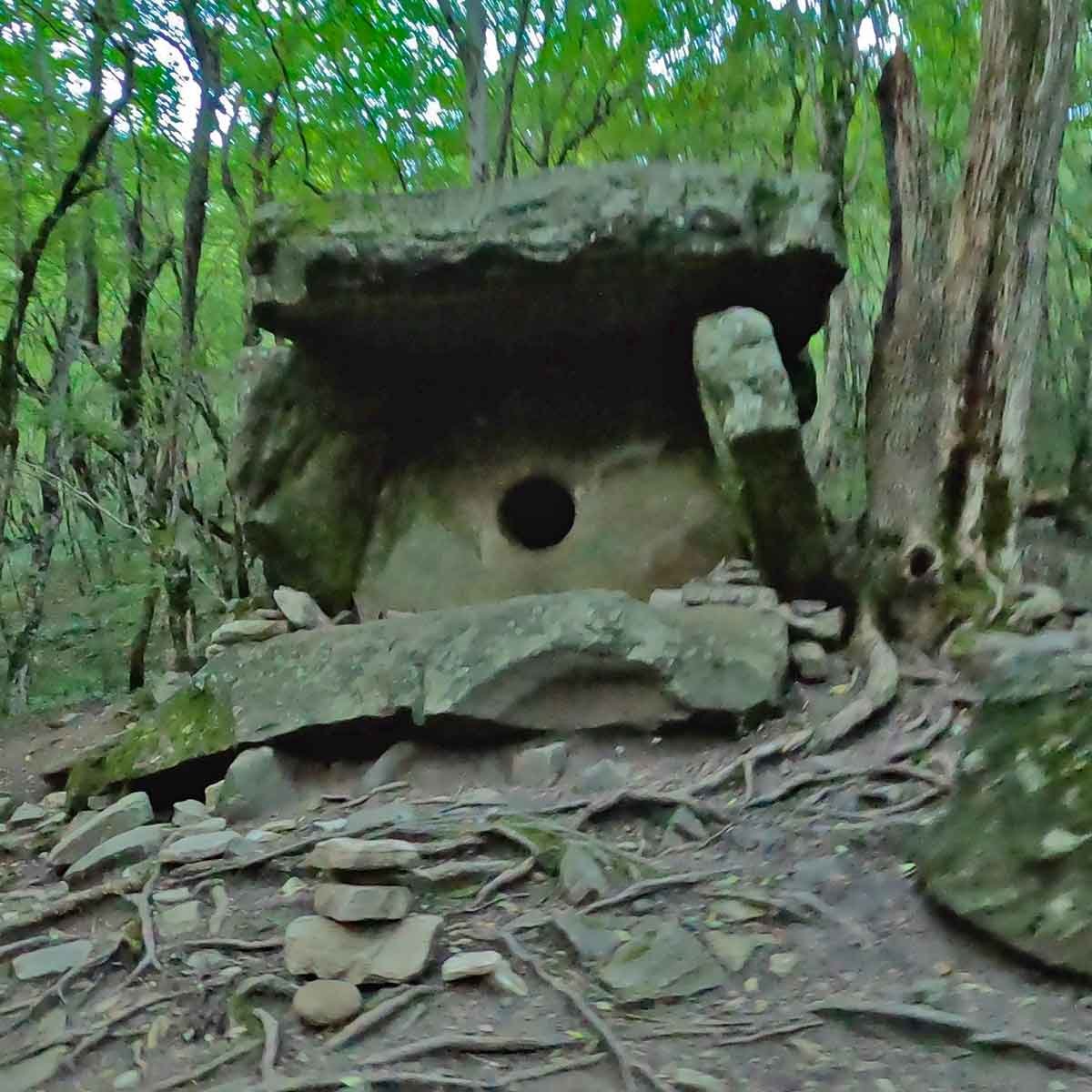
I remember, when I first came to this place and looked at the rocks and stones scattered around, I had a strong impression that these were traces of melting. There are spots where the stone looks as if it had been soft and then solidified (see the photos in the gallery at the top of the page). And these rounded shapes are atypical, because all around we see ordinary rocks, the kind we are used to seeing. But here something definitely happened.
This place is called Dovbush Rocks, named after Oleksa Dovbush, who lived here in the 18th century. He is recognized as a folk hero in Ukraine, but in essence he was a kind of Robin Hood — a bandit who attacked landlords’ estates, took their wealth, and shared it with the poor and with his companions. For ordinary people, he appeared as a defender and a fighter for justice.
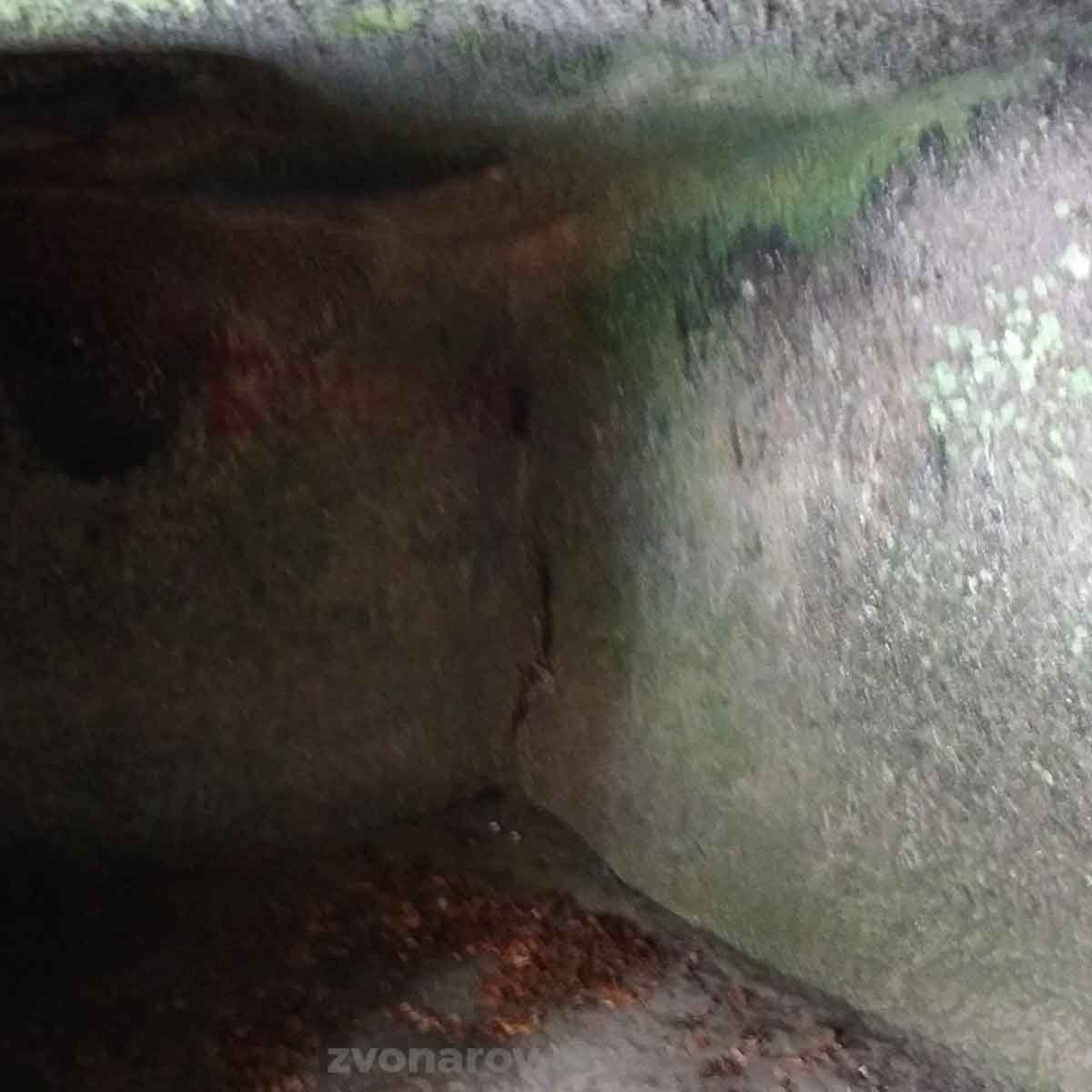
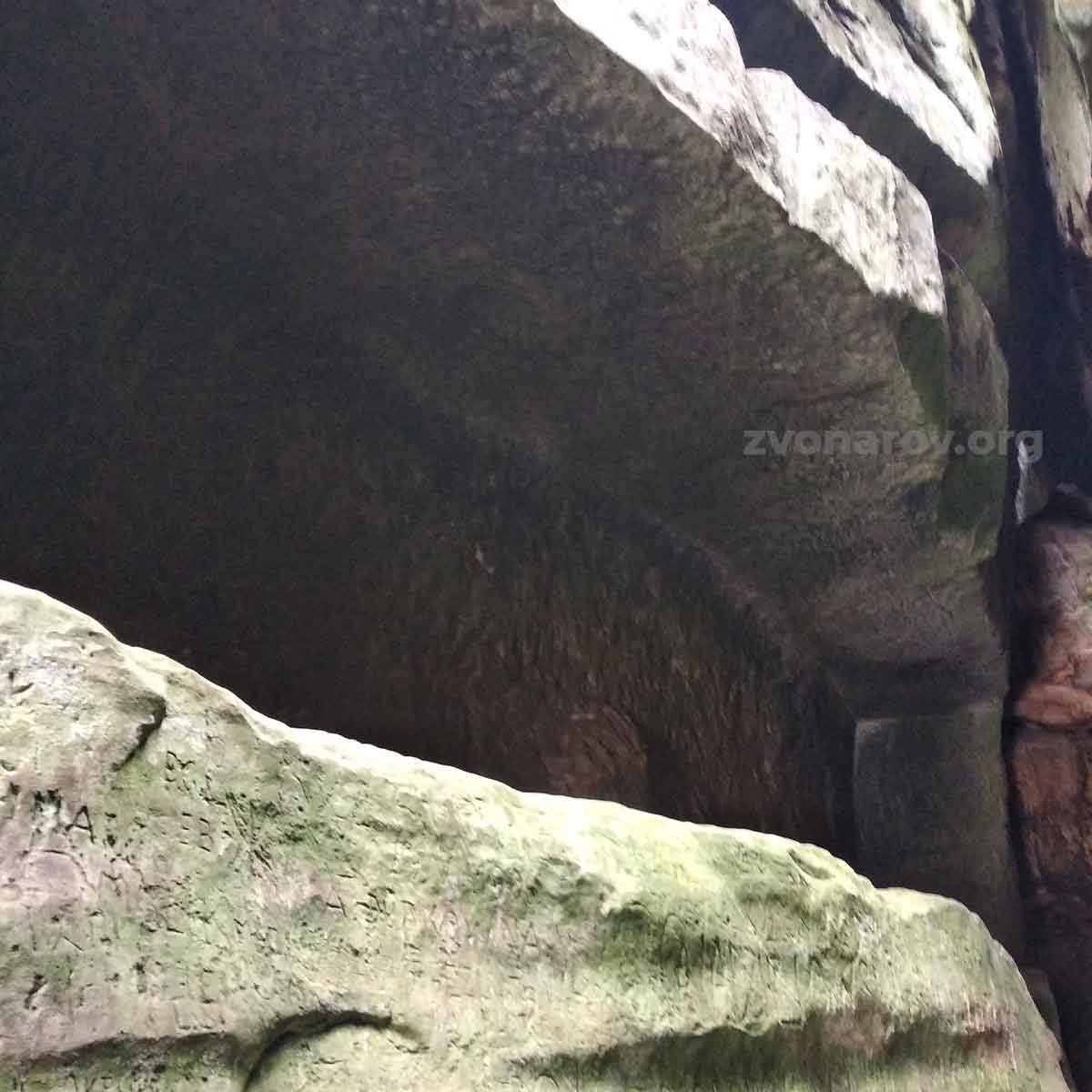
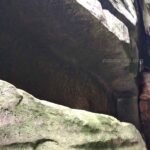
And yes, humans really did have a hand in altering this rock complex, because some chambers were used as a prison for a while, and in some hollows water was stored. In certain places, steps were cut into the rocks; you can see they were roughly made with a pickaxe — simply for convenience, so as not to slip and fall in winter, because people used this area as a natural refuge.
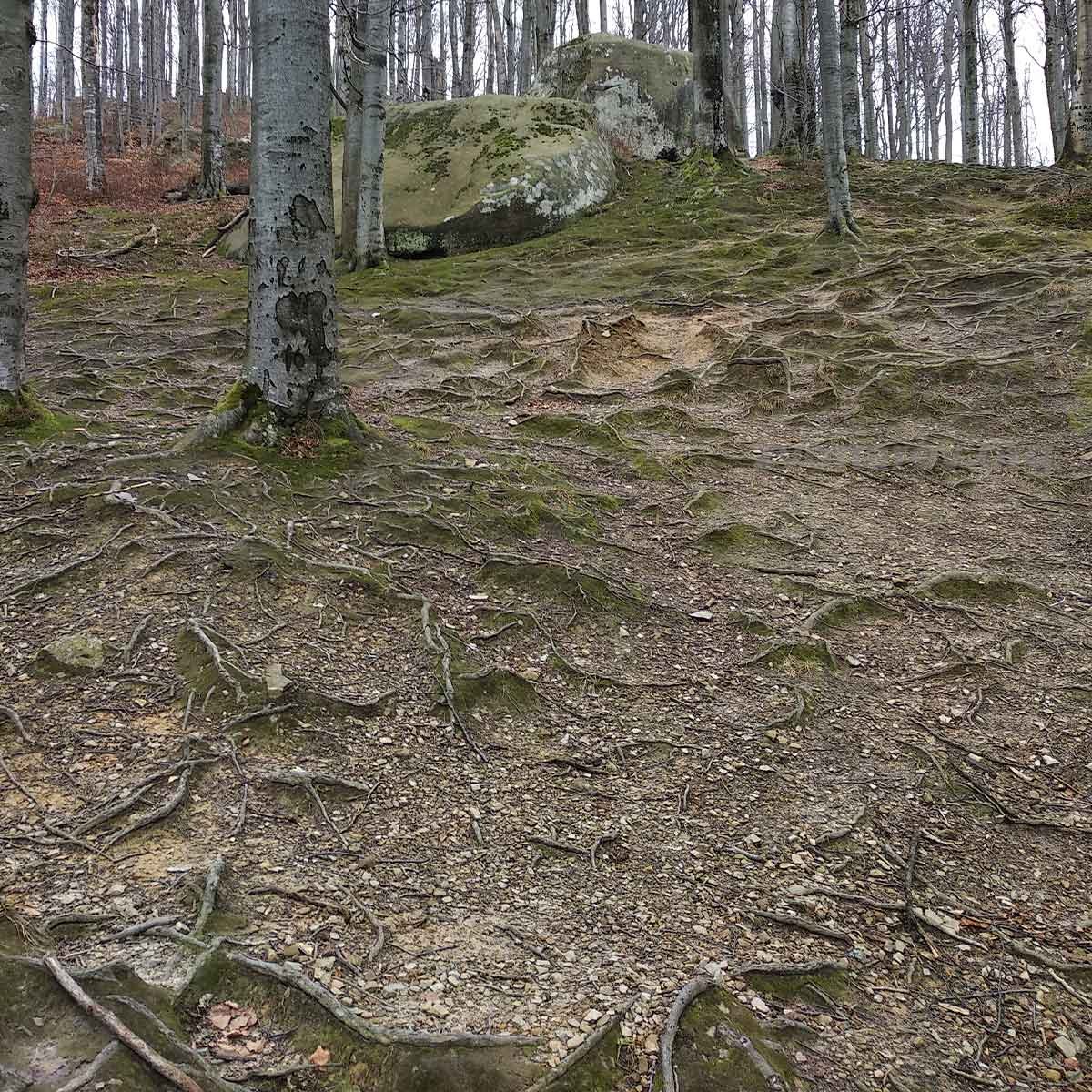
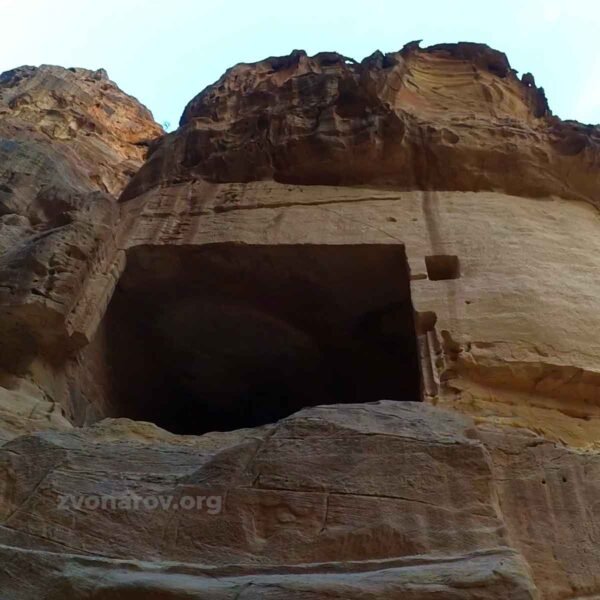
But was this place originally a natural formation? Why is everything around ordinary — ordinary rocks, ordinary forest, ordinary stones — and only here they take on a special shape, which you can see in the photographs?
I have often heard this place called a dolmen. But no, it is not a dolmen, it has nothing in common with dolmens. However, the origin of this structure remains a mystery, and that is very interesting. Because although humans did carve out parts of the rock to adapt this place for their needs, I still believe that there were originally recesses here, which people merely expanded in order to use for their purposes during the times of Dovbush and long before him.
















There are no comments yet.