Goddess Hathor

Hathor, the Egyptian goddess of love, music, and beauty, embodies both divine joy and deep cosmic wisdom. Revered as the “Golden One,” she united art, science, and spirit in perfect balance. Her temples, especially at Dendera, preserve intricate carvings and hieroglyphs that reveal the harmony between light, sound, and creation. The symbols of Hathor—the sistrum, mirror, and solar disk—remain keys to understanding ancient Egyptian spirituality and its vision of universal resonance.

Category:
Overview

Hathor, the Egyptian goddess of love, music, and cosmic harmony, remains one of the most enigmatic and multifaceted deities of ancient Egypt. In her, everything that we call both “human” and “divine” converges: love, motherhood, beauty, joy, music, light, and sacred knowledge. Although her cult might appear purely emotional—devoted to celebration and life—closer study reveals something far deeper. Behind the image of the goddess Hathor lies a profound mystery connected to the very nature of the human soul and perhaps to ancient knowledge that has long since lost its true meaning.

Dendera Hathor Temple with statues

Hathor was considered the daughter of the sun god Ra, the personification of feminine radiance and light. Her name, Hath-Hor, literally means “House of Horus,” or “She who gives shelter to the Falcon.” This idea is symbolic: Hathor is not only a mother but also a vessel of divine energy, within which the god Horus—Ra’s son—takes form and manifests in the physical world. She is the matrix of life, both literally and metaphysically.

In ancient Egyptian mythology, Hathor the Egyptian god of love and joy was also the one who welcomed souls of the dead and guided them toward eternal life. This made her not only the goddess of affection but also a bridge between worlds—the embodiment of the feminine principle that unites matter and spirit.

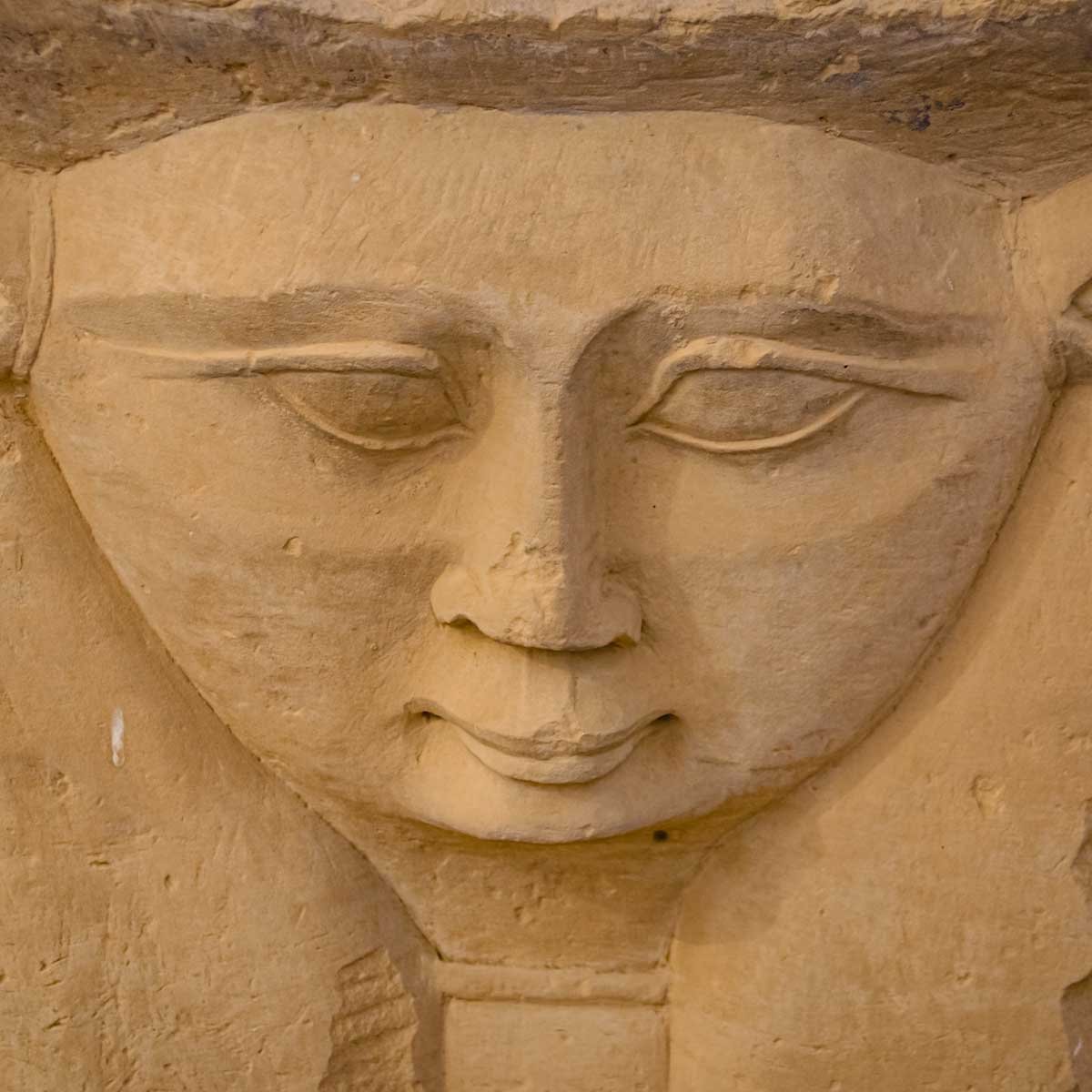
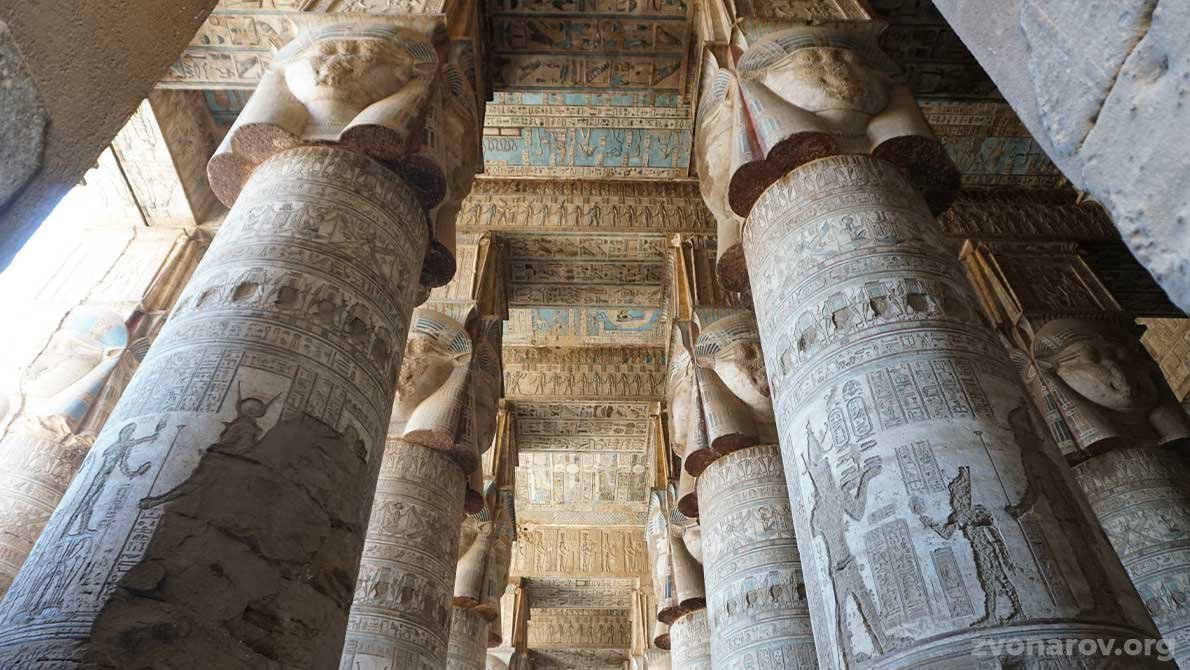
Hathor-faced column capital inside the Dendera Temple

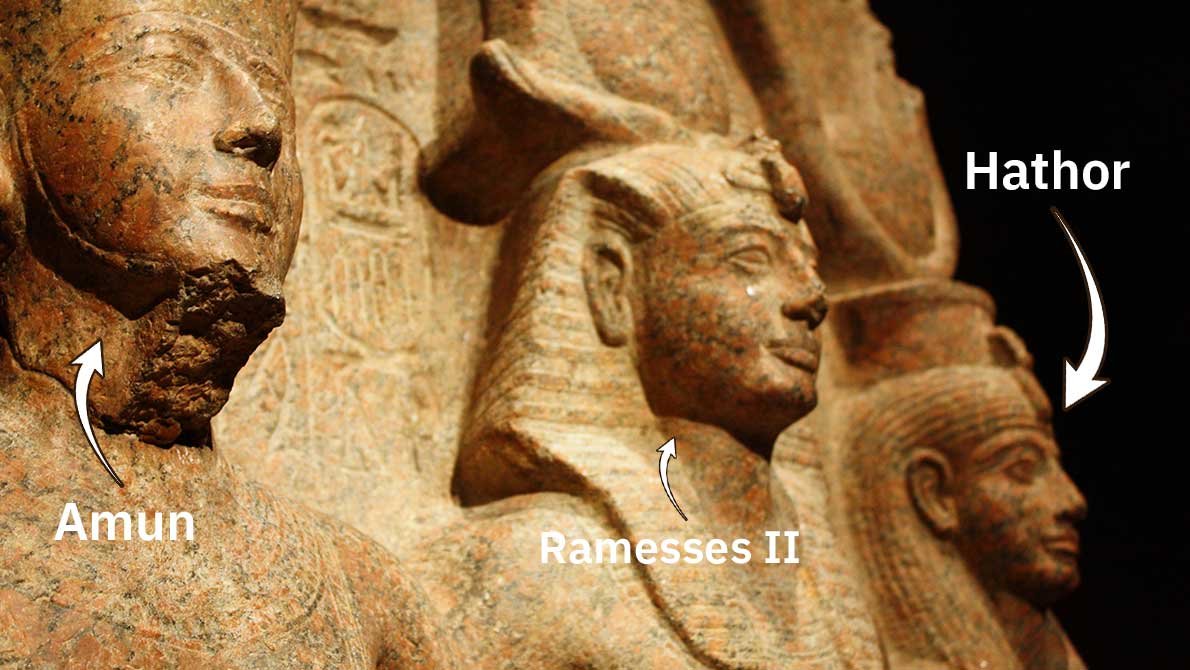
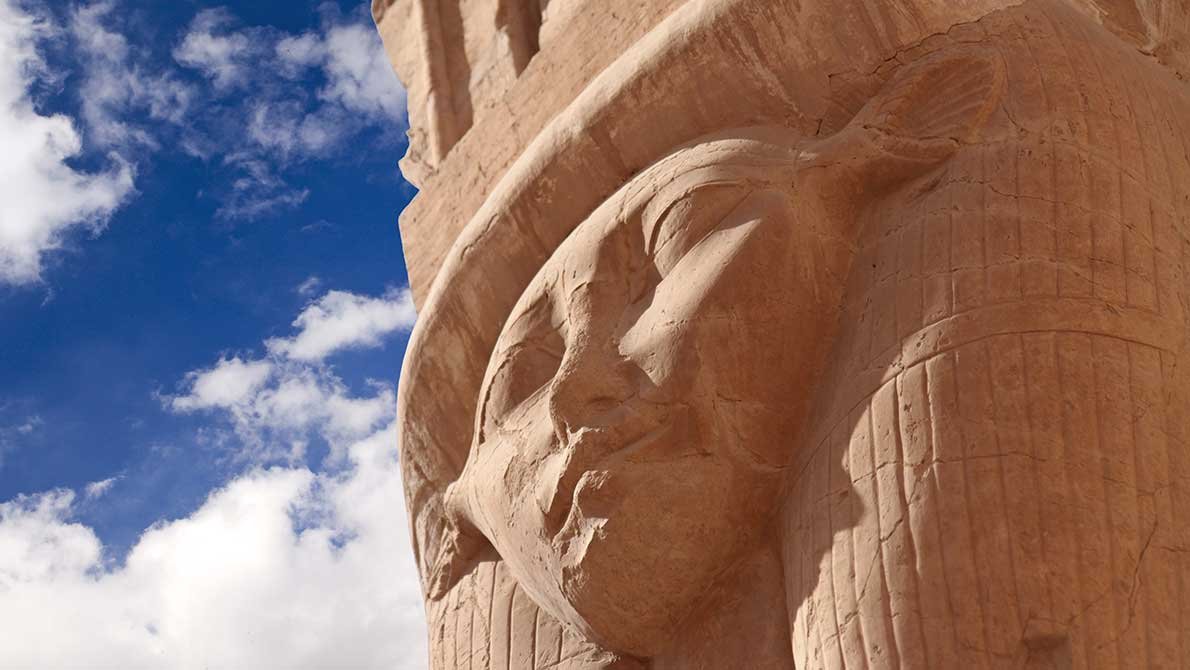
On temple walls and reliefs, the goddess of Hathor appears in several forms: as a woman with cow’s ears, a solar disk between her horns, as a cow with a human face, or simply as a beautiful woman. Each detail of her image carries meaning. The solar disk represents Ra’s light; the horns symbolize lunar cycles and fertility; the cow’s ears are a sign of divine hearing—the ability to perceive cosmic harmony. Ancient Egyptians believed Hathor “hears prayers,” and that is why she is often depicted with accentuated ears.

In the Temple of Dendera, her face repeats dozens of times—on column capitals, ceilings, and walls. Each visage is slightly different: some smiling, some serene, some almost stern. This repetition creates a feeling of living presence; the architecture itself becomes an act of devotion. The temple structure, in a way, becomes the body of the goddess herself.

Carved figures and deities on the outer wall of the temple

Mythologically, Hathor is closely linked with Isis and Sekhmet—three faces of one feminine principle. Isis represents motherhood, Sekhmet stands for power and destruction, and Hathor embodies love and balance. These three aspects form a sacred triad of birth, life, and death.

In some myths, Hathor was the wife of Horus; in others, his mother. She accompanied the sun across the sky, greeted the souls of the deceased, and offered them refreshing water from the “sacred tree.” She was also called “Lady of Sinai,” patroness of copper and turquoise mines, where gems for temples were extracted. Archaeological sites on the Sinai Peninsula reveal ancient sanctuaries dedicated to her, all marked by the same image—the face of Hathor with horns and a solar disk. This proves her worship extended far beyond one city; her cult connected religion, art, and even metallurgy across Egypt.

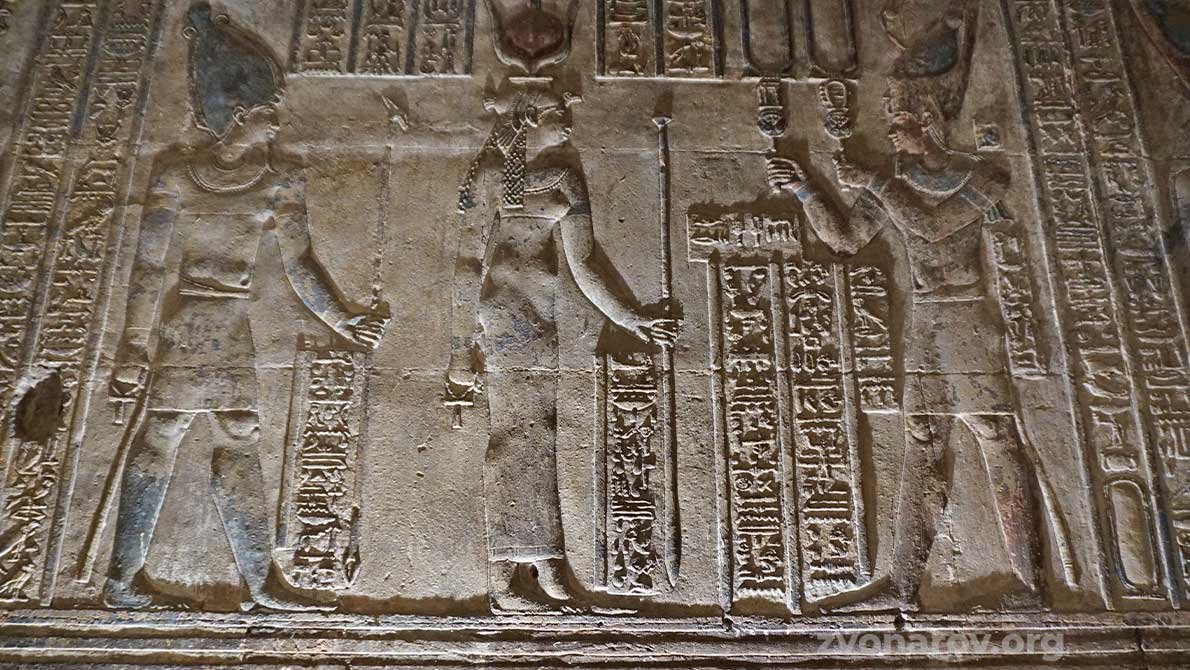
Ancient carving showing Pharaoh receiving blessing from Hathor

The symbolism of Hathor is remarkably rich. Her sacred attributes—the sistrum, the menat necklace, the mirror, the solar disk, and the cow ears—are not mere ornaments but carriers of meaning. The sistrum, a metallic rattle, created a sound believed to drive away evil spirits and attract divine energy. Its vibration symbolized the breath of life, the resonance of the universe itself. The menat represented vitality and rebirth, often worn by Hathor’s priestesses during ceremonies; it symbolized the solar rhythm and feminine essence. The mirror had a sacred role too: through it, the priestesses reflected the light of Ra back into the world. It was a metaphor for inner illumination—the ability to see and know oneself.

Interior view of columns beneath the roof of the Hathor Temple

All these symbols are carved into the walls of Dendera. They are scattered among hieroglyphs like fragments of ancient knowledge—perhaps messages about resonance, energy, and the physics of light itself. The Hathor hieroglyph, found throughout the temple, may encode not only her name but also the principle of vibrational balance that her cult expressed.

The reliefs in the Temple of Hathor are executed with extraordinary precision. Each line and curve of her face feels alive—as if sculpted from life rather than tradition. The beautiful Hathor goddess is not simply portrayed; she is manifested. In her gaze lies something timeless—an expression of peace and divine awareness. Especially fascinating are the ceiling reliefs where Hathor seems to hold up the sky, her face repeating rhythmically like a cosmic vibration, symbolizing the harmony between earth and heaven. In Egyptian art, such repetition was not decorative but philosophical: every pattern mirrored the eternal law of connection between all things through light and sound.

To explore the underground crypts of Dendera, where the most mysterious inscriptions and images of the goddess are found, follow this link — there, the hidden chambers might reveal even deeper layers of her symbolism.

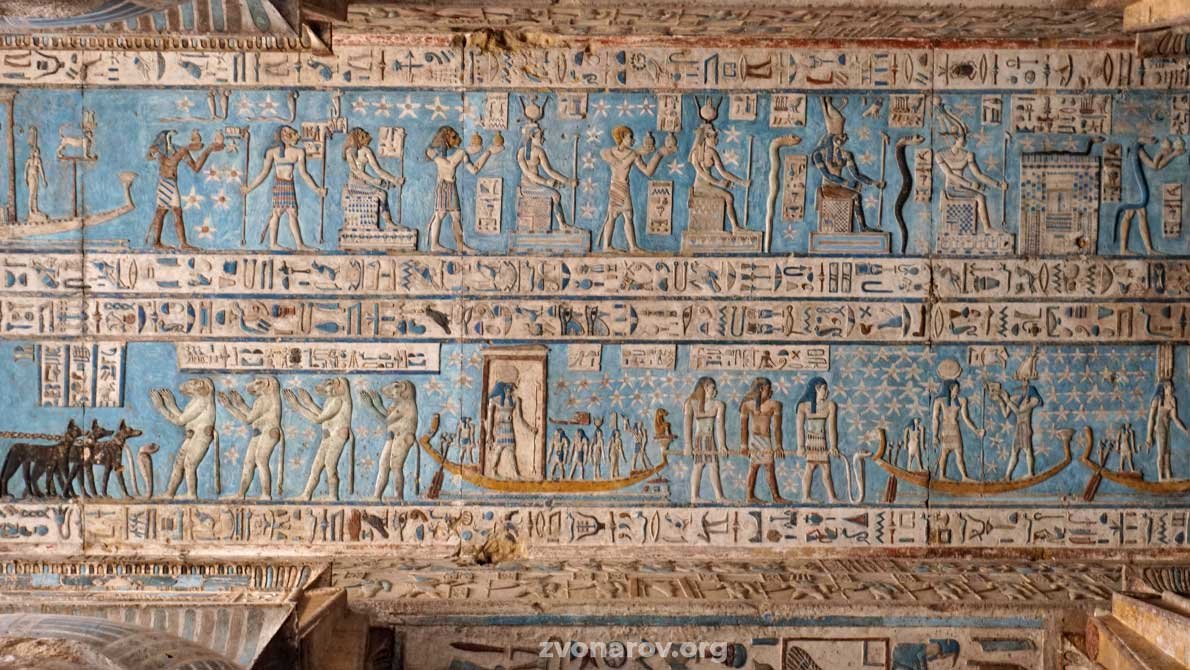
Painted ceiling with zodiac and sacred Egyptian symbols

There is also a less orthodox interpretation of who Hathor was. Some researchers in alternative history suggest that the scenes in Dendera may not depict religious rituals but rather ancient technological processes. They point to the unusual shapes of the reliefs, the smoothness of lines, and details difficult to explain in traditional iconography. According to these theories, Hathor could have been not just a goddess of love and music but a guardian of knowledge, energy, and vibration—the very forces that sustain the universe. Though speculative, this idea highlights how deeply ancient Egyptians connected divinity with science and harmony.

Decorated ceiling with sacred Egyptian motifs inside Hathor Temple

Over time, the cult of Hathor spread far beyond Egypt. In Greece and Rome, she was identified with Aphrodite and Venus, the goddesses of love and beauty. Yet Hathor of Egypt was far more profound. She represented not only sensual love but also spiritual union—the force linking human consciousness to the cosmos. Similar divine archetypes appear in Sumerian Ishtar and Hindu Saraswati—deities of wisdom, sound, and inspiration. Across civilizations, the feminine principle symbolized harmony, vibration, and creation itself. Hathor was the Egyptian god of that principle: the living energy that generates and sustains the world.

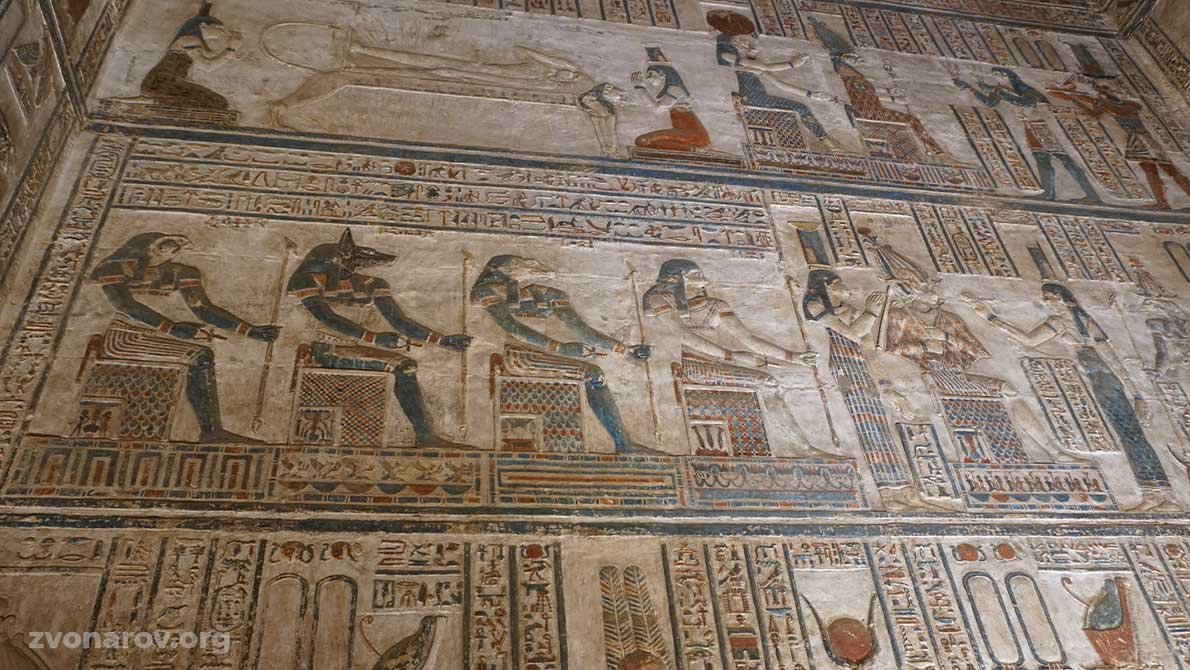
Wall relief showing ritual ceremony with hieroglyphic inscriptions

Even today, when we gaze at her serene face in Dendera, we can sense that the ancient artists were trying to capture not mere beauty but a state of being—a luminous awareness, the understanding that we are part of the cosmic whole. Hathor was often called “the Golden One,” for gold in Egypt symbolized the eternal, the incorruptible. Her “golden face” is a metaphor for the shining spirit within matter.

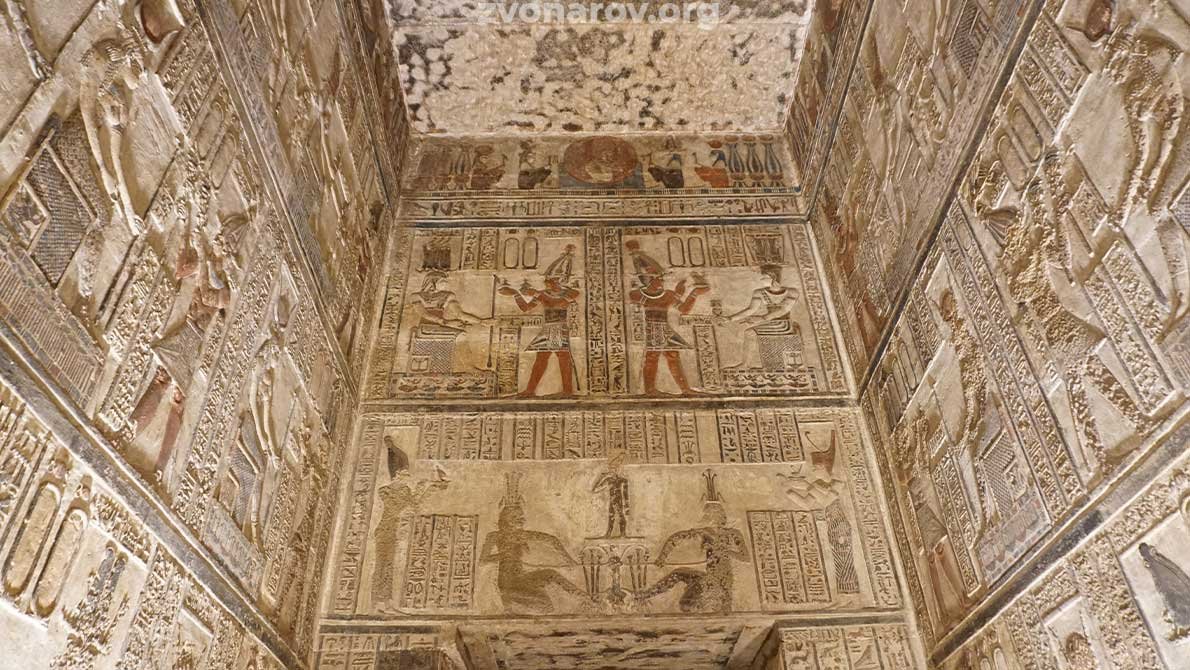
Inner stone walls of the ancient Temple of Hathor Egypt

Sistrums, mirrors, necklaces, solar disks—all these are not just accessories but part of a sacred visual language that speaks directly to those who can see and feel. Hathor in Egyptian mythology thus becomes more than an ancient figure: she is a code of civilization where religion, science, and art existed as one.

The goddess Hathor teaches us that knowledge is not merely data—it is a state of consciousness. Everything in Dendera embodies this principle: light, sound, geometry, and stone all express harmony. And perhaps, if we learn to read these symbols not as superstitions but as reflections of universal laws, we may once again hear the “Sound of Hathor”—the vibration of life itself, connecting humanity with the eternal source of light.

Who is Hathor in Egyptian mythology?
Hathor in Egyptian mythology is a major deity embodying love, music, joy, motherhood, and cosmic harmony. Often described as “the goddess of Hathor” at Dendera, she bridges the worlds of the living and the dead and welcomes souls to eternal life. As a cornerstone figure among the gods of Egypt, Hathor the Egyptian god (goddess) expresses the feminine principle that sustains creation.
What is Hathor the god of?
Commonly asked as “what is Hathor the god of,” the answer centers on love, beauty, music, dance, fertility, and maternal care. Hathor god of ancient Egypt also protects travelers and miners and is linked to joy, celebration, and the resonance of sacred sound. In temple theology, Hathor the Egyptian god radiates the life-giving light of Ra and the balancing force between spirit and matter.
What does Hathor look like?
Ancient art shows Hathor as a woman with cow’s ears and a solar disk between curving horns, or as a cow with a human face. She may also appear as a beautiful woman holding a sistrum or menat necklace. This iconic look answers “what does Hathor look like” and conveys her roles in music, fertility, and divine hearing.
What is the main Hathor symbol?
The best-known Hathor symbol is the sun disk nestled between cow horns, a sign of Ra’s light and lunar-fertility cycles. Other symbols include the sistrum (ritual rattle), the menat necklace, and the mirror used to reflect divine radiance. Together these emblems express how Hathor the Egyptian god channels harmony through light and sound.
Hathor hieroglyph: how is her name written in hieroglyphics?
“Hathor in hieroglyphics” and the shorter “Hathor hieroglyph” refer to spellings that typically include signs for “Hat” (house) and “Hor” (Horus), i.e., “House of Horus.” Variants appear across eras and temple walls, especially at Dendera. The writing underscores her role as the vessel through which Horus manifests in the world.
Where can I see the goddess of Hathor today?
The primary cult center is the Temple of Hathor at Dendera in Qena Governorate, Egypt, where her face adorns column capitals and ceilings. Reliefs, chapels, and crypts there preserve core imagery of the goddess of Hathor and her sacred instruments. For travelers, Dendera offers an immersive view of Hathor Egypt god worship in situ.
Why is she called the “beautiful Hathor goddess” and “the Golden One”?
Egyptian texts praise the beautiful Hathor goddess for radiance, joy, and the golden glow of the sun. Gold symbolized eternity and incorruptibility, mirroring her divine luminosity and benevolent presence. These titles highlight her role as a life-giving, aesthetically perfect force among the gods of Egypt.
Key facts about Hathor the Egyptian god (goddess)
Looking for “facts about Hathor the Egyptian god” or “goddess Hathor facts”? She protects love, music, fertility, and the passage to eternal life; she’s linked to Ra and sometimes to Horus as mother or consort. Identified with Aphrodite/Venus in the Greco-Roman world, she shows how Egyptian religion shaped wider Mediterranean culture.
How does Hathor relate to Isis and Sekhmet?
Tradition often presents Isis, Sekhmet, and Hathor as complementary faces of one feminine principle: nurturing, power, and joyful balance. Hathor Egyptian god expressions emphasize celebration, music, and harmony, while Isis symbolizes motherhood and Sekhmet divine might. Together they map birth, life, and transformation without fixing any single historical date.
What does “god of Egypt Hathor” mean in practice?
The phrase “god of Egypt Hathor” points to her national significance and wide cult—Dendera, Sinai mining zones, and beyond. As “Lady of Sinai,” she guarded copper and turquoise expeditions and inspired artisanship. This breadth shows how Hathor Egypt god spanned religion, art, and even metallurgy.
Hathor in Egyptian mythology and alternative interpretations
Some researchers read Dendera’s reliefs through a symbolic-technological lens, linking Hathor to vibration, resonance, and knowledge. While speculative, it complements the standard view of Hathor in Egyptian mythology as a deity of cosmic harmony. Either way, the corpus casts Hathor the Egyptian god as a guardian of balance between science, art, and spirituality.
Who is Hathor in Egyptian mythology to the wider world?
In cross-cultural terms, she was identified with Aphrodite and Venus and resonates with figures like Ishtar and Saraswati. This explains popular queries like “hathor the egyptian god” and “hathor god of ancient Egypt,” which point to her enduring global appeal. Her symbols—sistrum, menat, mirror, solar disk—still embody beauty, joy, and the music of life.
Comments

There are no comments yet.

Be the first to comment “Goddess Hathor”

Your email address will not be published. Required fields are marked *