Great Pyramid of Giza

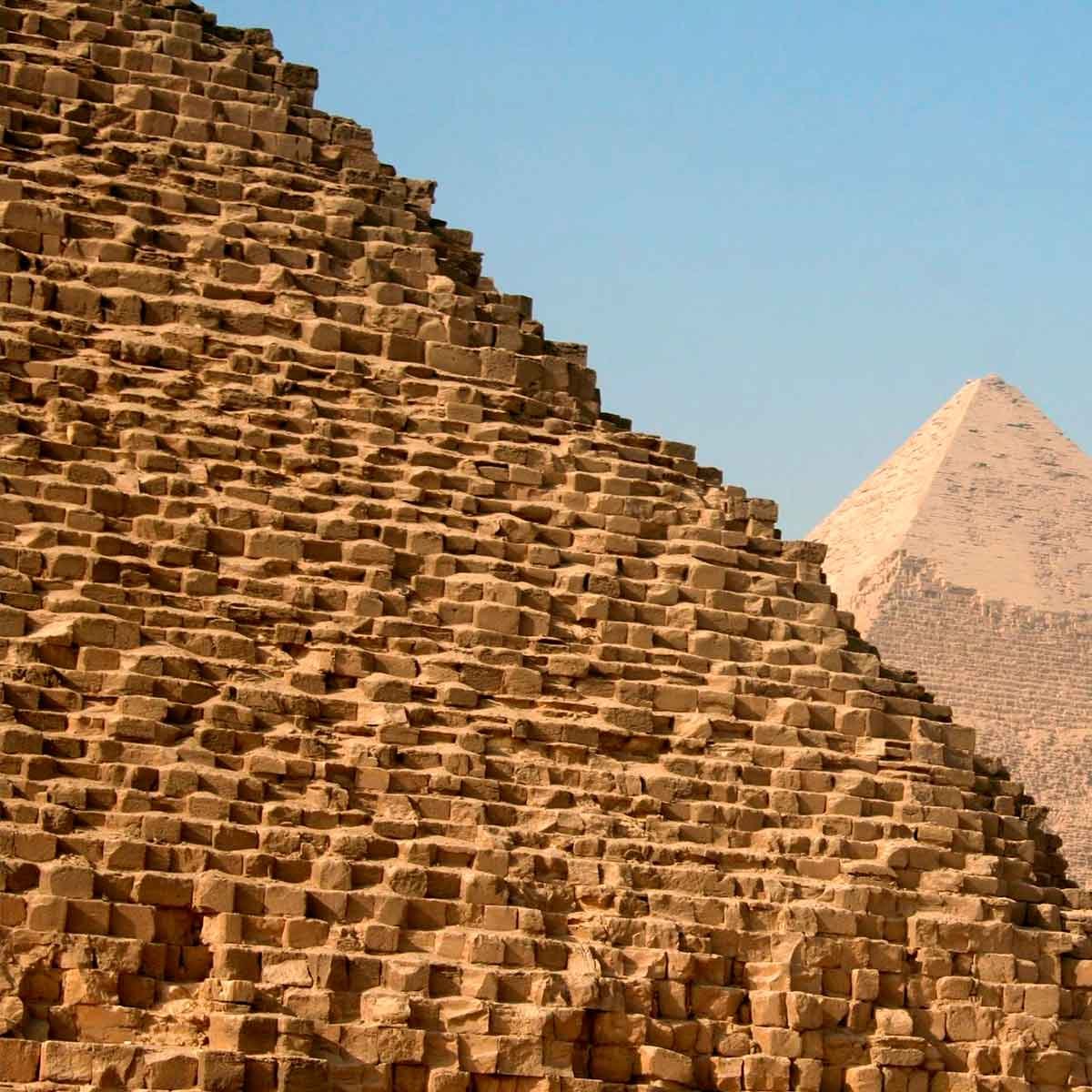
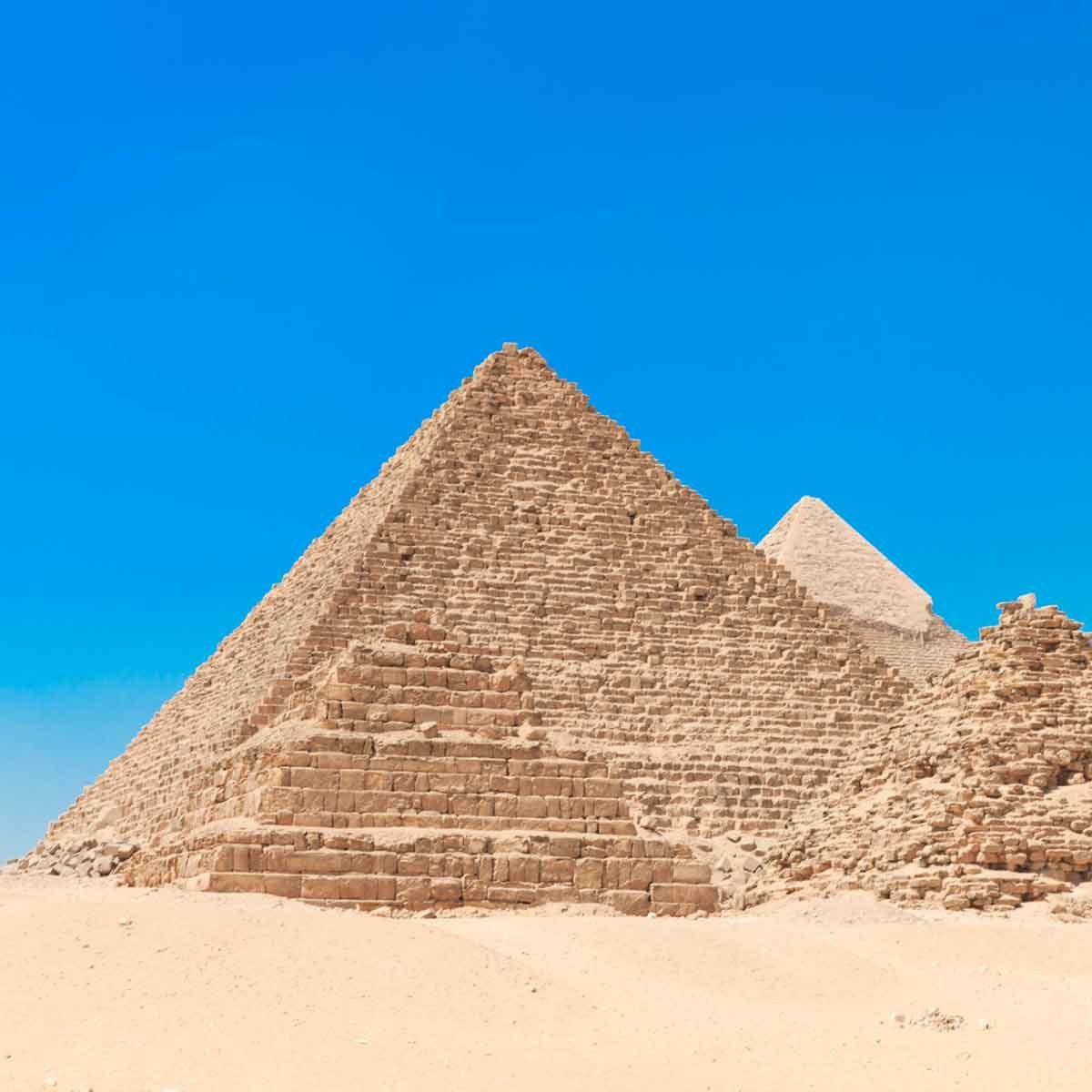
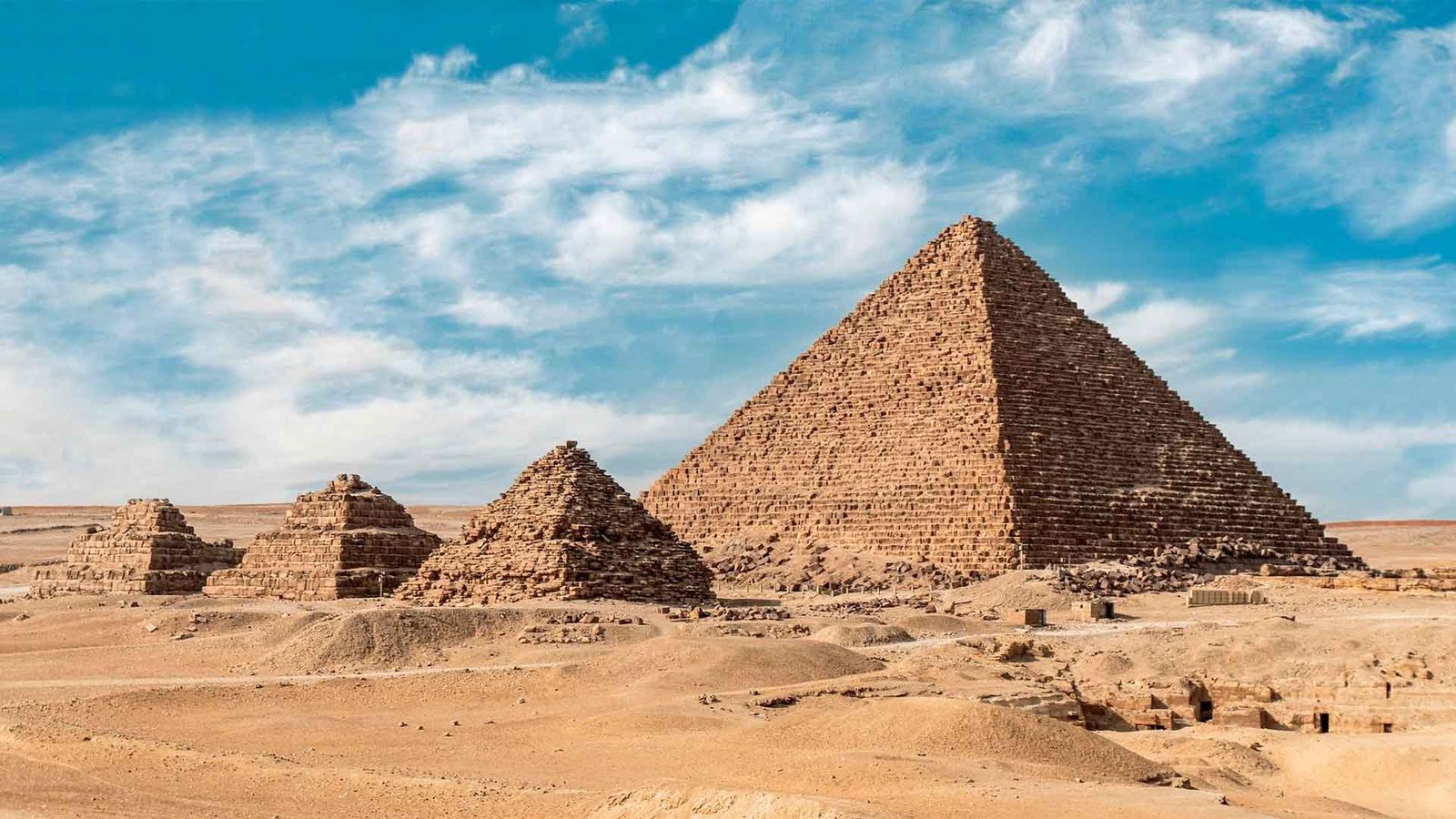
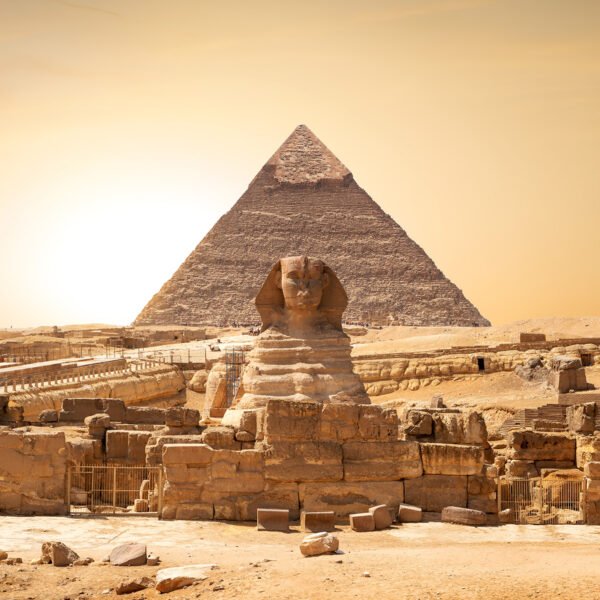
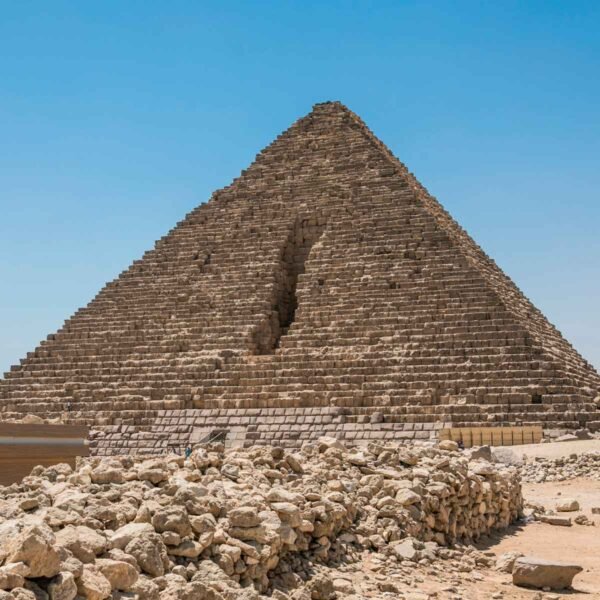
The Great Pyramid of Giza rises above the plateau near Cairo, impressing with its scale and precision. This ancient wonder, captured in countless pyramid of Giza photos, continues to spark curiosity and inspire research. Unique pyramid of Giza picture collections highlight its architectural genius and mysterious past.

Category:
Overview

The Great Pyramid of Khufu, also known as the Pyramid of Cheops, dominates the plateau of Giza near Cairo and remains one of the most extraordinary achievements of ancient Egypt. Rising originally to a height of around 146 meters, it was the tallest human-made structure on Earth for more than four millennia. Built from over two million limestone blocks, some weighing several tons, the pyramid covers a base equal to ten football fields. It is the only surviving wonder of the ancient world, and its scale continues to inspire both awe and debate.

The Official Historical View

According to the consensus of Egyptologists, the pyramid was constructed around 2560 BCE during the reign of Pharaoh Khufu of the Fourth Dynasty. It served as the king’s tomb, forming the centerpiece of a vast funerary complex that included temples, smaller pyramids, and causeways. Ancient papyri discovered in the desert describe the work of overseers who organized teams of boatmen and laborers. These texts reveal how limestone blocks were transported along canals connected to the Nile, and how vast quantities of white limestone from the quarries of Tura were used to create the pyramid’s dazzling exterior. To the Egyptians, Khufu was not only a ruler but also a divine figure whose control over the life-giving floods of the Nile legitimized his authority. The pyramid was therefore both a royal tomb and a cosmic symbol of power.
Alternative Interpretations

Beyond official archaeology, the Great Pyramid has fueled countless alternative theories. Some esoteric writers regard it not as a tomb but as an energy device, an astronomical observatory, or even a remnant of a lost civilization with knowledge surpassing that of the Egyptians. Others claim that its precise alignment with cardinal points and the dimensions encoded in its architecture conceal secret mathematical or cosmic knowledge. Popular myths also suggest connections with extraterrestrial builders, pointing to the enormous blocks and the apparent lack of advanced tools. While unsupported by material evidence, such theories remain influential in popular culture and contribute to the pyramid’s aura of mystery.

Views of Independent Researchers

Independent researchers often focus on technical anomalies and unexplained architectural features. Investigations into the so-called air shafts of the Queen’s Chamber revealed sealed stone doors deep inside, raising questions about hidden rooms or symbolic pathways. Explorers using robotic probes discovered metal fittings and unusual construction details, fueling speculation about unknown functions of these passages. Studies of the “Grotto” linked to the so-called escape shaft suggest that these structures might have been connected to water drainage, but others interpret them as remnants of unfinished or concealed projects. Some argue that the precision of the inner granite blocks, combined with the rougher outer fill, indicates construction methods that are still not fully understood.

Site under maintenance page

Archaeological Discoveries and Modern Research

Archaeological work continues to shed light on the pyramid. Excavations revealed workers’ villages, bakeries, and workshops, proving that the pyramid was not built by slaves but by organized laborers supported by a well-structured economy. Recent geological studies confirmed that a system of canals and ports brought materials directly to the Giza plateau. The discovery of dismantled wooden boats at the pyramid’s base demonstrated the sophisticated shipbuilding skills of the Egyptians, with planks literally sewn together by ropes rather than joined by nails. Scientific missions have also employed modern technology such as muon radiography, identifying large voids inside the pyramid that may represent undiscovered chambers. Visitors entering the monument today encounter narrow corridors, the Grand Gallery, and the King’s Chamber with its empty granite sarcophagus. The absence of Khufu’s mummy continues to be one of the great unsolved riddles of Egyptology.

The Great Pyramid of Khufu stands as a monument at the crossroads of fact and mystery. To scholars, it is a masterpiece of engineering built by human hands with ingenuity and organization. To alternative thinkers, it remains a timeless riddle hiding lost knowledge. Archaeological discoveries gradually reveal the methods and lives of the builders, yet the aura of enigma persists. More than four thousand years after its construction, the pyramid continues to embody both the glory of ancient Egypt and humanity’s enduring fascination with the unknown.

Where is the Great Pyramid of Giza and how do visitors plan a trip?
The great pyramid of giza stands on the Giza Plateau on the western edge of modern Cairo, close to the Nile’s desert escarpment and the Sphinx. Visitors typically reach it by taxi or guided tour from central Cairo, with early morning or late afternoon being the most comfortable times. On site, you will find ticket offices, security checks, and separate access rules for the interior passages that change with crowd control and conservation needs.
Who was Khufu and why is the monument often called the Pyramid of Khufu?
Khufu, known in Greek as Cheops, was a ruler of Egypt’s Old Kingdom whose name appears in quarry marks and inscriptions linked to the construction logistics. Because of these inscriptions and the broader mortuary complex aligned with his reign, the structure is widely referred to as the pyramid of khufu in academic and popular sources. The attribution reflects consensus from archaeology, inscriptions, and context rather than a single commemorative plaque inside the monument.
What can you see inside today and what conditions should you expect?
Interior access, when open, usually leads through tight corridors with low ceilings, steep ramps, and warm, humid air due to limited ventilation. Expect minimal lighting, uneven floors, and sections that require careful footing, so comfortable shoes and free hands are essential. Photography rules, crowd limits, and temporary closures can change without notice, so check current guidance at the entrance before committing to the climb.
Why does this monument inspire the global “pyramid of giza mystery” debate?
The precision of the casing geometry, colossal stone logistics, and astronomical alignments invite questions about planning methods and labor organization. Scholars explain these features through incremental engineering, quarry ramps, and coordinated work crews, while alternative theories propose lost techniques or symbolic knowledge traditions. The “pyramid of giza mystery” persists because the site combines measurable achievements with gaps in documentation that encourage speculation and comparative testing.
What practical tips help first-time visitors move around the plateau?
Bring water, sun protection, and cash for tickets and small purchases, as shade is limited and mobile coverage can be patchy. Distances between the Great Pyramid, the Sphinx, and smaller pyramids are walkable but exposed, so plan a loop that minimizes backtracking. Licensed guides and official signage are useful for context, while designated viewpoints near the desert edge provide the broadest panoramas of the pyramid field.
Which “pyramid of giza facts” best convey the site’s scale and engineering?
The base spans roughly four equal sides set with remarkable orthogonality, and the whole mass is aligned very close to true north, reflecting careful surveying. The core blocks vary in size and placement, while finer casing stones once formed a smooth outer mantle that magnified the monument’s visual impact. Among the most cited pyramid of giza facts are its immense volume, the precision of cornering and leveling, and the integrated complex of causeway, satellite pyramids, and valley installations.
Comments

There are no comments yet.

Be the first to comment “Great Pyramid of Giza”

Your email address will not be published. Required fields are marked *