Lion Triclinium

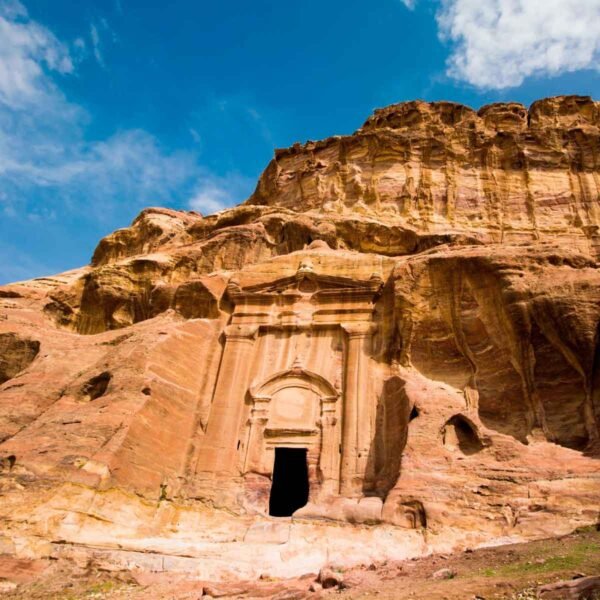
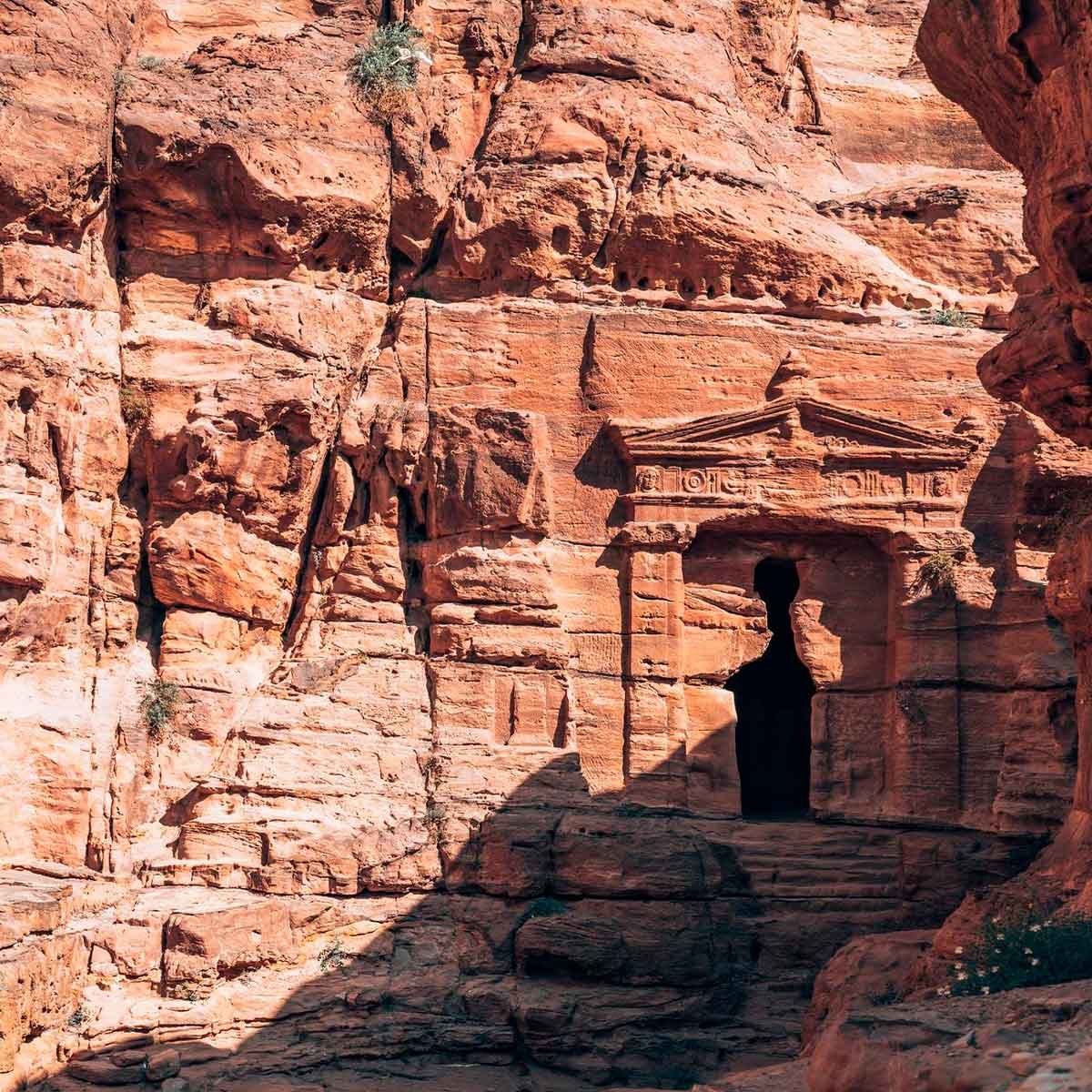
The Lion Triclinium is one of the striking monuments of Petra, Jordan, carved directly into the rock. Its facade is adorned with sculpted lions, giving the site its name. This tomb in Petra reflects both Nabataean craftsmanship and sacred symbolism. Surrounded by other temple in Jordan Petra structures, it remains a fascinating reminder of the city’s enigmatic past.

Category:
Overview

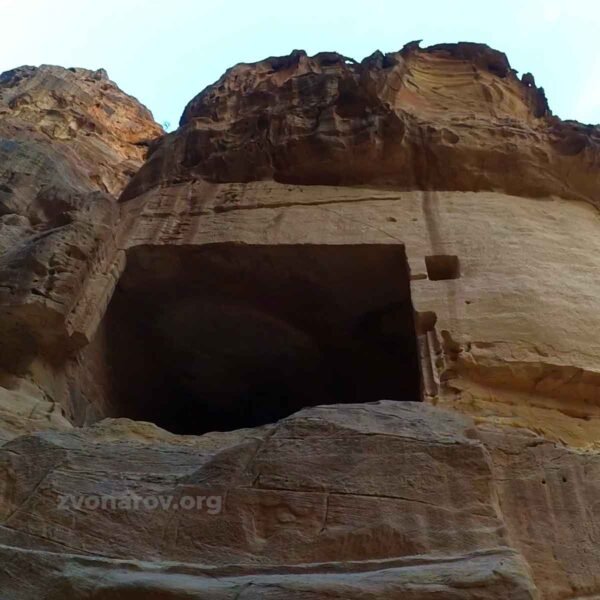
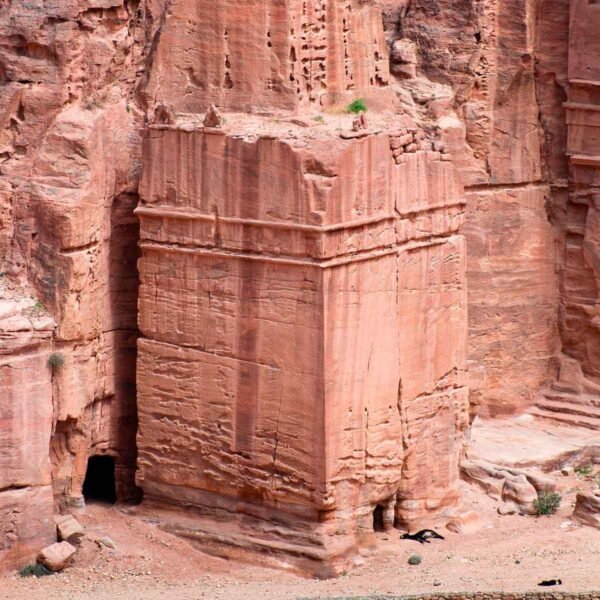
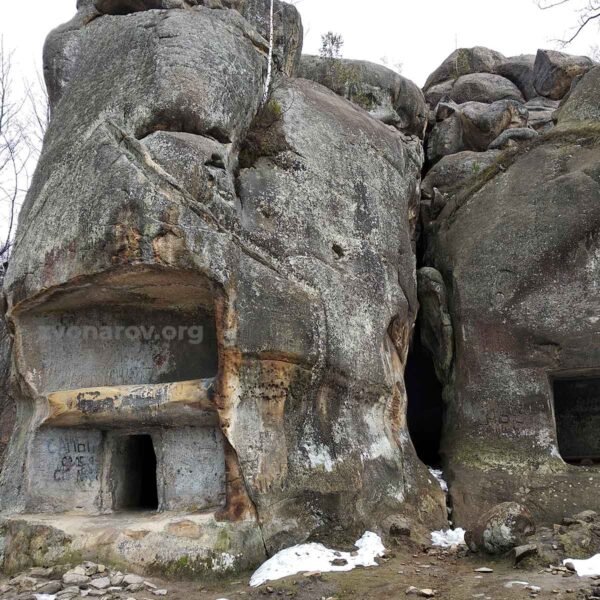
The Lion Triclinium is another Petra landmark that at first glance appears to be carved more roughly and carelessly. Yet it is once again a monolithic creation: both the facade and the interior chamber were hewn directly from the living rock. It is difficult to imagine the exact purpose of this place, as access to it is not particularly convenient. Another question concerns its current state—traces of destruction are visible everywhere, and in some areas it even seems as though the structure was never fully completed.

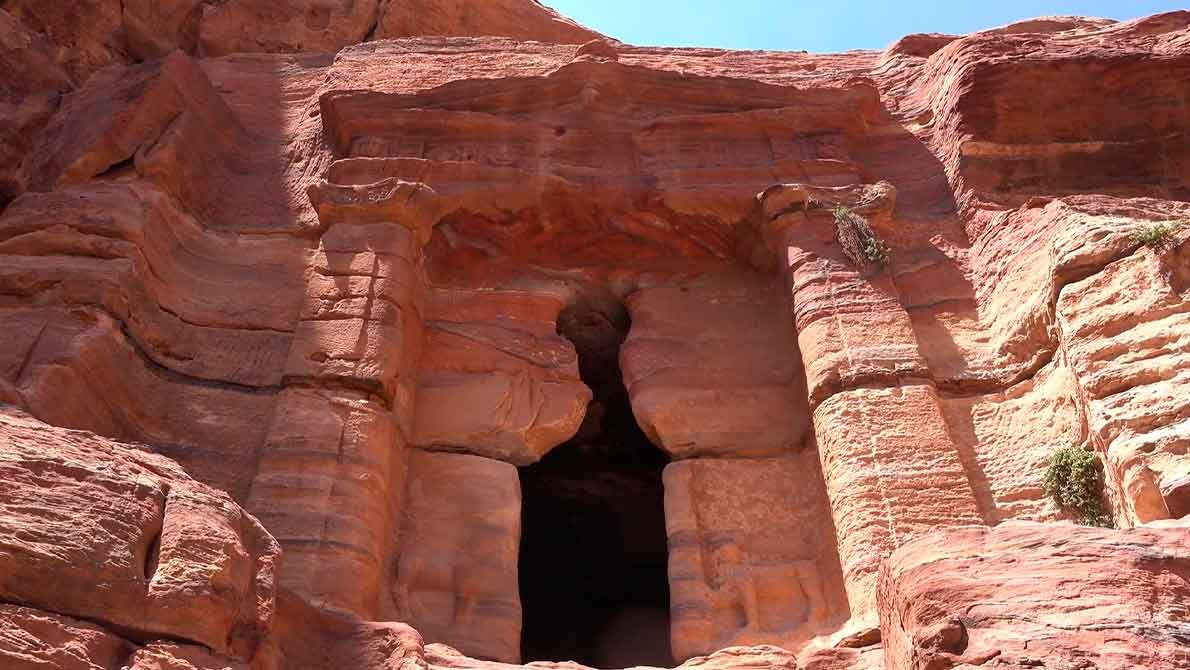
The Lion Triclinium received its name thanks to the stone reliefs of lions that once decorated the entrance. The very term "triclinium" indicates a hall intended for ritual banquets: inside, stone couches were carved where participants could sit or recline during feasts.

Lion Triclinium Petra wide view

The facade of the structure is cut straight into the rock. It is relatively austere compared to the more famous tombs of Petra, but this monument is valued by researchers precisely for its internal layout. The central doorway leads into a spacious chamber where stone benches run along the walls — the triclinium. Such rooms are believed to have been used for ritual meals in honor of the dead and may have held cultic significance.

The official version of history claims that the monument dates back to the 1st century AD and belongs to the typical cult and funerary architecture of the Nabataeans. The lions carved at the entrance symbolized protection and divine power.

An alternative interpretation questions the simple function of a tomb or banquet hall. Researchers point to the monolithic way it was carved and to the strange acoustics inside the chamber. Some suggest that the Lion Triclinium might have served as a ritual “energy” chamber or a place for unknown ceremonies connected with acoustics and vibration.
What is this rock-cut monument and why is it important in Petra?
It is a Nabataean ceremonial dining chamber (a triclinium) carved into the cliff, used for ritual banquets connected with ancestor or deity veneration. Unlike burial chambers, its function was social-ritual: benches along three sides hosted commemorative feasts near nearby necropolis areas. The monument encapsulates Petra’s blend of local and Hellenistic motifs, making it a concise showcase of Nabataean religious life and craftsmanship.
Where exactly is it and how do visitors reach it?
It sits off a side gorge on the ascent toward the Monastery (Ad-Deir) trail, reached by a short detour up a rocky channel. Wayfinding typically involves following minor waymarks and stepping over boulders; sturdy shoes and care on uneven surfaces are advisable. Plan extra time if you are continuing to Ad-Deir, and carry water and sun protection—shade can be limited around midday.
What details should I look for on the facade and inside?
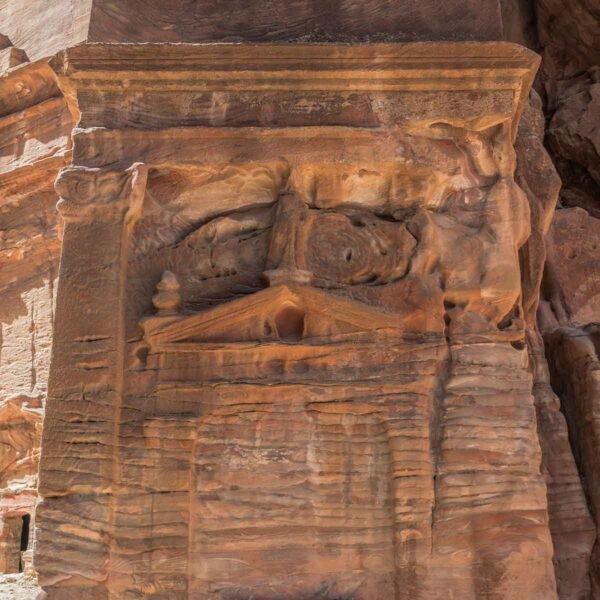
At the doorway, look for the eroded reliefs of two lions flanking the entrance jambs—an emblematic feature that inspired the site’s modern name. The facade bears a frieze with triglyphs and metopes; at the ends you can spot carved heads often identified as Medusa masks, a classical decorative motif reinterpreted locally. Inside, three stone benches form the triclinium layout, and a baetyl carved in a niche near the entrance indicates a cultic focus within the chamber.
Is it actually a tomb?
No—there are no burial loculi inside; it functions as a dining hall associated with nearby burial grounds rather than as a grave itself. Triclinia like this were used for commemorative banquets, a practice well attested across Petra’s canyons. The placement beside necropolis terraces reinforces its role as a venue for remembrance rather than interment.
How common are triclinia in Petra and what do they tell us?
Petra preserves many triclinia—dozens, in fact—ranging from small chambers to large halls, often in dialogue with tomb facades opposite or nearby. Their architecture shows a synthesis of Nabataean ritual needs and classical decorative language, bridging local tradition with broader Mediterranean styles. Together they reveal the social side of mortuary practice: community feasting, memory, and status expressed through rock-cut design.
Which temple in jordan petra should I not miss, and how does it relate to this site?
The freestanding Qasr al-Bint complex is the essential temple in jordan petra for most visitors; it anchors the sacred and civic core of the valley. While Qasr al-Bint represents a major public cult center, triclinia like this chamber illustrate more intimate, feast-focused ritual close to burial zones. Visiting both offers a balanced picture of Petra’s religious landscape—from monumental temple worship to commemorative banqueting spaces hewn into the cliffs.
Comments

There are no comments yet.

Be the first to comment “Lion Triclinium”

Your email address will not be published. Required fields are marked *