Where is Siq al-Barid located and how far is it from Wadi Musa?
Siq al-Barid lies in the Ma'an Governorate of Jordan, in the hills north of Wadi Musa. The access road branches off the ring road around Petra and ends at a small parking area. Driving time from the Petra Visitor Center is typically about 15 minutes, and the distance is roughly 8–9 km.
Is there an entrance fee and do I need the Jordan Pass or a Petra ticket?
Entry to the Siq al-Barid canyon area itself is free and not gated. However, if you plan to continue via the so-called “back door” route toward Petra’s Monastery (Ad Deir), there is a checkpoint on the way. At that point you must show a valid Petra ticket or Jordan Pass to proceed beyond the Siq al-Barid area.
Can I hike from Siq al-Barid to the Monastery using the back-door trail?
Yes. From the parking area you can arrange a short 4x4 shuttle to the trailhead or hike the full route across the plateau. The path is straightforward for experienced hikers, but signage is limited and conditions are exposed, so bring water, sun protection, and a map or GPS. Expect checks for valid Petra access before reaching the Monastery.
What are the highlights inside Siq al-Barid?
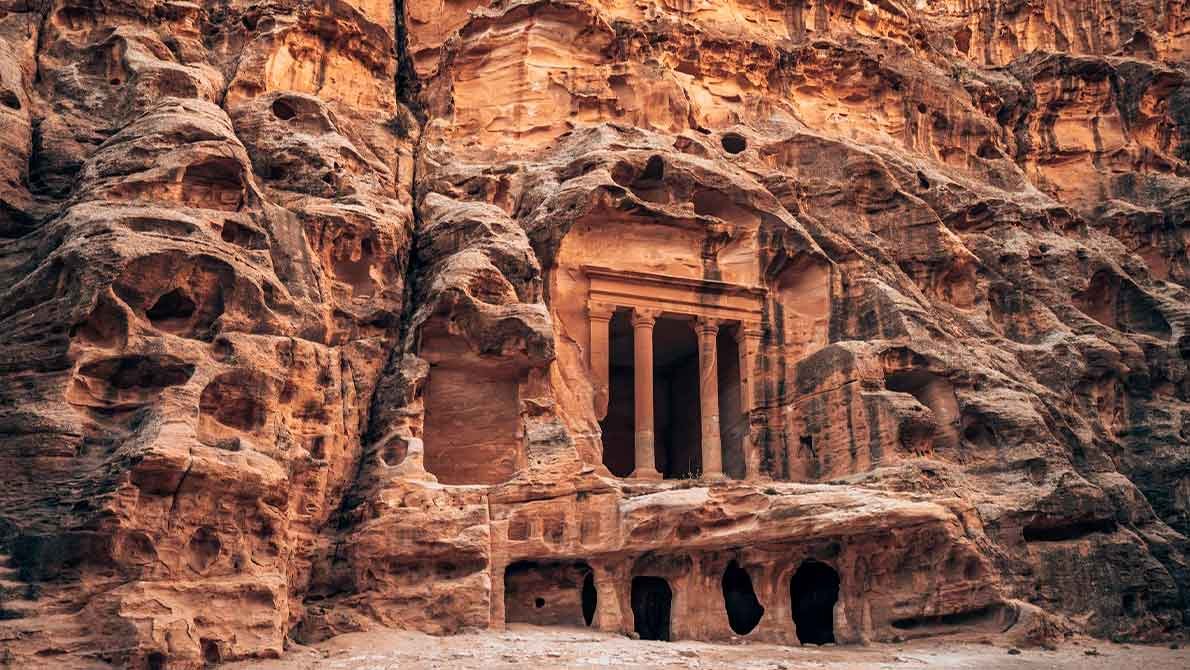
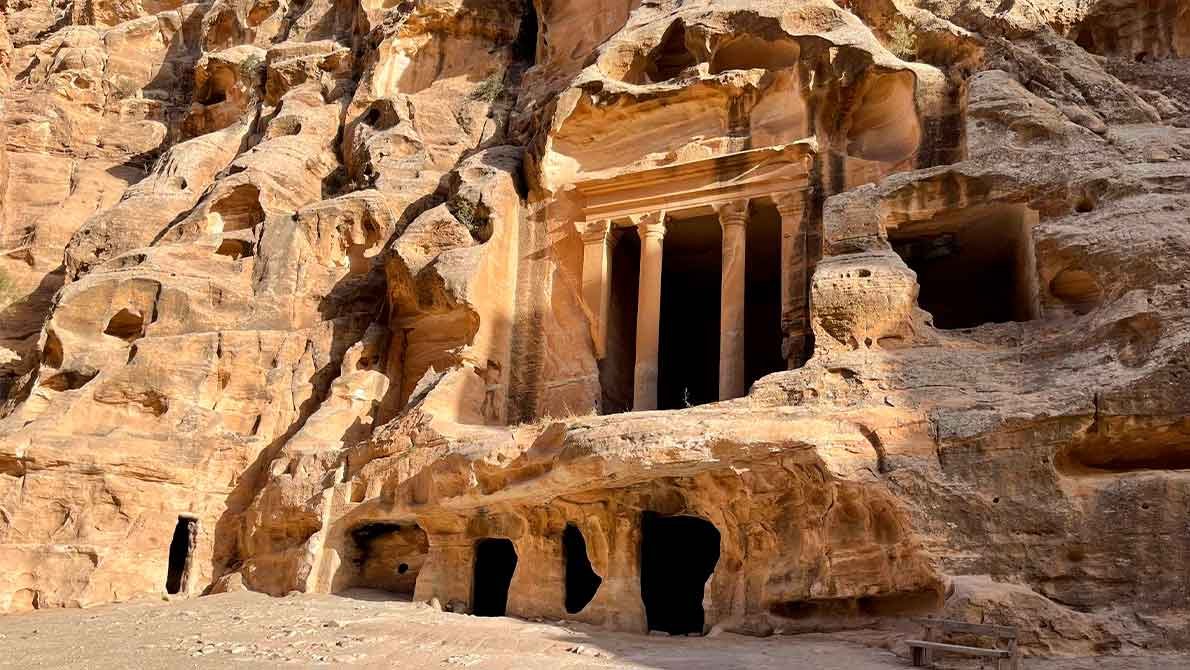
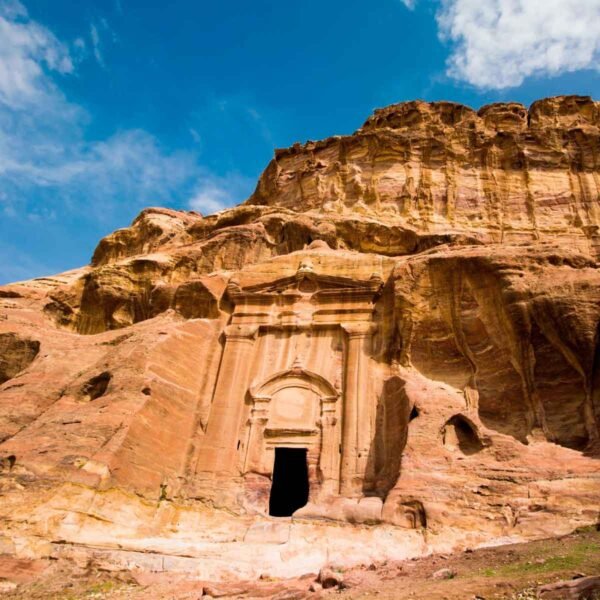
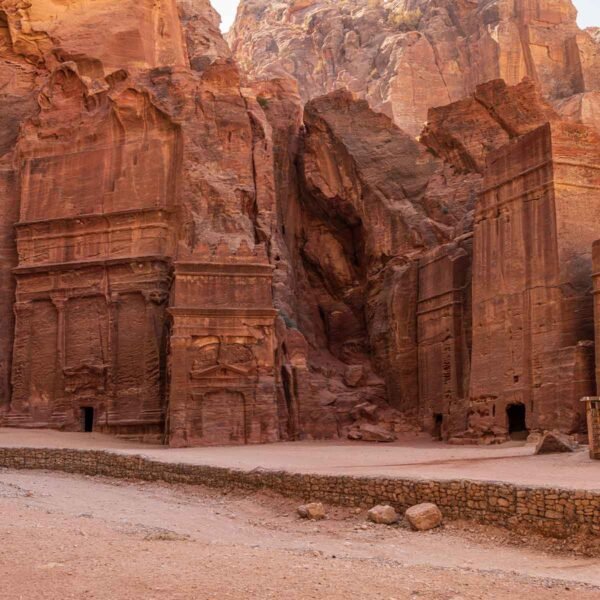
The narrow sandstone gorge shelters Nabataean façades, tricliniums carved for gatherings, stairways and rock-cut water channels leading to cisterns. Look for the Painted House with rare interior fresco fragments featuring vines and figures. The canyon’s orientation keeps it cool and shaded for much of the day.
What is Al Beidha and why is it important?
Al Beidha (Bayda) is a nearby Neolithic village a short walk from the canyon entrance. It is among the earliest settled communities known in the region and is part of the Petra UNESCO World Heritage inscription. The site helps visitors understand the shift from mobile lifeways to farming and animal domestication.
When is the best time to visit and how crowded does it get?
Mornings and late afternoons offer softer light and fewer tour groups, with cooler temperatures thanks to the canyon’s shade. Compared with Petra’s main Siq and Treasury, foot traffic is typically lighter here. Even in peak months, you can often explore more quietly and take time with the rock-cut details.
Are there facilities, parking, and accessibility considerations?
There is a small unpaved parking area by the access road and simple Bedouin stalls for tea and snacks in season. Surfaces are uneven, sandy, and rocky, and the narrow passageways and steps are not wheelchair-friendly. Wear sturdy footwear, carry water, and expect limited shade beyond the main canyon.







There are no comments yet.