Obelisk Tomb Petra

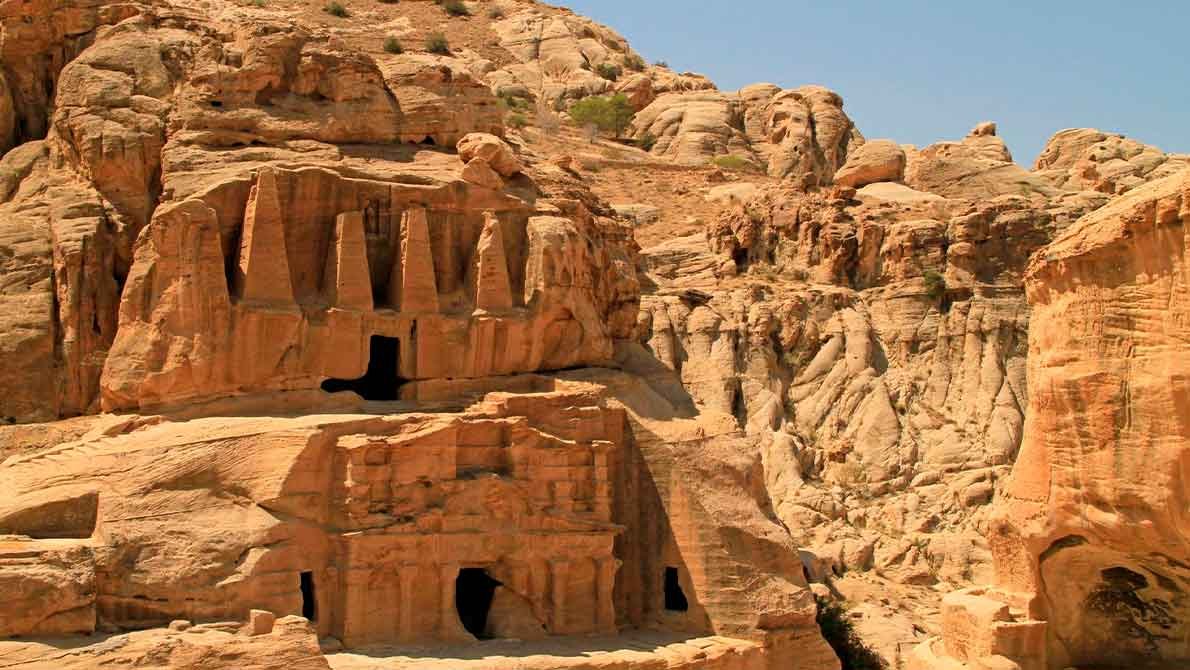
The Obelisk Tomb Petra stands at the entrance to the ancient city, carved directly into the sandstone cliffs. Its unusual façade blends four obelisks with a chamber below, creating a striking image of Nabataean architecture. Located near Bab al Siq, it remains one of the most remarkable Petra tombs Jordan that still fascinates visitors. The mix of monumental style and unknown origins adds a sense of mystery to its presence.
Category:
Overview

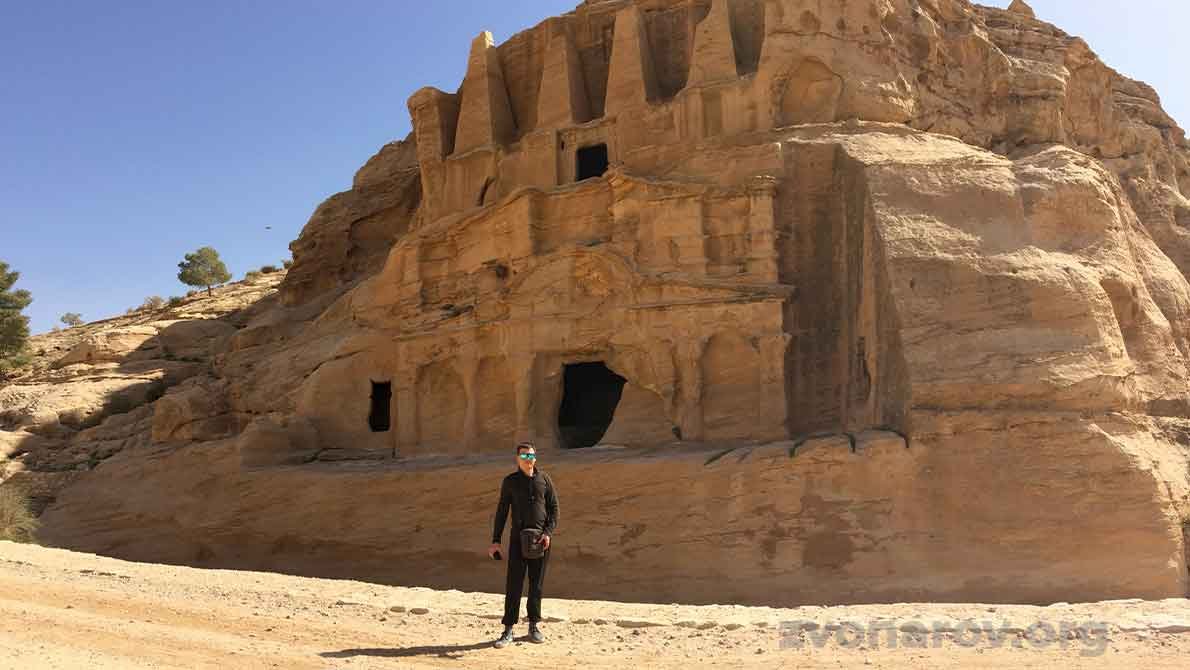
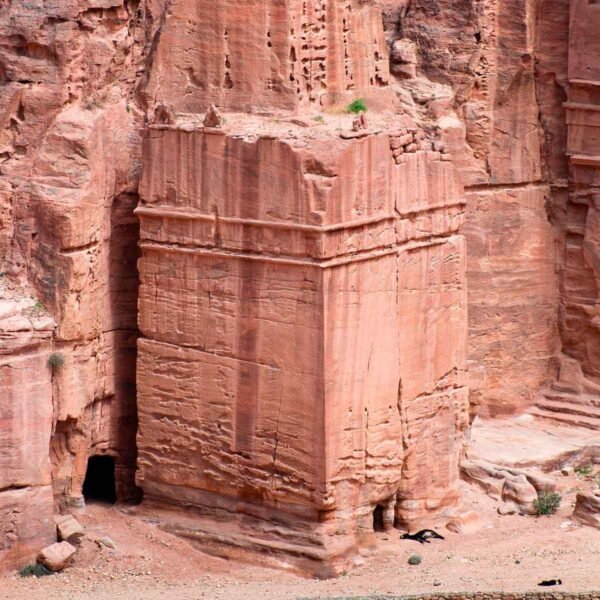
The Obelisk Tomb is not just a burial site at the entrance to Petra, but something more mysterious. The official version claims that the four obelisks symbolize the souls of the deceased, yet when one examines the technique itself, more questions than answers arise. These pointed shapes are carved into solid rock with such precision and symmetry that it is difficult to imagine the use of primitive tools. Straight lines, identical angles of the facets, and preserved geometry — all this requires not only skill, but also a technology that could work with the rock mass as if it were a single block.

Side view Petra Obelisk Tomb

In the lower part, we see a rectangular opening, perfectly outlined in stone. The thickness of the walls and the accuracy of the cuts create the impression that the rock was not simply hewn, but rather separated from a solid mass and carefully removed. And if the obelisks can still be explained by symbolism, the underground chamber with three-sided stone benches (a triclinium) already suggests a multifunctional structure. It does not resemble only a tomb. It is more like a hall where gatherings, banquets, or rituals were held, connected not so much with death as with the preservation of a particular tradition.

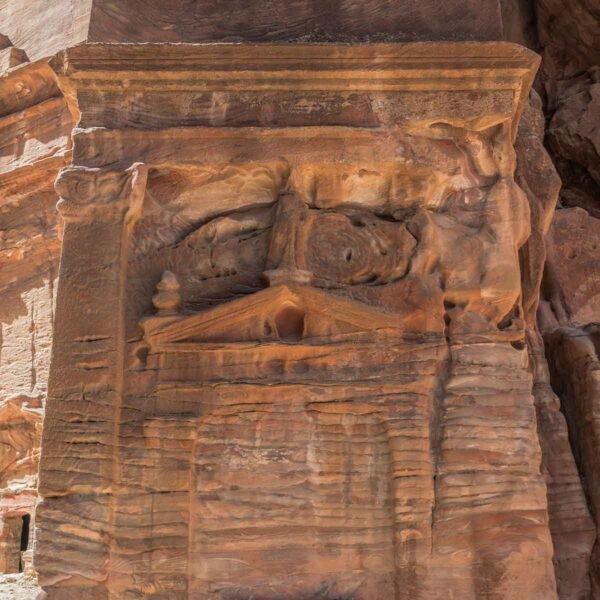
Petra Obelisk Tomb facade

It is also hard not to notice the traces of damage. In places, the stone seems to have melted, its surface losing sharpness, as if it had once become soft, subjected to the influence of high temperature or energy, and then solidified again. As a result, today we see not only the strict forms of the obelisks but also strange flowing lines, as though capturing the moment of a catastrophe.

Wide view Petra Obelisk Tomb

Photo © Zvonarov

In this sense, the Obelisk Tomb appears more like a part of a larger system, where symbolism and technique intertwine. Perhaps it was an element of a much broader architectural project, the purpose of which we do not fully understand. Whether this is a tomb in the strict sense, or a fragment of a lost complex with another function, remains an open question.

What makes the Petra tombs in Jordan unique?
The Petra tombs in Jordan stand out because of their monumental facades carved directly into the sandstone cliffs. They reflect a blend of Nabataean creativity with Hellenistic and Roman influences. Each tomb is different in scale and detail, creating a fascinating open-air necropolis that attracts both researchers and travelers worldwide.
What is the Bab al Siq monument and why is it important?
Bab al Siq is a striking façade near the entrance of Petra, combining the Obelisk Tomb with a triclinium underneath. It is important because it demonstrates the dual function of Nabataean architecture, blending funerary and ritual elements. This site introduces visitors to the grandeur of Petra before they even enter the main canyon.
How can visitors reach the Obelisk Tomb and Bab al Siq Triclinium?
The Obelisk Tomb and Bab al Siq are located at the beginning of the Siq, the main gorge leading into Petra. Travelers will encounter this monument shortly after passing the modern entrance. Its strategic position made it a symbolic gateway to the sacred landscape of the Nabataeans.
What architectural features are visible on the Obelisk Tomb?
The façade of the Obelisk Tomb is easily recognized by four carved obelisks that rise above a central niche. Beneath it lies the Bab al Siq Triclinium, a chamber likely used for ritual banquets. This combination of tomb and ceremonial hall reflects the Nabataeans’ complex spiritual practices and respect for their dead.
Why do researchers debate the origins of Petra’s tombs?
Researchers debate the origins of Petra’s tombs because the Nabataeans left very few written records. Some scholars believe the forms were heavily inspired by Egyptian and Roman traditions, while others argue they reflect a unique cultural synthesis. This ongoing discussion makes Petra a key site for alternative interpretations of ancient history.
Is Bab al Siq connected to local Nabataean rituals?
Yes, many archaeologists suggest that Bab al Siq was closely connected to ritual practices. The triclinium carved beneath the tomb indicates it was used for ceremonial feasts, a tradition among the Nabataeans to honor the dead. This link between architecture and ritual provides valuable insight into the cultural identity of Petra’s inhabitants.
Comments

There are no comments yet.

Be the first to comment “Obelisk Tomb Petra”

Your email address will not be published. Required fields are marked *