Petra Caves

Petra Caves in Jordan represent a unique blend of architecture and mystery, with rock-carved Petra chambers and Petra rooms that served diverse purposes. Their preserved facades and intricate interiors make them one of the most fascinating elements of the Nabataean city. Visitors often see them not just as shelters, but as silent witnesses of forgotten stories carved into stone.
Category:
Overview

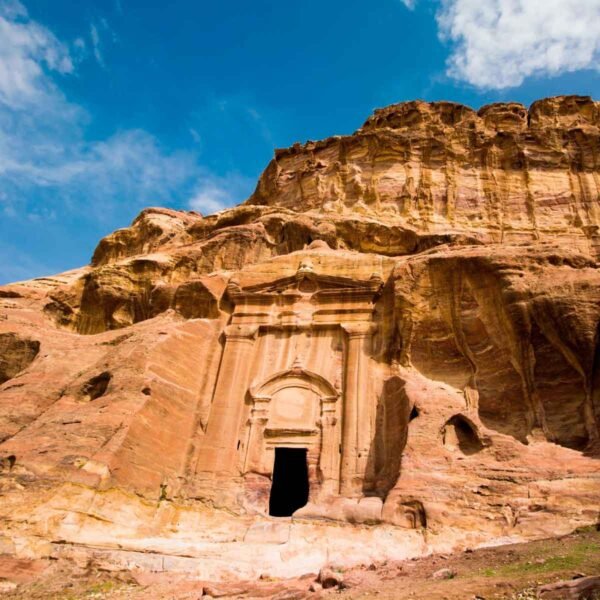
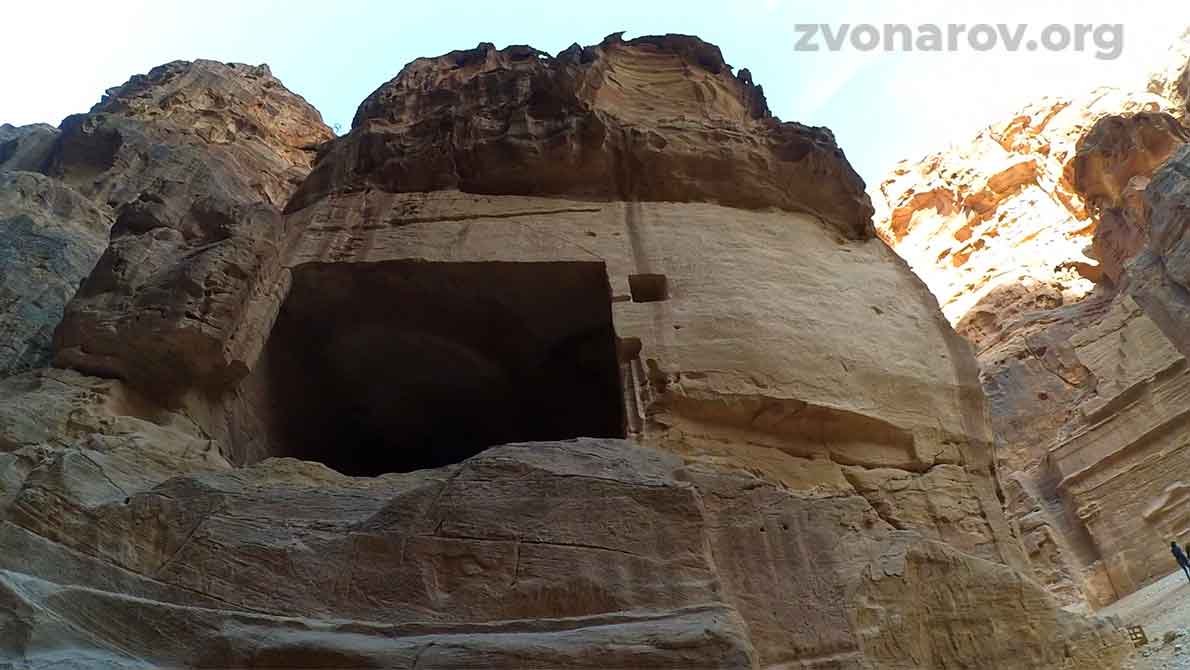
Hello again, dear reader. In this publication I want to share with you a topic related to the inner chambers of Petra. In the very first photographs I placed an object located next to the Great Treasury, immediately to its right. This object made a strong impression on me, perhaps because it was the first such structure I saw within the complex.

Stone tomb carved into Petra’s cliffs

Photo © Zvonarov

What amazes me is not only the huge cube carved inside the rock, but also the fact that the surface of the rock itself — one could say its floor — was carefully leveled. For what purpose was this done? Clearly for some reason. The steps we see below were carved in later times. From their appearance it is clear that they were made by people who lived here afterwards, in order to use the inner chamber for their own needs. But the chamber itself was certainly not created by them.

Stairway leading into Petra chamber

Photo © Zvonarov

The question arises: why was it left unfinished? In the second photo we can clearly see a technical recess on the right side. It looks like ventilation, although it could have been intended for lighting or for the installation of some decorative element. Perhaps it could have served any of these purposes. But overall it seems that this part was either left incomplete or was destroyed.

In addition, there is the impression that a large fragment is missing here, one that was supposed to close the entrance to this inner chamber. Inside, by the way, there are no windows, which greatly limits its possible use by ordinary inhabitants of antiquity, whether Nabataeans or Romans. After all, there was no need to carve a chamber of such height in the rock and also level the rock itself.

Rock-cut burial with multiple chambers

Photo © Zvonarov

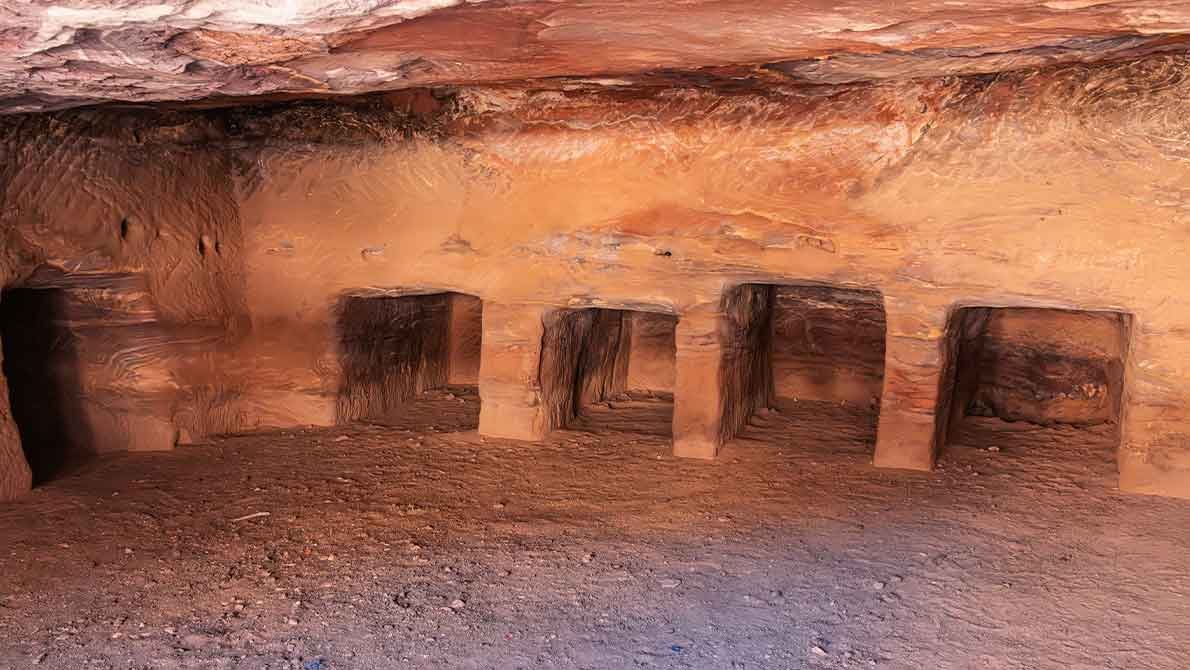
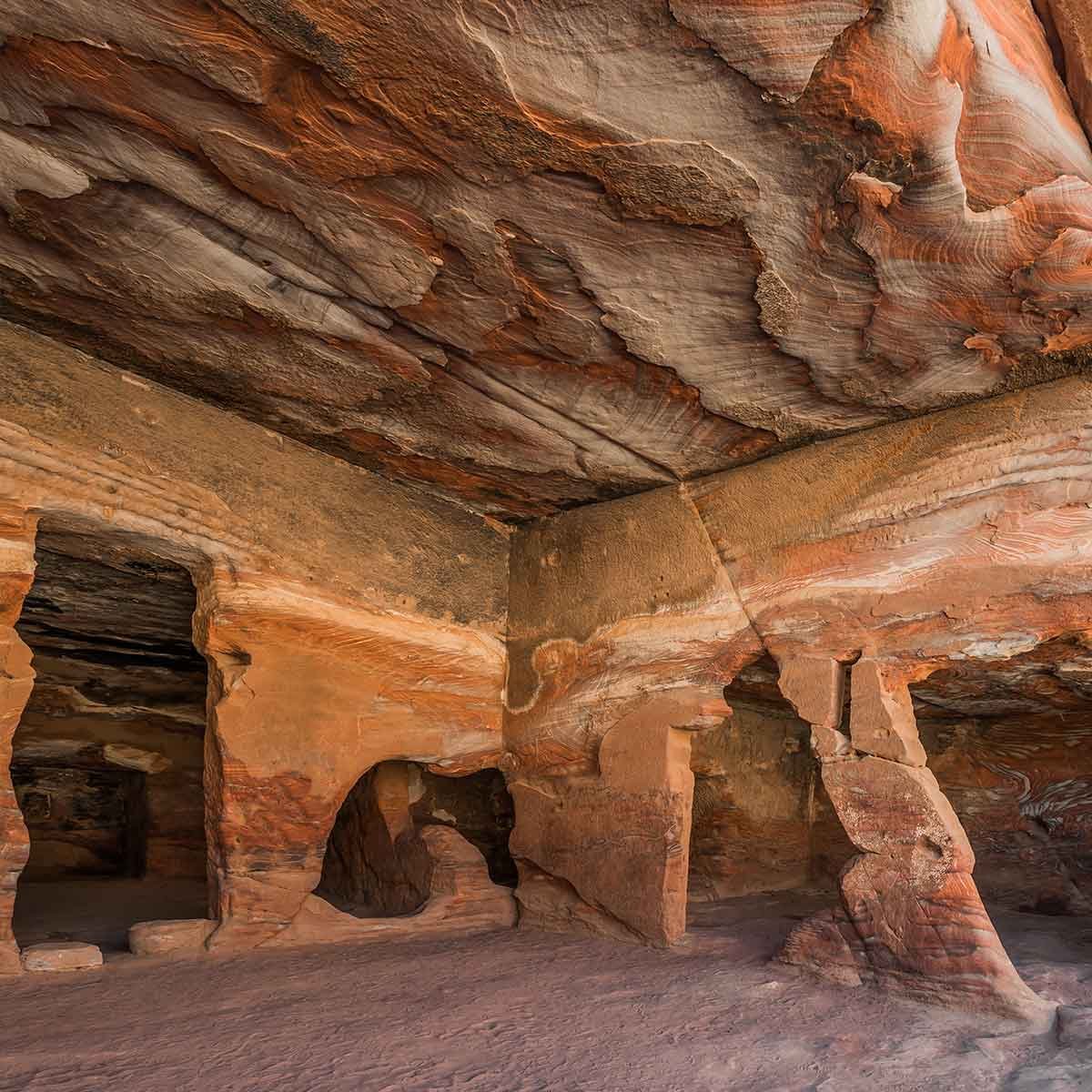
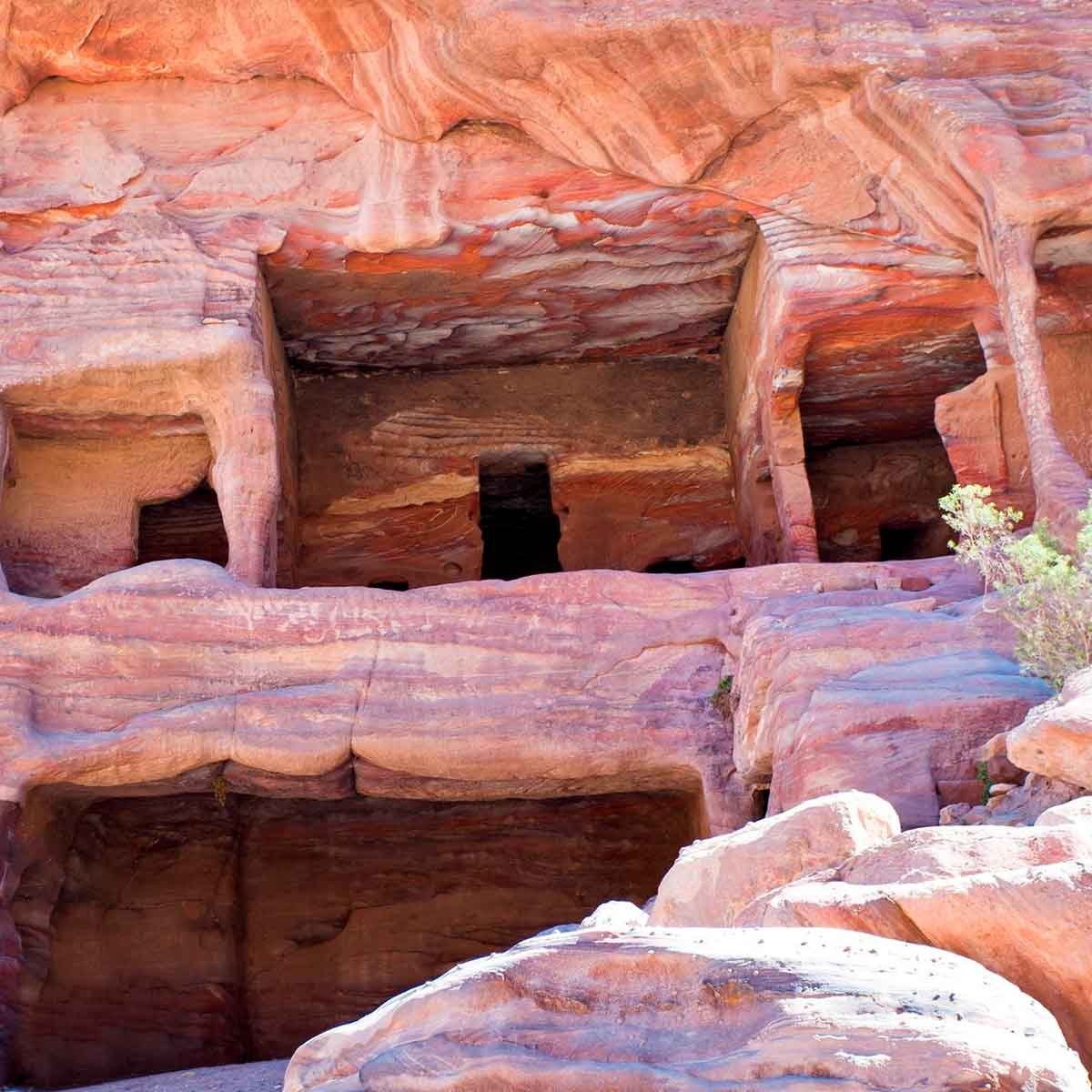
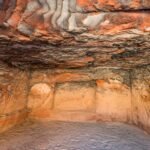
Next, I want to show photographs of other inner chambers that can be found in this amazing complex. Inside them we see rather strange niches. It is difficult to imagine how exactly they might have been used. At the same time, from a technical point of view, it is clear that the chamber was planned in advance and has a complex structure. The arrangement of some elements is difficult to explain. It is especially difficult to understand the absence of windows or ventilation. Living in such a chamber would have been extremely inconvenient.

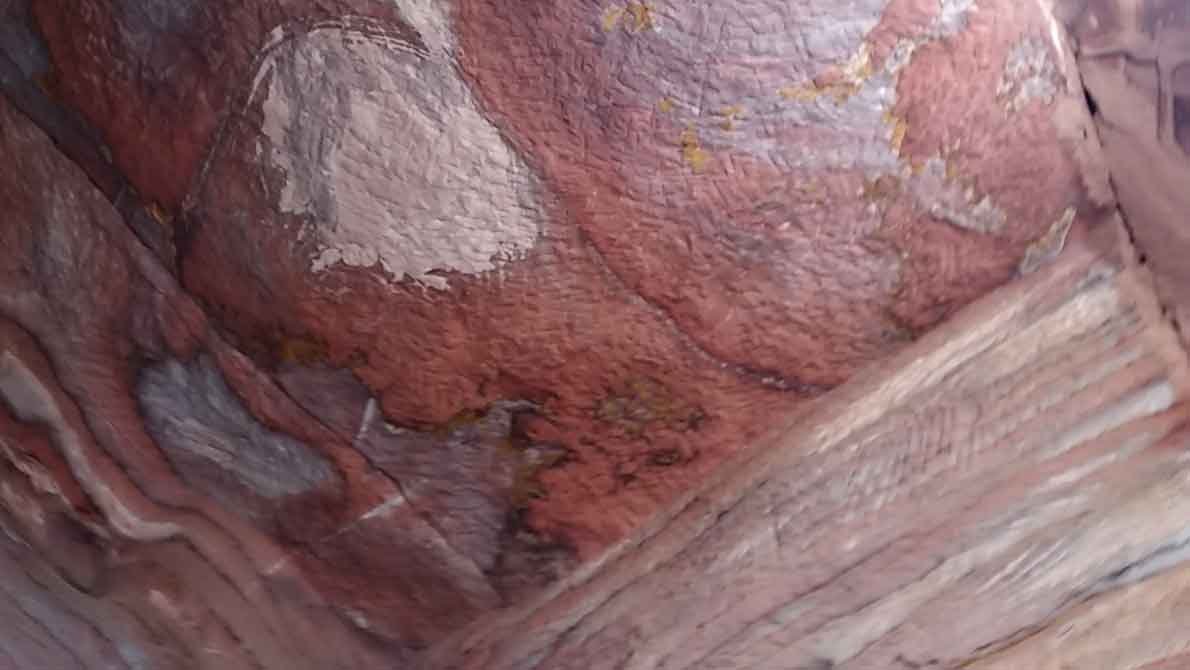
Multicolored sandstone patterns inside Petra

Photo © Zvonarov

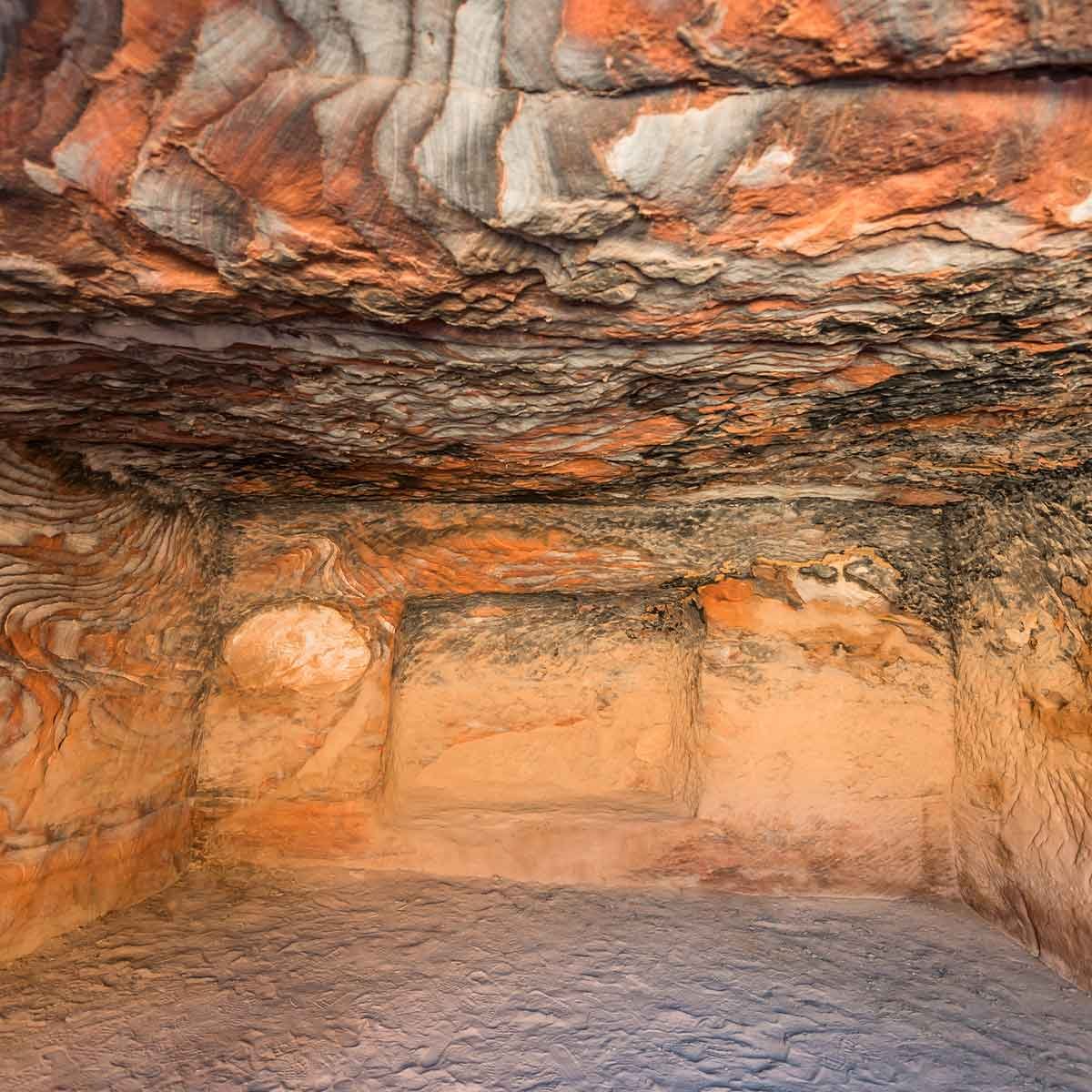
In other photographs, taken during my very first visit to Petra with an old phone, the image quality is poor. But precisely in them one can notice a very interesting element. These are the joint lines of the blocks on the ceiling.

Layered sandstone formations inside Petra

Photo © Zvonarov

They were made without any mortar, yet fitted together with incredible precision. This means that the ancient builders were not only able to shape the rock according to their design, but also to insert megalithic blocks there, perfectly matched and installed without the use of binding material. For what purpose all this was done remains one of Petra’s greatest mysteries.

Rock-cut facade with three chambers in Petra
Where is Petra located?
Petra is located in southern Jordan, near the town of Wadi Musa. It lies in a valley surrounded by sandstone mountains and is famous for its carved rock facades, tombs and temples. The site is accessible through the narrow Siq canyon, which creates a dramatic entrance for visitors.
What are the Petra chambers used for?
The Petra chambers carved into the rock served different purposes depending on their size and design. Some are thought to have been tombs for Nabataean elites, while others may have been ritual spaces or meeting places. Their function still sparks debates among historians, adding mystery to Petra’s architecture.
What are the Petra rooms inside the monuments?
Many carved monuments in Petra contain rooms with flat walls and benches, which could have been used for gatherings, meals or funerary rites. The Petra rooms vary from small simple spaces to multi-chambered complexes, showing the advanced rock-cutting skills of the builders. They remain an impressive example of ancient interior planning.
Why is Petra called the Rose City?
Petra is often called the Rose City because of the unique pink and red shades of its sandstone cliffs. The light changes throughout the day, creating different tones on the rock facades. This natural play of color makes Petra especially picturesque at sunrise and sunset.
How do visitors explore Petra today?
Visitors usually start their journey through the Siq, a narrow canyon leading to the famous Treasury facade. From there, they can explore temples, tombs, caves and hiking trails leading to the Monastery and other high viewpoints. Exploring Petra often requires a full day or more, as the site covers a vast area.
Is Petra considered one of the wonders of the world?
Yes, Petra is recognized as one of the New Seven Wonders of the World. Its combination of natural landscape and monumental rock-cut architecture makes it unique in global history. This recognition highlights its importance as a cultural treasure and a major tourist destination.
Comments

There are no comments yet.

Be the first to comment “Petra Caves”

Your email address will not be published. Required fields are marked *