Petra Temple Jordan

The Monastery Petra, or Ad Deir Petra, stands high in the mountains of Jordan as one of the largest rock-cut temples. Its monumental facade carved into sandstone cliffs astonishes with perfect proportions. Inside, hidden chambers add intrigue to its scale and design. The purpose of this temple remains an unsolved enigma, making it one of Petra’s most captivating landmarks.
Category:
Overview

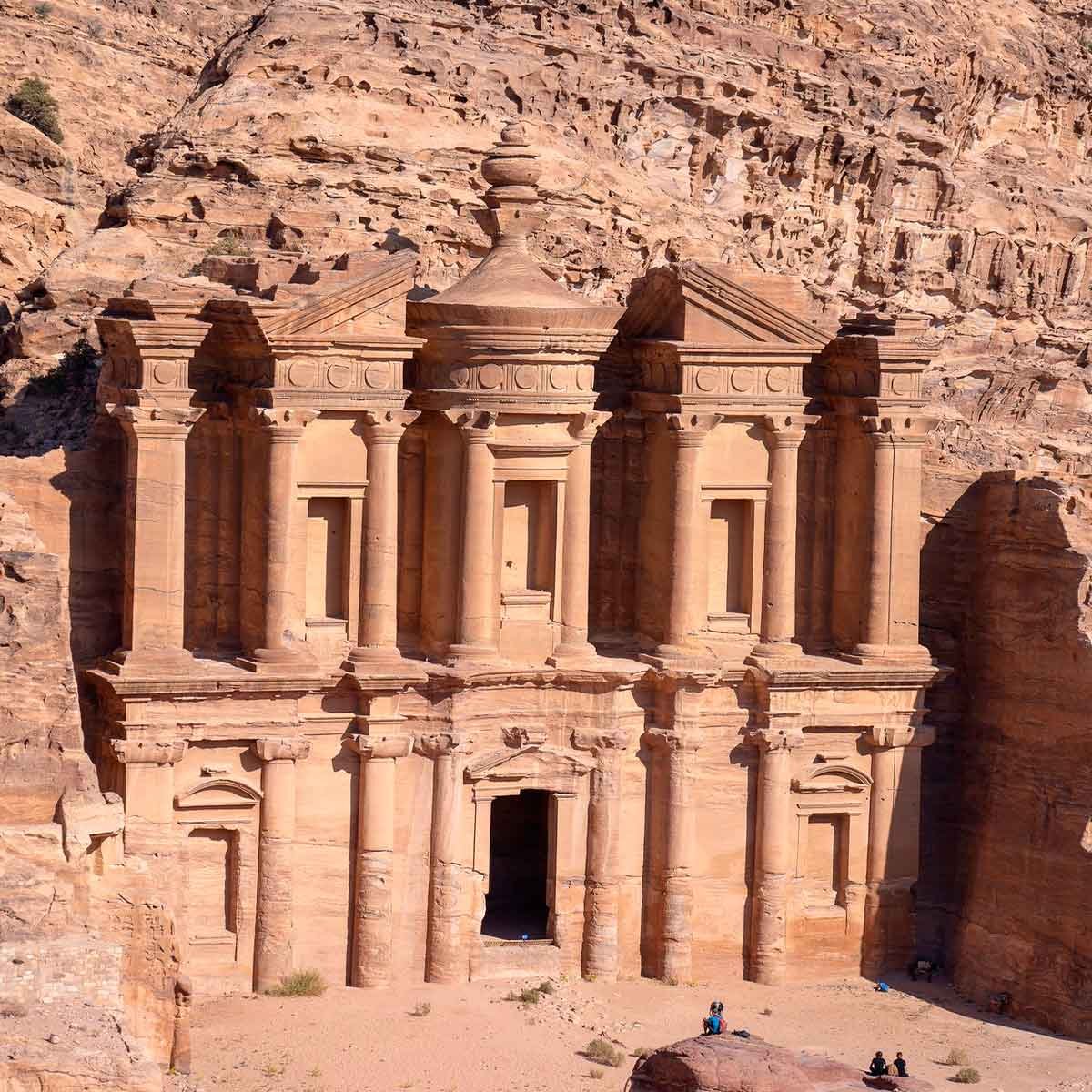
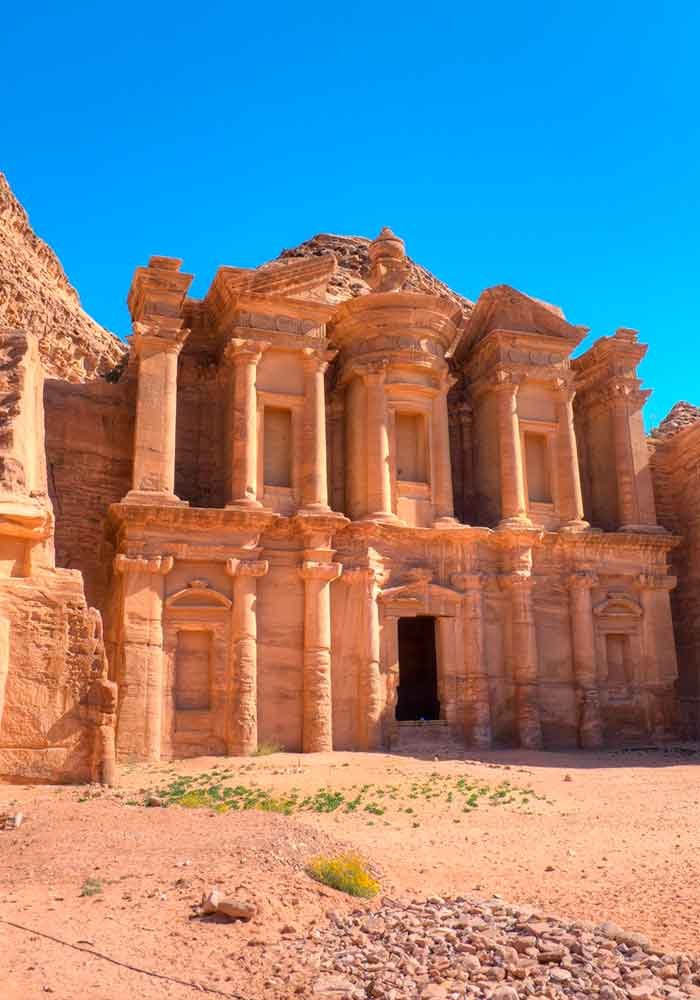
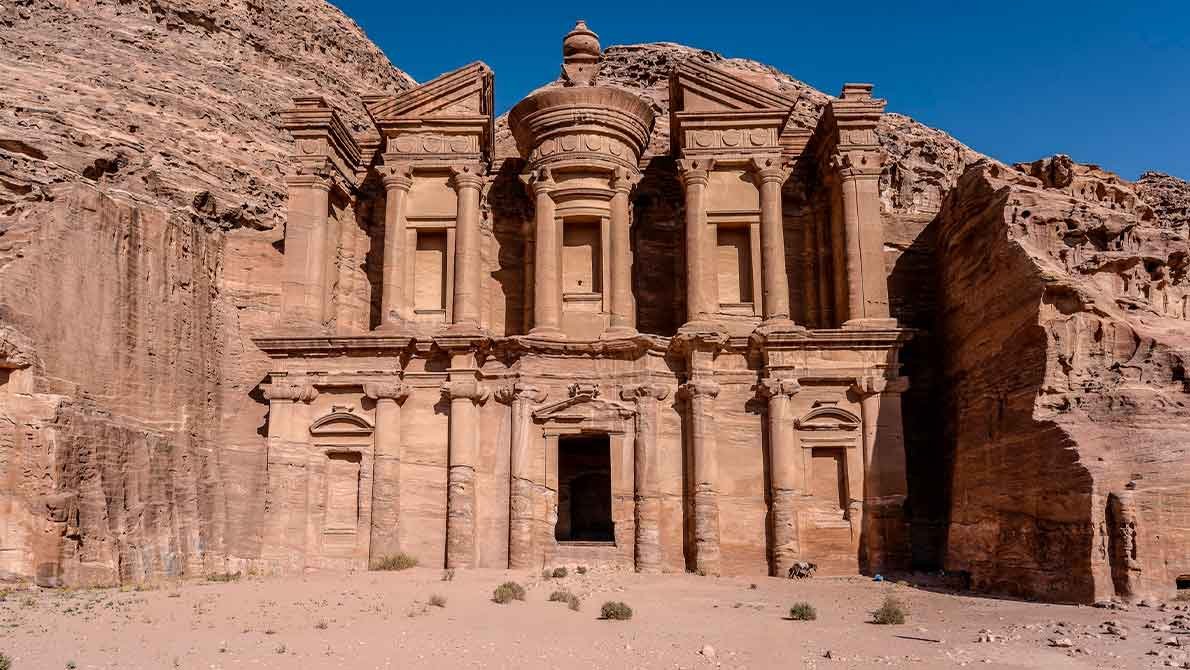
The Monastery Ad-Deir is one of the most magnificent structures of ancient Petra. Its façade reaches about 47 meters in height and almost 50 meters in width, making it the largest in the city. In the lower part stand out eight massive columns supporting a decorative entablature. Above them rises a pediment with a round tholos and a giant urn almost nine meters high. The entrance portal, about eight meters tall, leads into a spacious hall measuring approximately 12 by 11 meters and about 10 meters high. In front of the façade there is a wide leveled platform, which was probably used for rituals and gatherings.

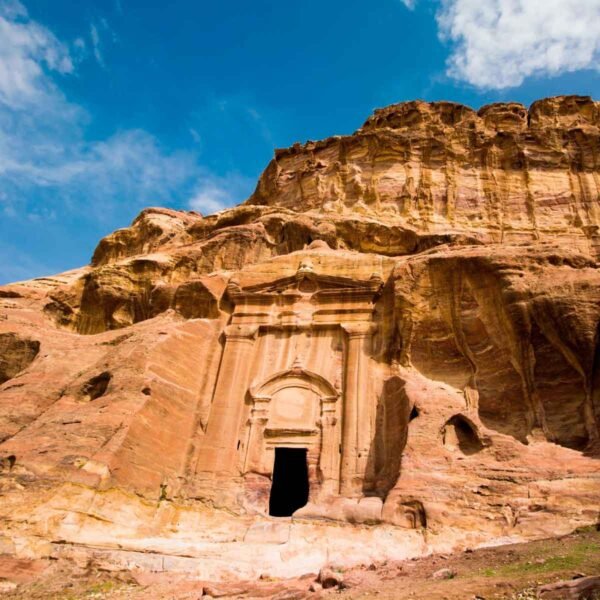
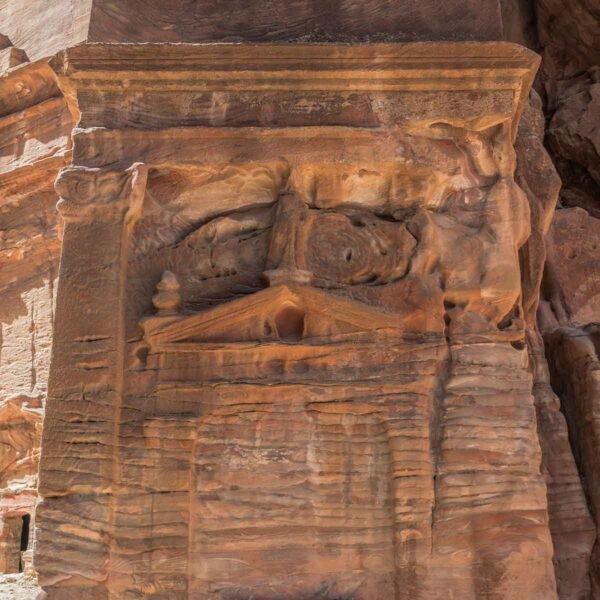
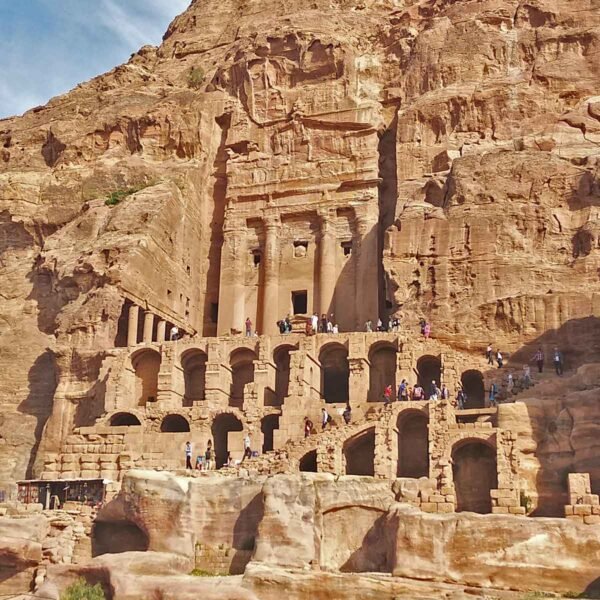
Uneishu tomb Petra wide view

According to the official version, Ad-Deir was created by the Nabataeans in the 1st century AD and was used as a cult structure, later turned into a Christian church. Some researchers link it to King Obodas I, while others believe it was intended for public rituals and banquets. Alternative views suggest a more ancient origin and the involvement of unknown technologies. Personally, I am inclined to think that once this entire rock complex was fully carved and completed, but later something catastrophic happened to it, radically changing its appearance.

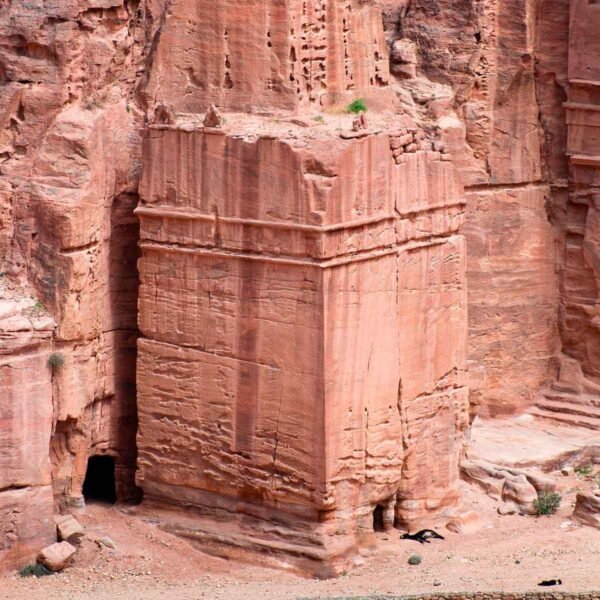
Rock-cut structure of Ad Deir Monastery Jordan
What is the Monastery in Petra and why is it famous?
The Monastery, known locally as Ad-Deir, is one of Petra’s largest and most dramatic rock-cut facades. Carved high in the mountains, it impresses with a monumental doorway, massive pilasters and a crowning urn. Travelers often highlight its remote setting and panoramic viewpoints, which make “monastery petra” a must-see for both hikers and photographers.
Why is Ad-Deir in Petra considered unique?
Ad-Deir stands out for its scale, crisp rock-hewn detailing and the way the facade dominates a natural terrace above the valley. Unlike other Petra monuments, the surrounding plaza and carved niches suggest a complex ritual or commemorative use beyond a simple tomb. This blend of engineering ambition and landscape theater is why many travelers search for “ad deir petra” specifically.
How do you reach Ad-Deir and how demanding is the hike?
From Petra’s main path, a long stone stairway climbs through switchbacks and shaded clefts to the summit terrace. Expect a sustained ascent with many rock-cut steps and intermittent viewpoints; most visitors allow generous time for breaks and photos. Good footwear, water and sun protection are essential, as the route is exposed and can be hot in the afternoon.
What will you see at the top and around the facade?
The terrace opens onto a broad plaza facing the monumental facade, whose central doorway leads to a high, plain interior chamber. Above, a prominent urn and broken pediments create the signature silhouette visible from nearby ridges. Short trails lead to signed viewpoints over canyons and distant deserts, offering some of Petra’s widest vistas.
When is the best time to visit and what should you bring?
Morning brings cooler temperatures on the climb and softer side-light on the rock; late afternoon offers warmer tones and quieter terraces after peak hours. Carry at least one large bottle of water per person, a hat, sunscreen and sturdy shoes with grip. In cooler seasons, a light layer helps with wind at the exposed viewpoints.
Was Ad-Deir a monastery, a tomb or a ceremonial sanctuary?
The name “Monastery” is modern; scholars propose multiple functions across different periods. The interior’s simplicity and exterior scale point to ceremonial or commemorative roles, while niches and nearby installations hint at gatherings or processions. Local narratives and alternative interpretations also view Ad-Deir as part of a larger sacred landscape aligned with routes, terraces and sightlines.
Comments

There are no comments yet.

Be the first to comment “Petra Temple Jordan”

Your email address will not be published. Required fields are marked *