Where inside Petra is the theatre and how do you reach it?
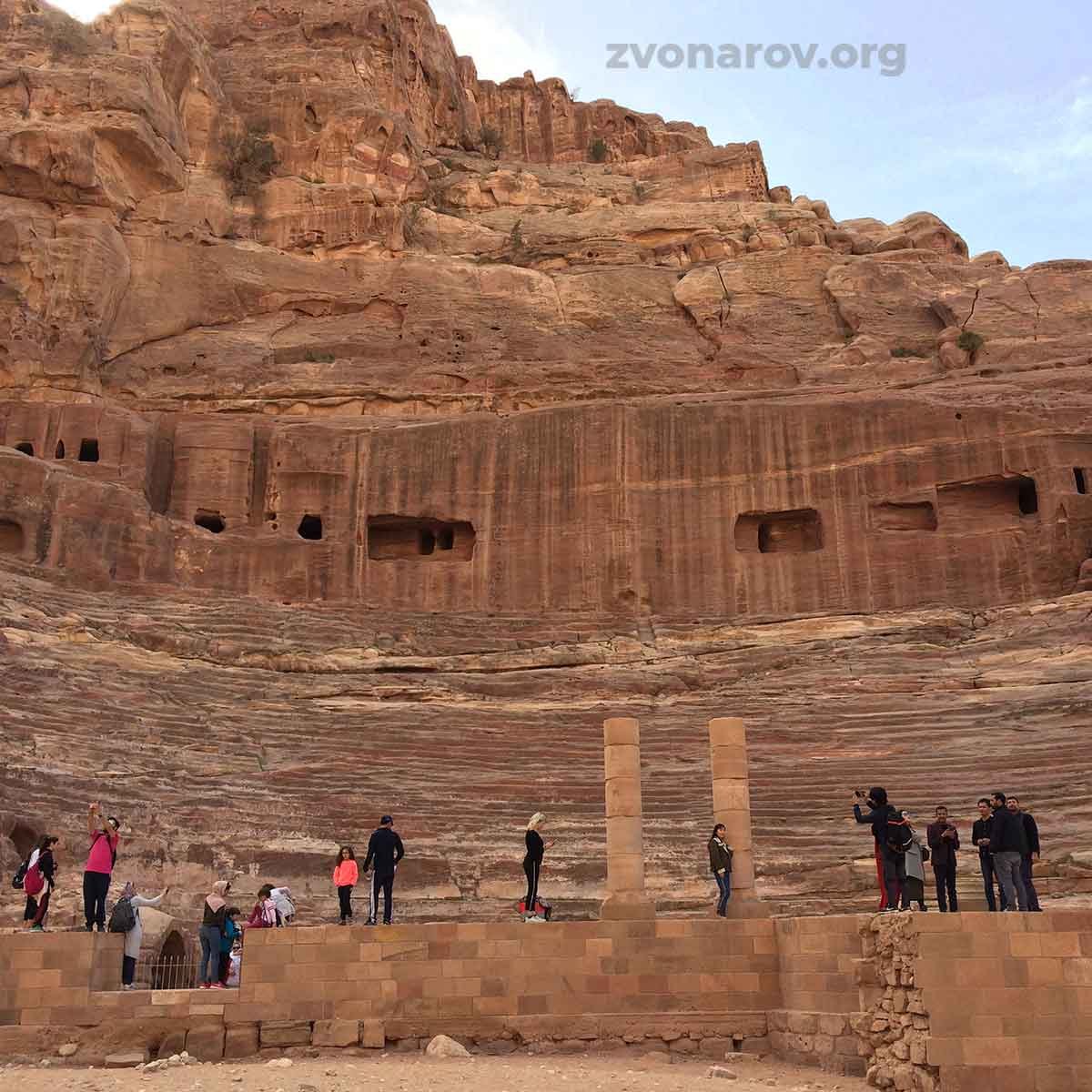
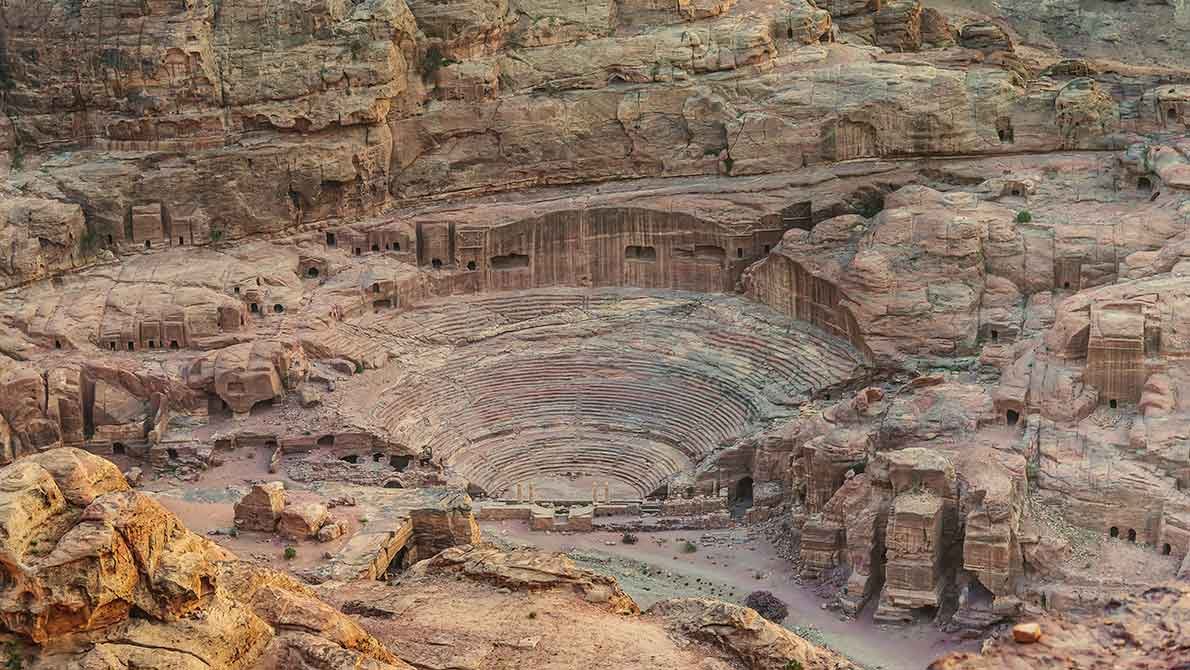
The theatre sits along the main valley of Petra near the end of the Street of Facades, facing the heart of the city. Visitors typically reach it on foot from the Siq and Treasury area, continuing along the main trail toward the Royal Tombs. Its position integrates with surrounding rock-cut monuments, so you see tomb facades around the seating bowl as you approach.
Is it a Roman building or Nabataean? (covering “petra theatre” spelling)
Although its plan follows Greco-Roman theatre design, the monument is distinctly Nabataean because much of it is carved directly into bedrock. Later Roman work rebuilt parts like the stage wall, but the rock-cut cavea and decorative details reflect local craftsmanship. In short, “petra theatre” refers to a Nabataean creation with Roman architectural influence.
How many spectators could it hold?
Published estimates vary widely, from roughly 4,000 to about 8,000–8,500 seats. Differences come from how scholars reconstruct lost rows, later enlargements, and erosion. The cavea is organized in horizontal sections with multiple stairways, which also affects capacity calculations reported by different surveys and guides.
Why do some guides call it the “petra amphitheater” and is that correct?
The term appears in guides and blogs, but technically an amphitheatre is an elliptical arena (like Rome’s Colosseum), while Petra’s monument is a semicircular theatre for staged performances. Using “petra amphitheater” can help cover search variations, yet the accurate type is a rock-cut theatre integrated into the valley’s cliff.
What design features and acoustics should visitors notice?
Look for the rock-hewn seating tiers, passageways, and stairways that follow the natural contours of the slope. This configuration, paired with a Roman-style orchestra and stage area, yields strong acoustics without modern amplification. The engineering showcases how Nabataean builders adapted classical plans to Petra’s geology.
What can you see from the seats, and why is the view significant?
From the cavea, many surrounding tomb façades fall within view, creating a dramatic backdrop. Scholars note the theatre’s placement seems intended to frame Petra’s funerary landscape for audiences during performances. The result blends civic gathering space with the city’s iconic rock-cut architecture in a single panorama.





There are no comments yet.