Poulnabrone Dolmen

The Poulnabrone Dolmen in Ireland stands as one of the most famous megalithic tombs in Europe. Its massive limestone slabs form a precise portal structure that has withstood thousands of years of wind and rain. Set on the Burren plateau, it offers breathtaking views and a deep sense of ancient mystery. The site remains a symbol of Ireland’s ancient past and its enduring connection to forgotten civilizations.

Category:
Overview

Just look at this dolmen. It has stood here for thousands of years, preserving its original, still unknown purpose. Today, thousands of visitors come to see it with their own eyes. Even in our modern world, this monument continues to amaze and inspire awe.

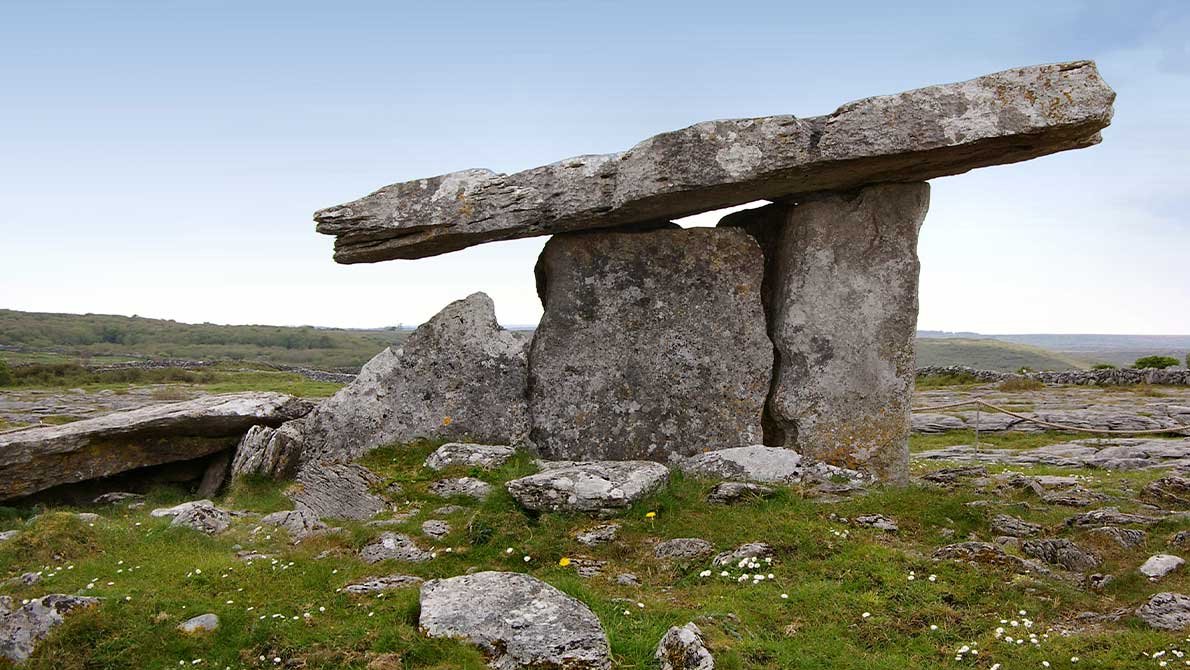
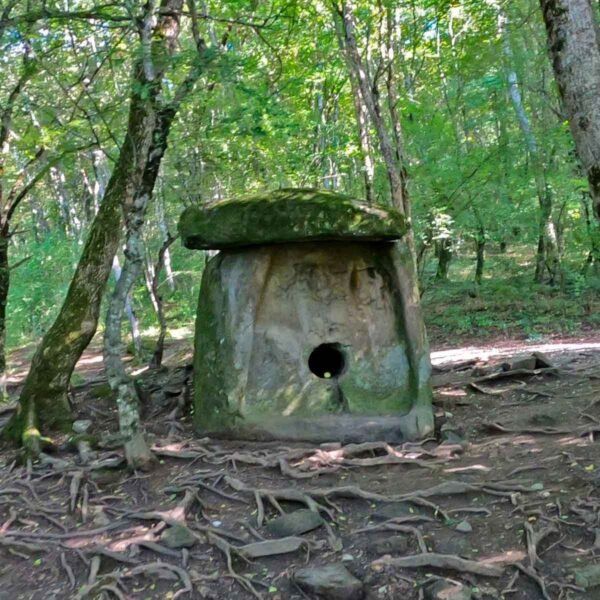
General view of Poulnabrone dolmen standing in the Burren karst landscape of Ireland

Imagine how people of ancient times reacted to it — those who knew nothing about cranes or modern construction technologies. It’s no wonder that the Poulnabrone Dolmen was believed to possess magical properties. After all, humans — especially in antiquity — always sought explanations for what they could not understand, just as we do today. That’s why this place became a stage for sacred ceremonies and ritual practices.

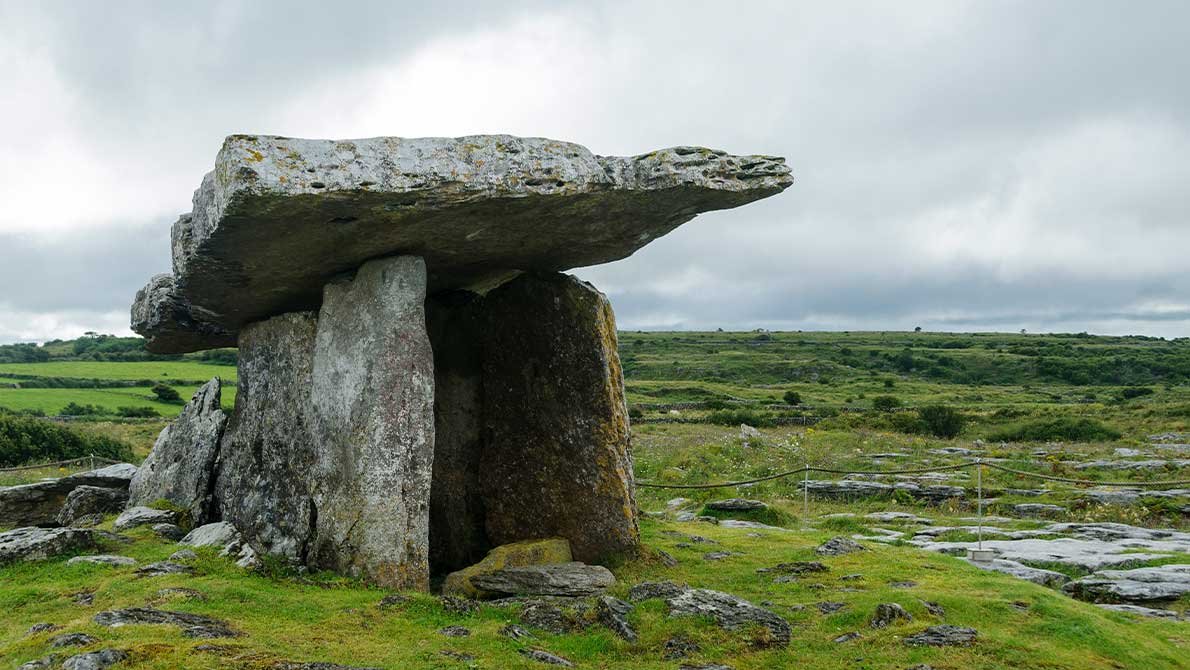
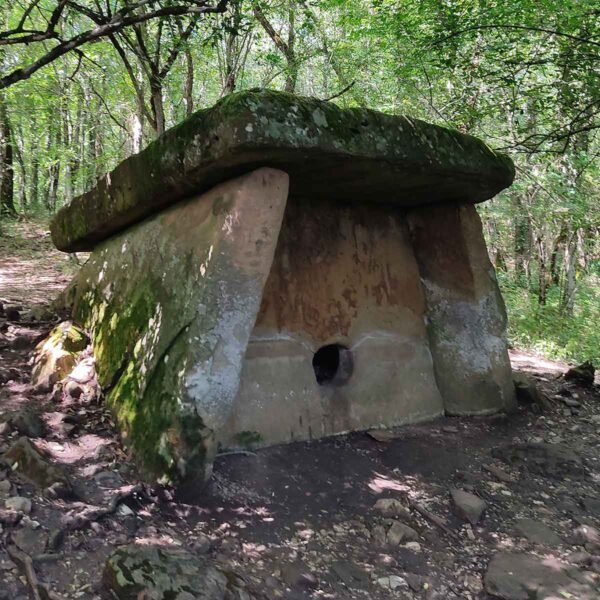
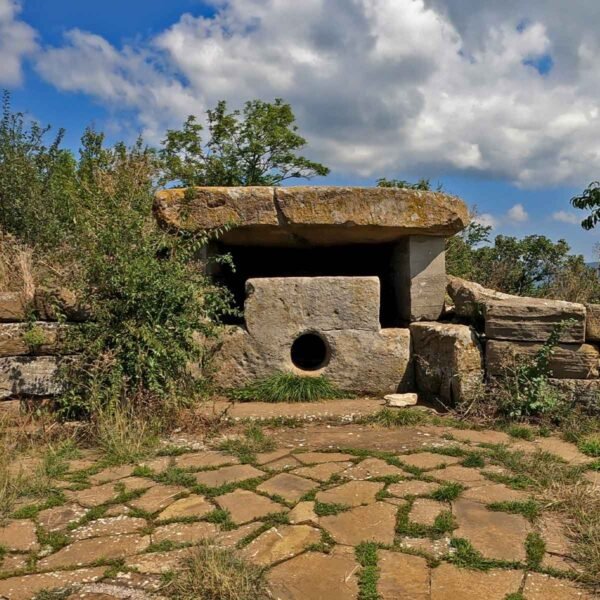
Front facade of Poulnabrone megalithic tomb with vertical orthostats and limestone roof

Today, I believe we are seeing only part of the structure. The other part was destroyed over time. Yet, fragments that once formed the dolmen’s walls still lie scattered on the ground nearby. The last collapse occurred in 1985, caused by a fracture in the limestone slab located on the eastern side of the monument.

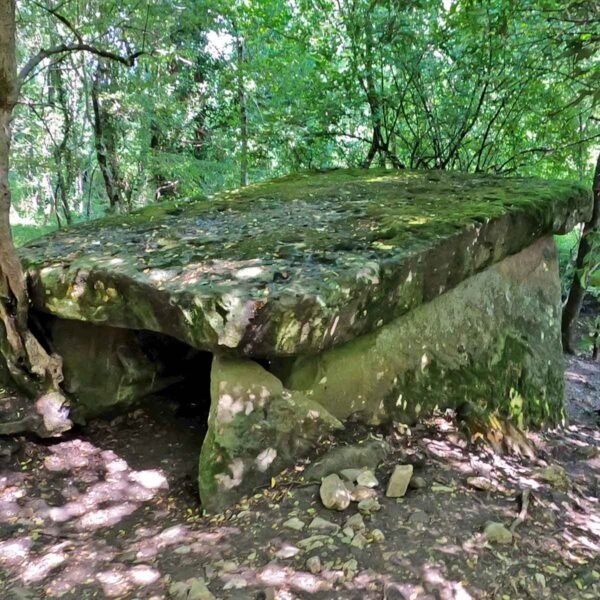
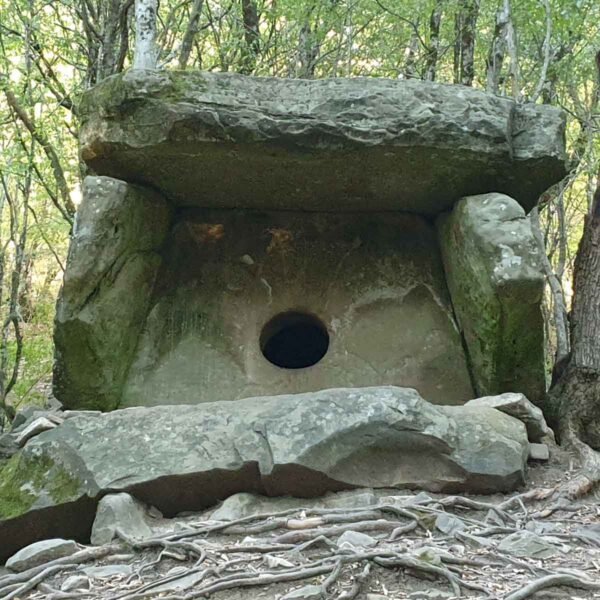
Chamber of the Poulnabrone dolmen set among limestone slabs and grass on the Burren plateau

Even official science admits that the Poulnabrone tomb was constructed approximately between 4200 and 2900 BC. Do you feel the tone in which that sounds? A range of 1,300 years — and the word “approximately.” It’s as if they could have simply said: “We have no real idea when this structure was built.”

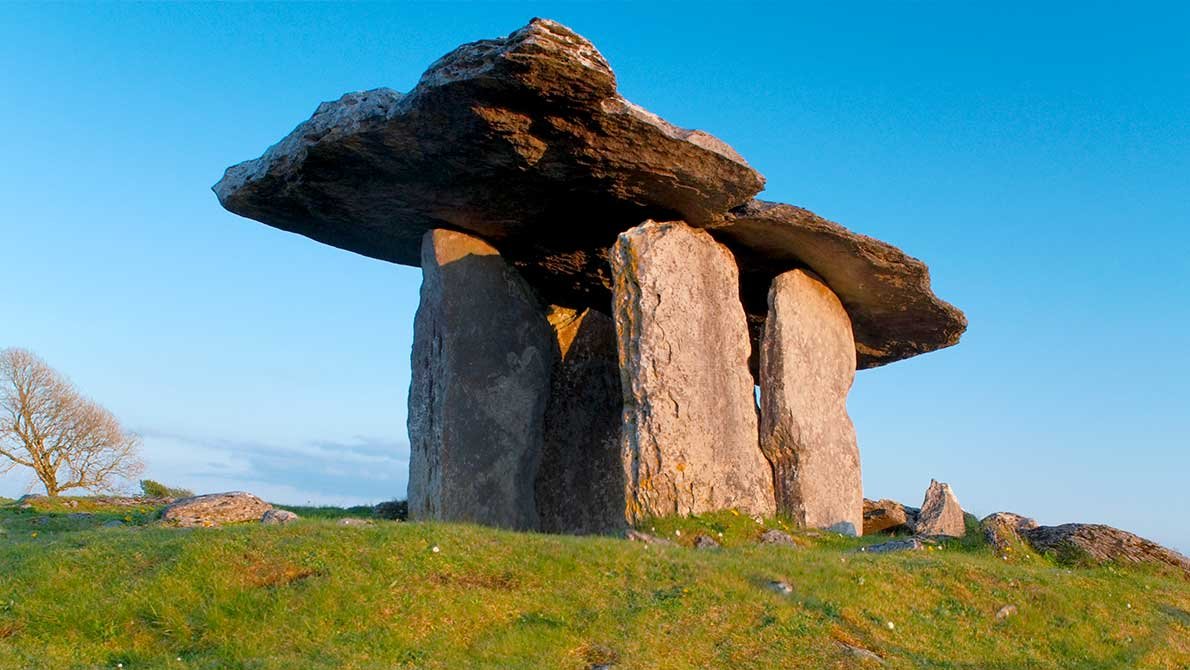
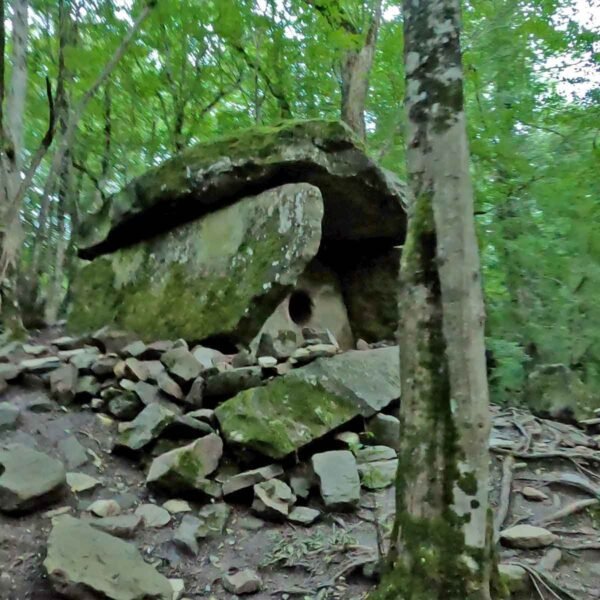
Ancient Poulnabrone dolmen glowing in sunset light among limestone rocks of the Burren

The Poulnabrone megalithic tomb impresses with its simplicity and precision. Several limestone slabs, set with astonishing geometric accuracy, form a structure that has endured millennia of wind and rain. The enormous capstone seems to float above the ground, balanced delicately on the upright stones.

Researchers believe that the dolmen served as a site for special rituals connected with ancient beliefs about life and death. Its location on a karst plateau was not accidental — from here, a sweeping view opens over the stone waves of the Burren, where the horizon appears endless.

Today, Poulnabrone Dolmen in Ireland has become one of the country’s enduring symbols. It often appears in photographs, postcards, and travel guides, reminding us of the depth of history and how little we truly know about those who built these stone monuments. In its silence, one can feel both power and mystery — something that has outlasted the centuries.

What is the Poulnabrone Dolmen?
The Poulnabrone Dolmen is a megalithic portal tomb located in the Burren region of County Clare, Ireland. Composed of massive limestone slabs, it stands as one of the most iconic prehistoric monuments in the country. Its name means “the hole of the quern stones” in Irish.
Where is the Poulnabrone Dolmen located?
This ancient tomb stands on the karst limestone plateau of the Burren in County Clare, Ireland. The area is famous for its rugged rocky landscape, dotted with prehistoric remains and rare flora. Visitors can easily reach the dolmen by road from Ballyvaughan or Kilfenora.
What is the purpose of the Poulnabrone tomb?
Archaeological studies suggest that the Poulnabrone tomb served as a ritual or burial site. Excavations revealed human bones, pottery fragments, and stone tools, indicating ceremonies connected with death and the afterlife. However, its full spiritual meaning remains a mystery.
How old is the Poulnabrone megalithic tomb?
Scientists estimate that the Poulnabrone megalithic tomb was built several millennia ago, during Ireland’s Neolithic period. Exact dating remains uncertain, but it clearly predates most written records and demonstrates remarkable ancient engineering skills.
What makes the Poulnabrone Dolmen unique?
Unlike many other megaliths, the Poulnabrone Dolmen is positioned on a high limestone plateau with panoramic views of the Burren. Its construction shows extraordinary geometric precision, and the massive capstone appears to float weightlessly above the supporting stones.
Can tourists visit the Poulnabrone Dolmen today?
Yes, the Poulnabrone Dolmen is open to visitors year-round. It is one of Ireland’s most photographed landmarks and a popular stop on the Wild Atlantic Way. Visitors are asked to respect the monument and avoid climbing on the stones to help preserve it for future generations.
Why is the Poulnabrone Dolmen important for Irish heritage?
The Poulnabrone portal dolmen symbolizes Ireland’s deep prehistoric roots. It reflects the beliefs, craftsmanship, and community spirit of ancient peoples. Today, it serves as both a national symbol and an enduring reminder of the mysteries still hidden within megalithic culture.
Comments

There are no comments yet.

Be the first to comment “Poulnabrone Dolmen”

Your email address will not be published. Required fields are marked *