Pyramid of Djoser

The Pyramid of Djoser is a unique step pyramid in Badrshein, Egypt, considered the earliest large stone monument of its kind. Its stepped design and preserved structure attract both tourists and researchers. Many step pyramid of Djoser facts remain unexplained, and the enigmatic interior raises questions about its purpose. The pyramid of Djoser continues to intrigue with its ancient mysteries.

Category:
Overview

In the desert of Saqqara, on the west bank of the Nile, rises a monument that forever changed humanity’s understanding of architecture. The Step Pyramid of Djoser, the first stone pyramid in history, marked the beginning of a new era. Its height once reached about sixty meters, and the dimensions of the complex amazed contemporaries. It was a true skyscraper of its time, surrounded by walls, temples, and palaces, resembling an entire city devoted to eternity. Beneath the ground stretched kilometers of tunnels and chambers, forming an underground world.

The official version

Historians claim that the structure was built by order of Pharaoh Djoser, ruler of the Third Dynasty. His architect is named as Imhotep, an almost legendary figure, the first person in history whose name stood beside that of a king. Egyptologists see the pyramid primarily as a royal tomb, a place of eternal rest for the pharaoh, linked with temple structures and ritual enclosures. They also believe that its construction was not only a religious act but a form of propaganda, symbolizing both power and the divine nature of kingship.

Alternative views

There is another perspective: the underground galleries and complex corridors could hardly have served only funerary purposes. Labyrinths descending more than thirty meters below ground are more reminiscent of an underground city. Some researchers argue that these spaces were intended for rituals, possibly involving sound, light, or other sacred practices. The architectural complexity goes far beyond that of a simple tomb, leaving room for mystical interpretations.

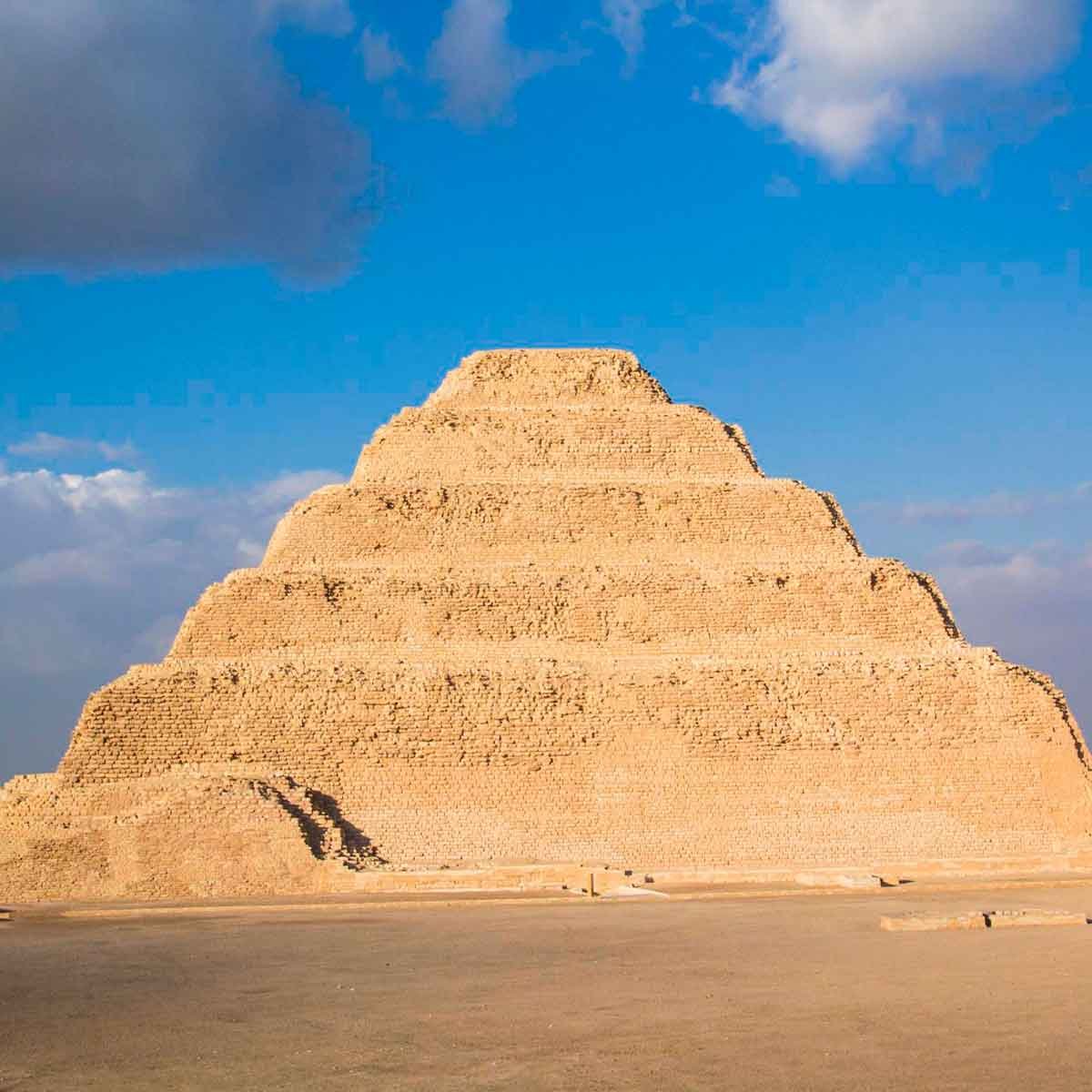
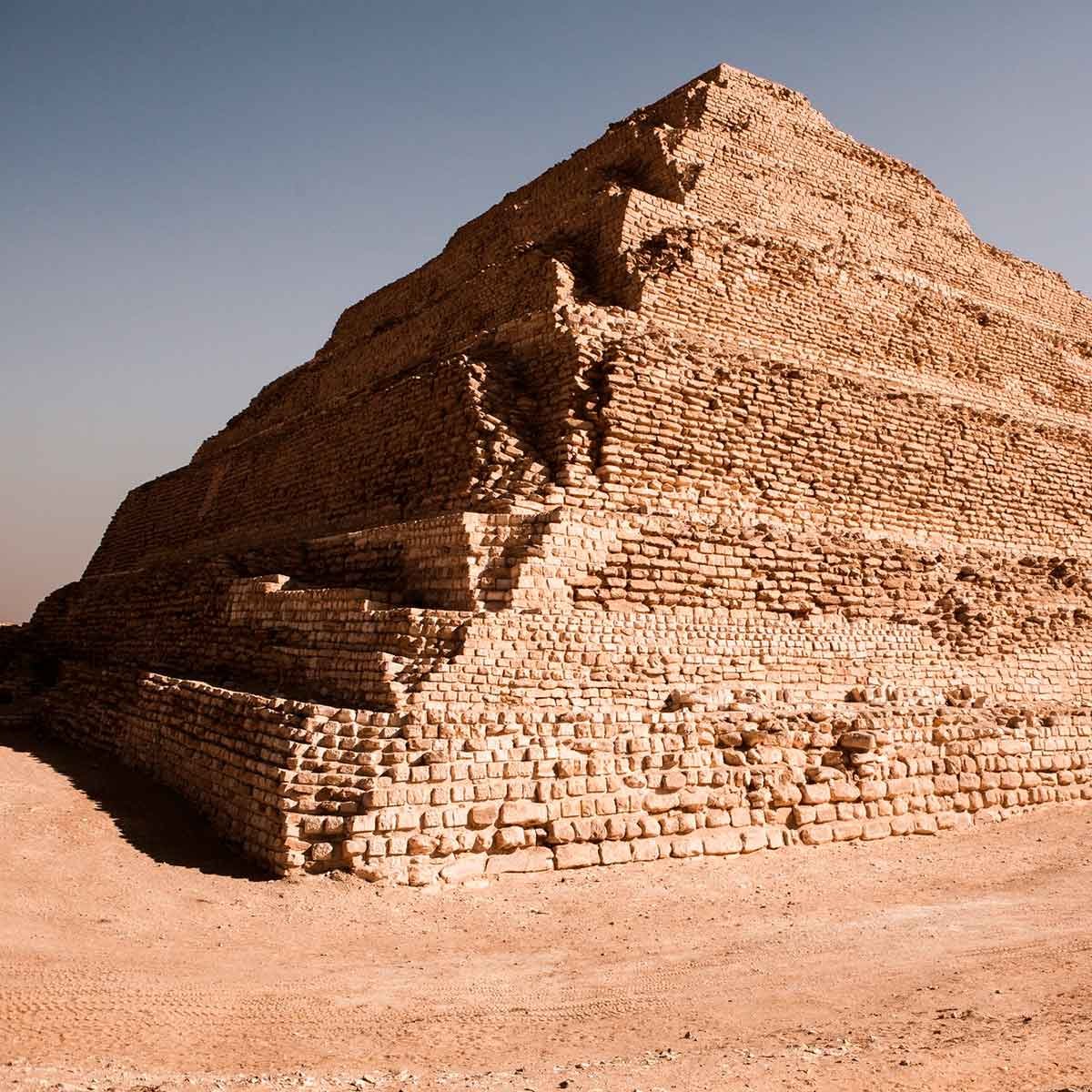
Step Pyramid of Djoser side perspective Saqqara

Independent researchers

Andrei Zhukov points out that the traditional scheme of construction—from mastaba to step pyramid—appears artificial. In his view, the high status of Imhotep as both architect and priest would not have allowed for repeated improvisations and errors. He sees the Step Pyramid as a carefully conceived project, perhaps even based on knowledge that defies modern historical explanations. Zhukov emphasizes that the labyrinthine structure beneath the pyramid has no parallels among other Egyptian pyramids and cannot be explained as an ordinary burial site.

Archaeological findings and modern research

Modern technologies have provided new insights into the pyramid. Laser scanning and photogrammetry revealed hidden tunnels and structures, allowing researchers to reconstruct the entire complex with precision and confirm that construction proceeded in stages. Cedar beams found within helped to date the structure more accurately, while the granite sarcophagus beneath the pyramid remains one of its greatest enigmas. Its form and design still raise questions: was it an ordinary coffin, or something connected to the ancient Egyptian concept of magical energy?

The Pyramid of Djoser is not only the first stone pyramid in history but also a riddle combining a monumental architectural revolution with the mystery of an underground city. For some it is a symbol of royal power and cult, for others evidence of ancient knowledge that does not fit into conventional history. Its secrets remain unsolved, which makes it one of the most fascinating monuments of Ancient Egypt.

Where can I find a the step pyramid of djoser reading pdf?
Search reputable museum collections, university repositories, and peer-reviewed journals that publish open educational materials on Old Kingdom monuments. Many institutions provide downloadable guides or syllabi that summarize the site, plan, and terminology without giving an exact construction date. Prefer sources that include site maps of Saqqara, references to Imhotep’s design innovations, and citations to excavation reports.
Are there reliable step pyramid of djoser reading answers for study use?
Yes, but use answer keys that align with recognized archaeological consensus. Solid materials explain that the monument stands at Saqqara above extensive underground galleries and a central shaft, forming Egypt’s earliest large-scale stone complex. Trust explanations that distinguish between verified features and hypotheses, and that avoid precise dates or unsupported claims about hidden devices.
What does the phrase “the step of pyramid of djoser” refer to?
It refers to the monument’s tiered silhouette: six stacked mastaba-like levels that create a stepped outline rather than smooth sides. This profile reflects successive design enlargements around a royal funerary core within a walled ceremonial precinct. The stepped exterior became a prototype for later Old Kingdom pyramids, while the surrounding courts hosted rituals tied to kingship and renewal.
Is there evidence of step pyramid of djoser hydraulics?
Archaeological publications do not identify an ancient hydraulic system operating within the pyramid complex. The site includes deep shafts, corridors, and storage magazines cut into bedrock, but these serve funerary and ceremonial functions. Any claims about pumps or engineered water flow remain speculative; conservation-era drainage features should not be confused with original Old Kingdom technology.
What about step pyramid of djoser water technology theories?
“Water technology” ideas occasionally appear in popular media, yet they are not supported by the main excavation records from Saqqara. Scholarly work emphasizes stone construction methods, enclosure walls, ritual courts, and decorated chambers beneath the pyramid. When evaluating such theories, look for clear stratigraphy, tool marks, and context—standards that distinguish credible archaeology from conjecture.
What is the name of djoser’s pyramid designed by Imhotep?
It is widely known as the Step Pyramid of Djoser, located at Saqqara near ancient Memphis. Ancient sources credit the architect Imhotep with conceiving its innovative stone design and the vast ceremonial precinct around it. You may also encounter names like “Pyramid of Djoser” or references to the king’s Horus name, Netjerikhet, in academic literature.
Comments

There are no comments yet.

Be the first to comment “Pyramid of Djoser”

Your email address will not be published. Required fields are marked *