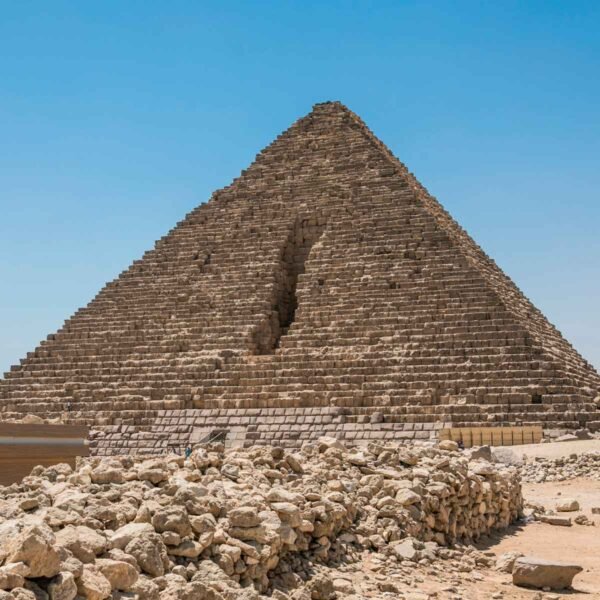
Pyramid of the Moon in Mexico

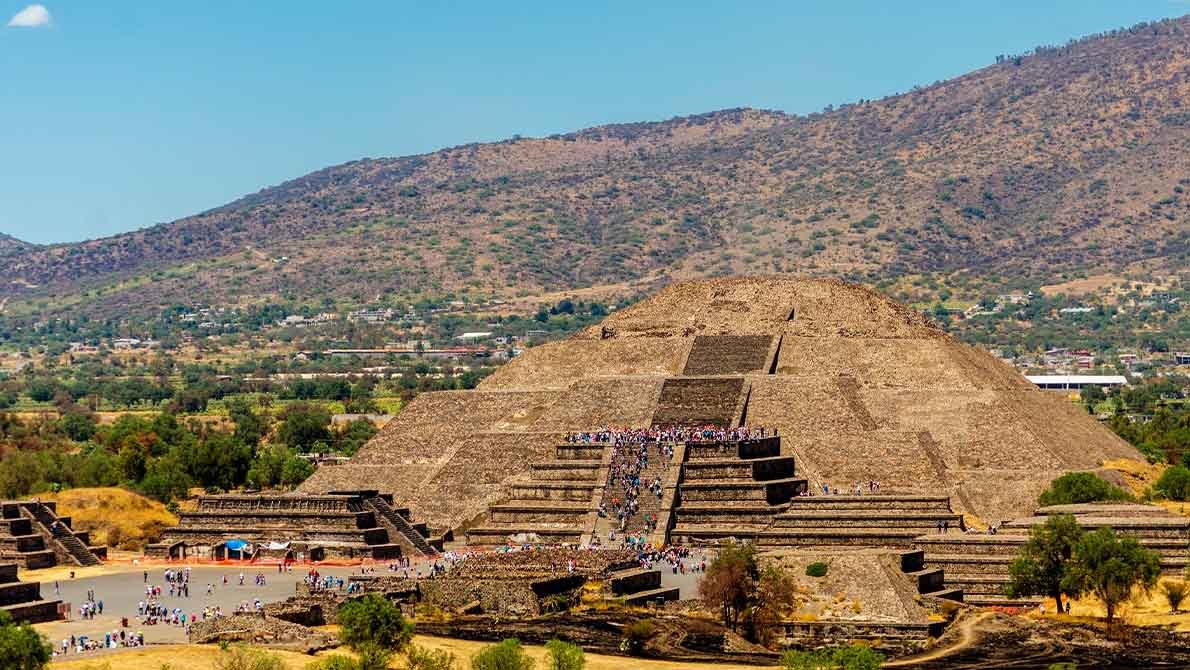
The Pyramid of the Moon Mexico City is the second largest monument in Teotihuacan, offering visitors panoramic views of the Avenue of the Dead. Its monumental steps and preserved form make it one of the most photographed sites, attracting travelers from around the world. The structure embodies the grandeur of ancient civilizations while keeping many of its secrets hidden. Tourists can explore the site and capture unforgettable pyramid of the moon photos.

Category:
Overview

The Pyramid of the Moon rises in the north of the famous Teotihuacan, the ancient city of Mesoamerica that once stood as the greatest cultural center of Central Mexico. Located at the foot of the Sierra Gordo mountain, it mirrors its contours, creating harmony between architecture and natural landscape. The structure holds a special place in the city’s ensemble: it completes the Avenue of the Dead, opening its solemn perspective, and is connected to it by a wide staircase. Today, the Pyramid of the Moon appears as a monumental construction about forty-three meters high, which in the past served not only as a cult platform but also as a symbol of the entire Teotihuacan civilization.

According to historians, construction began around two thousand years ago. Archaeologists distinguish several phases of its building, during which the monument was repeatedly expanded and reshaped. At the top stood a temple where, scholars believe, the great goddess of fertility, water, and earth was worshiped, a deity who governed the cycles of nature and society’s life. Numerous sacrifices were performed here: the foundation of the pyramid conceals the remains of humans and animals, together with ceramics, obsidian knives, seashells, and other symbolic offerings. All of this reveals the significance of the rituals through which the people of Teotihuacan sought to maintain harmony with the forces of the world.
There are other interpretations. Esoteric thinkers claim that the Pyramid of the Moon was not only a temple but also a gateway to the underworld. This view is supported by the discovery of underground tunnels, one of which was revealed in 2017 using electrical tomography. It leads to a hidden chamber that some researchers identify as an entrance to the realm of the dead. Such an idea echoes ancient myths where the underworld was seen as both a source of danger and of renewal. In this version, the numerous sacrifices become not just religious acts but attempts to keep balance between two worlds and to seal away dark powers.

Independent researchers also point out that the Pyramid of the Moon might have been not only a sacred center but also a political symbol. The burials of high-ranking individuals accompanied by weapons and attributes of power suggest that rituals here had military and social meaning. Some archaeologists note that Teotihuacan society was far from peaceful: it actively participated in military campaigns, and the sacrificed warriors and noble captives could symbolize the city’s dominance over neighboring lands. At the same time, sculptures of the goddess of water and fertility indicate ties to agricultural cults and the concern for sustaining life.

Pyramid of the Moon Teotihuacan aerial photo

Archaeological work in recent decades has helped to reconstruct the stages of its construction. Excavations led by Saburo Sugiyama revealed seven major phases, each reflecting changes in the religious and political life of the city. Burials contained human and animal remains as well as luxury objects, showing a complex symbolic system and elaborate rituals. These finds both confirm the official view of the pyramid’s religious function and open new space for hypotheses. The combination of bloody ceremonies with refined symbolic offerings shows how the ancient inhabitants perceived death and sacrifice as an integral part of the cosmic cycle.

Today, the Pyramid of the Moon remains a mystery that combines the power of architecture, the mysticism of beliefs, and the unanswered riddles of the past. It preserves evidence of the greatness of Teotihuacan as well as the dramatic aspects of its history. Every new discovery beneath its base not only reveals more about this vanished civilization but also raises new questions, keeping the Pyramid of the Moon one of the most enigmatic monuments of the ancient world.

Where is the Pyramid of the Moon located in Mexico City?
The Pyramid of the Moon is part of the ancient city of Teotihuacan, situated about 40 kilometers northeast of modern Mexico City. It stands at the northern end of the Avenue of the Dead, one of the most impressive ceremonial avenues of the ancient world. This location allows visitors to experience the grandeur of Teotihuacan while remaining close to the capital.
Why is the Pyramid of the Moon considered an important monument?
The Pyramid of the Moon is the second largest pyramid in Teotihuacan and played a central role in religious and political life. It was dedicated to deities linked with fertility, water, and the moon. Its elevated platform also provided a dramatic view over the Avenue of the Dead, reinforcing its symbolic power within the city’s ceremonial core.
Can visitors take photos at the Pyramid of the Moon?
Yes, visitors are encouraged to take photos of the Pyramid of the Moon, and it is one of the most photographed monuments in Mexico. From the base and from nearby platforms, travelers can capture panoramic views of the pyramid itself and the entire Teotihuacan site. Morning and evening light provide especially striking conditions for photography enthusiasts.
What activities can tourists do when visiting the Pyramid of the Moon?
Tourists can walk along the Avenue of the Dead, explore nearby temples, and climb partially up the Pyramid of the Moon for a sweeping view of Teotihuacan. In addition, guided tours often explain the symbolism of the murals and the city’s advanced urban planning. The site also hosts museums with artifacts that provide insight into the daily life of its ancient inhabitants.
How does the Pyramid of the Moon differ from the Pyramid of the Sun?
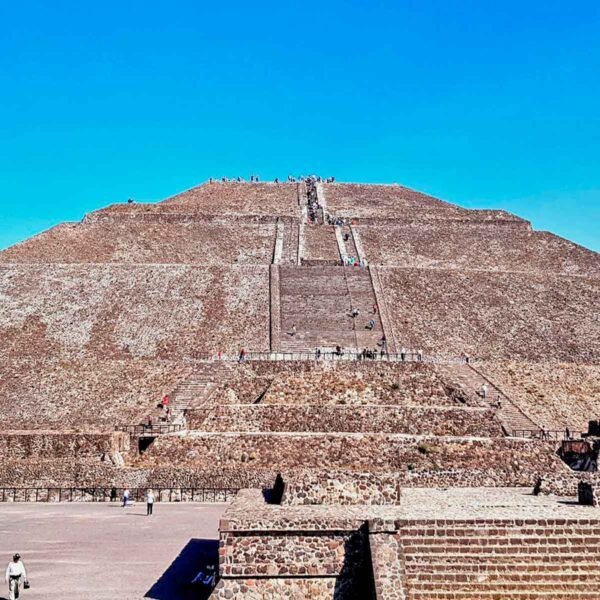
The Pyramid of the Moon is smaller than the Pyramid of the Sun but holds a more dominant position within the sacred landscape, directly aligned with the Cerro Gordo mountain behind it. Unlike the Pyramid of the Sun, which was associated with solar deities, the Pyramid of the Moon was dedicated to fertility and water gods. Its architectural design emphasizes symmetry with the surrounding valley, making it equally significant despite its smaller size.
What is the best time of day to visit the Pyramid of the Moon?
The best times to visit are early in the morning or late in the afternoon, when the light enhances the textures of the stone and the site is less crowded. During these hours, the views are more striking, and photographs capture the pyramid’s majestic profile with softer natural colors. Visiting at these times also provides a more peaceful atmosphere for exploring the ancient city.
Comments

There are no comments yet.

Be the first to comment “Pyramid of the Moon in Mexico”

Your email address will not be published. Required fields are marked *