Pyramid of the Sun Facts

The Pyramid of the Sun in Teotihuacan, near Mexico City, is one of the largest ancient monuments of Mesoamerica. Its massive stone structure and impressive interior passages attract travelers seeking history and mystery. Visitors can explore the surroundings, learn about Aztec connections, and enjoy panoramic views from the top. The origins of its construction remain partly unexplained, adding to its enigmatic character.

Category:
Overview

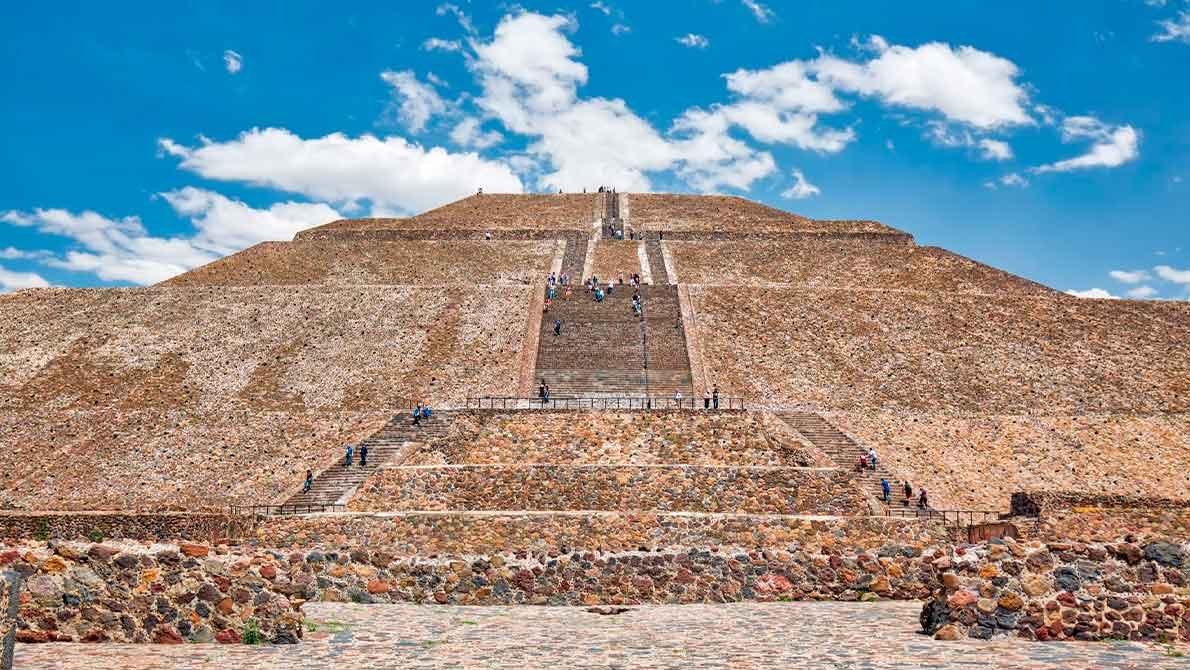
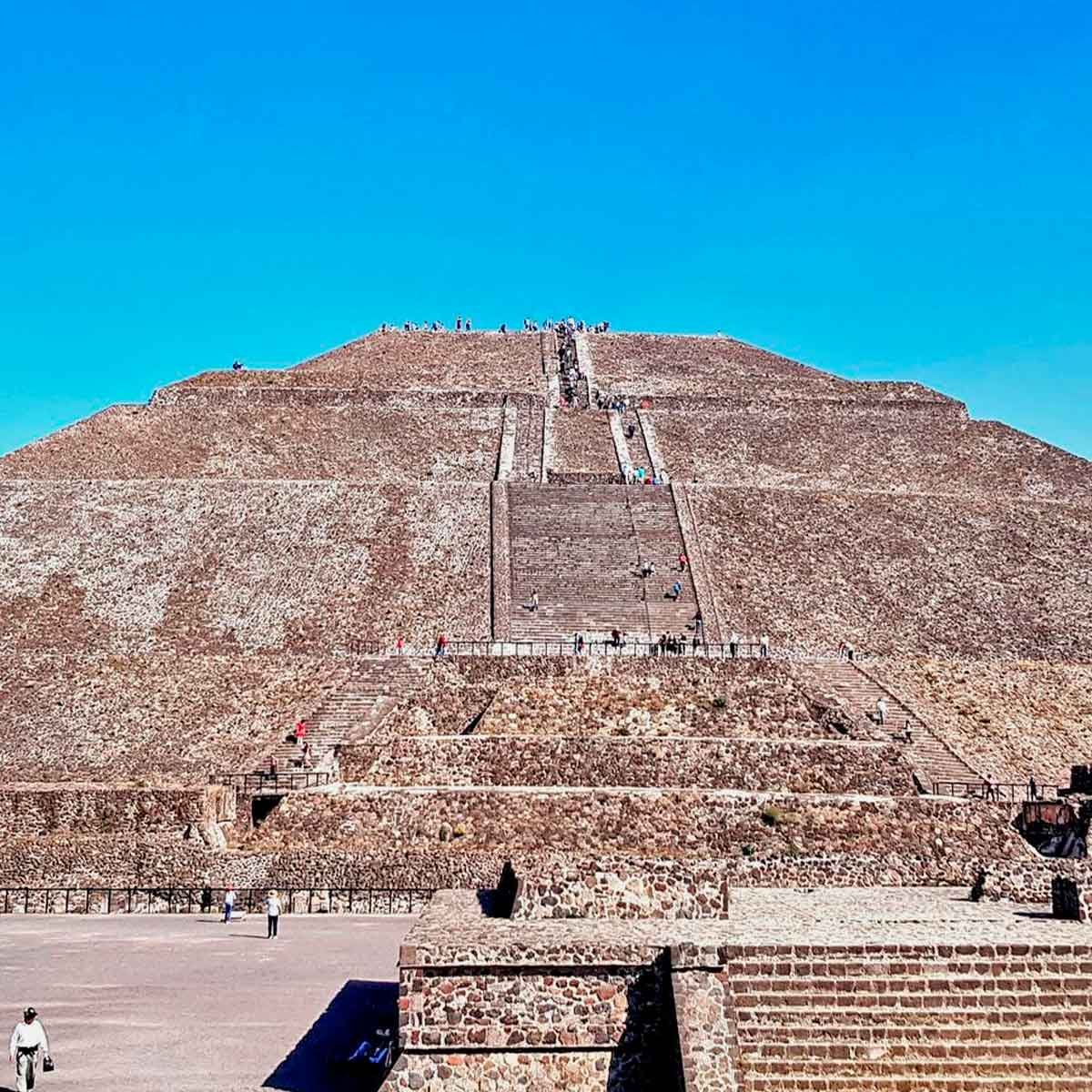
In the heart of ancient Teotihuacan, forty kilometers northeast of Mexico City, rises the majestic Pyramid of the Sun — one of the most monumental structures in Mesoamerica. Its height reaches 64 meters, and its base is almost comparable to that of the Pyramid of Khufu in Egypt. This grand temple complex, located on the Avenue of the Dead between the Pyramid of the Moon and the Citadel, became the symbol of the city and still amazes with its scale and architectural harmony.

Historians believe that the Pyramid of the Sun was built around the year 200 AD, during the peak of Teotihuacan. It was constructed from earth, clay, and small stone fragments, while its outer walls were covered with lime plaster and bright murals, of which only fragments depicting jaguars and snakes remain. The structure was built in two stages, and, according to estimates, its construction required millions of man-hours.

The pyramid was not only an architectural object but also the center of religious life. At its base, archaeologists found numerous offerings: obsidian knives, figurines, shells, animal bones, and even child burials. These sacrifices were most likely dedicated to the rain god Tlaloc and served to sanctify the temple. The Aztecs, who came here centuries later, gave the structure its modern name and linked it to myths about the creation of the world, where the gods gathered in Teotihuacan to ignite the new sun.

For esoteric thinkers and supporters of ancient civilizations, the Pyramid of the Sun is not only a temple but also an astronomical instrument. Its axis is oriented toward the dates August 12 and April 29, coinciding with important Mayan calendar cycles. Its position in the landscape also seems intentional: when viewed from the Pyramid of the Moon, it repeats the outline of the Patlachique mountain. Beneath the pyramid, at a depth of six meters, lies an artificial tunnel with chambers, interpreted by many as an entrance to the underworld or the place of human origin. According to one version, this was the legendary Chicomoztoc — the cave from which the ancestors of all people emerged.

Pyramid of the Sun Teotihuacan cloudy weather

Some archaeologists see in the pyramid echoes of cosmogonic ideas about the “Mountain of Sustenance” — a sacred mountain with storerooms where seeds and food for humankind were kept. Fish bones and traces of water channels found under the pyramid gave rise to the hypothesis that the site was connected to water and fertility cults. Others argue that the structure was used for ceremonies of enthronement and for New Fire rituals, which renewed the cosmic cycle and confirmed Teotihuacan’s authority over surrounding lands.

The Pyramid of the Sun preserves evidence of numerous rituals. About thirty offerings have been discovered, ranging from ceramic vessels to obsidian and jade figurines, masks, and pyrite mirrors. Particularly striking are the child burials, confirming ritual sacrifices. In the 20th and 21st centuries, archaeologists uncovered caches with unique artifacts — jade figurines, ceramic vessels, remains of jaguars, eagles, and snakes, as well as massive pyrite disks.
Modern research has shown that the tunnel beneath the pyramid was man-made and may have served as a royal burial or a ritual center. Despite ancient looting, the surviving finds testify to the high level of organization and symbolism in Teotihuacan’s culture.

The Pyramid of the Sun in Teotihuacan is not only an architectural wonder but also a key to understanding the worldview of the ancient inhabitants of Mesoamerica. It unites myths of creation, cult rituals, astronomical knowledge, and engineering mastery. Its mysteries remain unsolved, but this very enigma makes it one of the most captivating monuments of antiquity.
Can you go inside the Pyramid of the Sun and what is located there?
Yes, visitors can enter the Pyramid of the Sun in Teotihuacan. Inside you will not find intact chambers or decorative frescoes as in some Egyptian pyramids, but rather restored tunnels and narrow passages that allow archaeologists and tourists to explore its inner structure. The main attraction is the climb to the top, which offers panoramic views of the entire ancient city.
Is the Pyramid of the Sun connected to the Aztecs?
Although the Pyramid of the Sun is often associated with the Aztecs, it was actually built many centuries earlier by the Teotihuacan civilization. The Aztecs discovered the ruins long after the city was abandoned and gave the pyramid its current name. Therefore, it is linked to the Aztecs mainly through cultural reinterpretation, not construction.
How can you get to the Pyramid of the Sun from Mexico City?
The Pyramid of the Sun is located in Teotihuacan, about 50 kilometers northeast of Mexico City. Travelers can take a direct bus from the Terminal del Norte station, which arrives at the archaeological site in about an hour. Another option is to book an organized tour, which often includes transportation, tickets, and a guided visit.
Comments

There are no comments yet.

Be the first to comment “Pyramid of the Sun Facts”

Your email address will not be published. Required fields are marked *