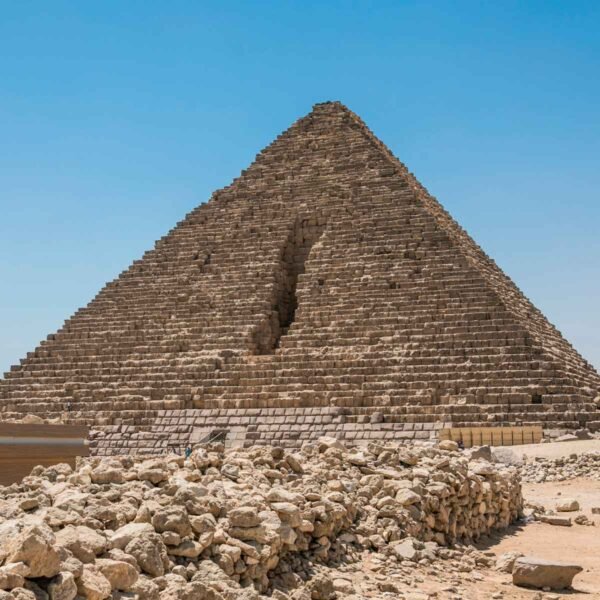
Red Pyramid

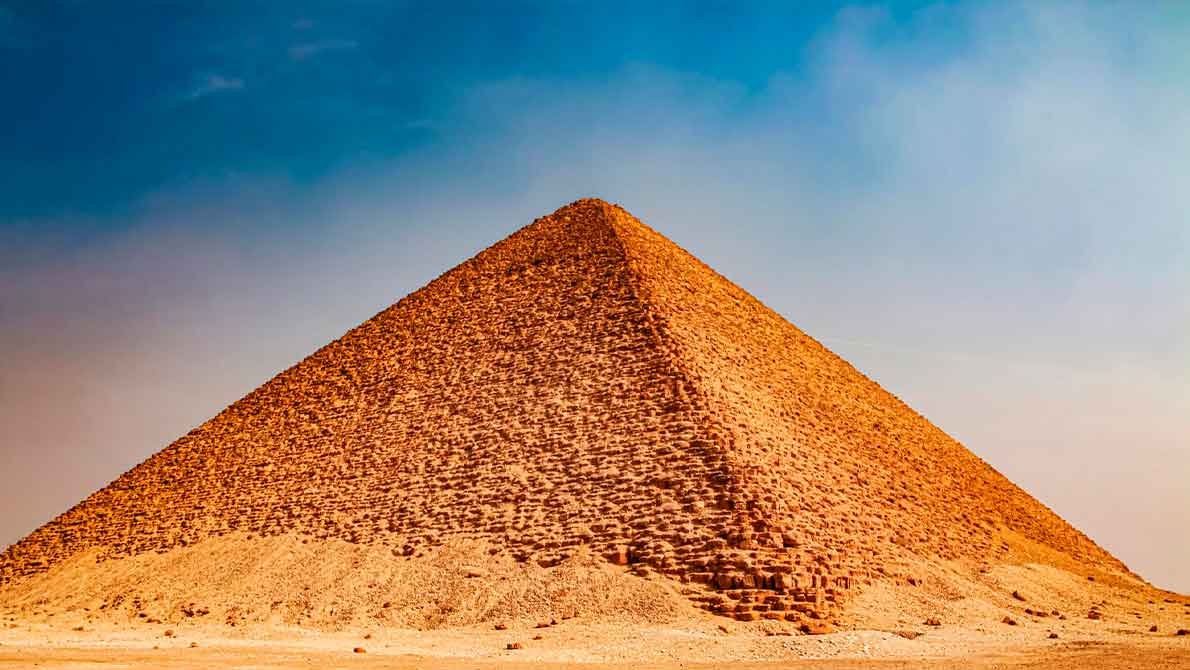
The Red Pyramid is located in Dahshur and is known as one of the most remarkable ancient constructions in Egypt. Its massive size and distinctive red limestone blocks make it a unique monument of architectural evolution. Visitors can explore the site and see Red Pyramid photos that capture its striking design.

Category:
Overview

In the necropolis of Dahshur, south of Cairo, rises the Red Pyramid, the third largest in Egypt after the pyramids of Khufu and Khafre. Its height today is about 104 meters, and its base measures 220 meters per side. Originally, the monument was clad in white Tura limestone, but this covering was almost completely removed in the Middle Ages, when it was used for building in Cairo. Its modern name comes from the reddish hue of the limestone core. Standing isolated against the desert horizon, the pyramid still preserves an aura of mystery.

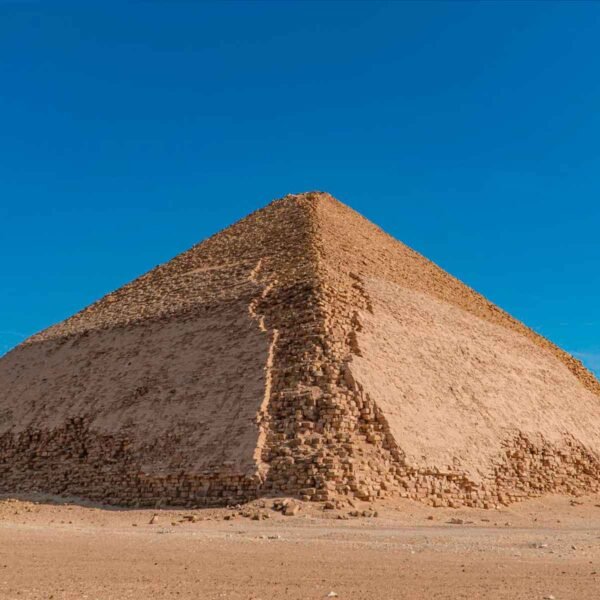
Historians attribute the construction of the pyramid to Pharaoh Sneferu, founder of the Fourth Dynasty and father of Khufu. It is considered his third burial project, following the pyramid at Meidum and the Bent Pyramid at Dahshur. Unlike these earlier attempts, the Red Pyramid became the first truly “classical” pyramid with smooth sides. Its corridors and chambers are lined with carefully fitted limestone blocks, and the central chamber, according to Egyptologists, was meant to house Sneferu’s burial. The only archaeological proof linking the pyramid to this pharaoh are cartouches with his name found on a few stones.

Some researchers and esoteric thinkers do not see a tomb here but rather a technical structure. They point to the absence of a sarcophagus, a mummy, and any ritual texts or images, which later became standard in pyramids of subsequent dynasties. The high corbelled ceilings and corridors seem to them like waveguides or parts of an unknown mechanism. The persistent smell of ammonia, the black deposits on the walls, and the unusual acoustics are taken as signs of an ancient device, possibly energetic or chemical in nature. According to this view, the pyramid may have been erected by a far older and more advanced civilization, long before the reign of the pharaohs.

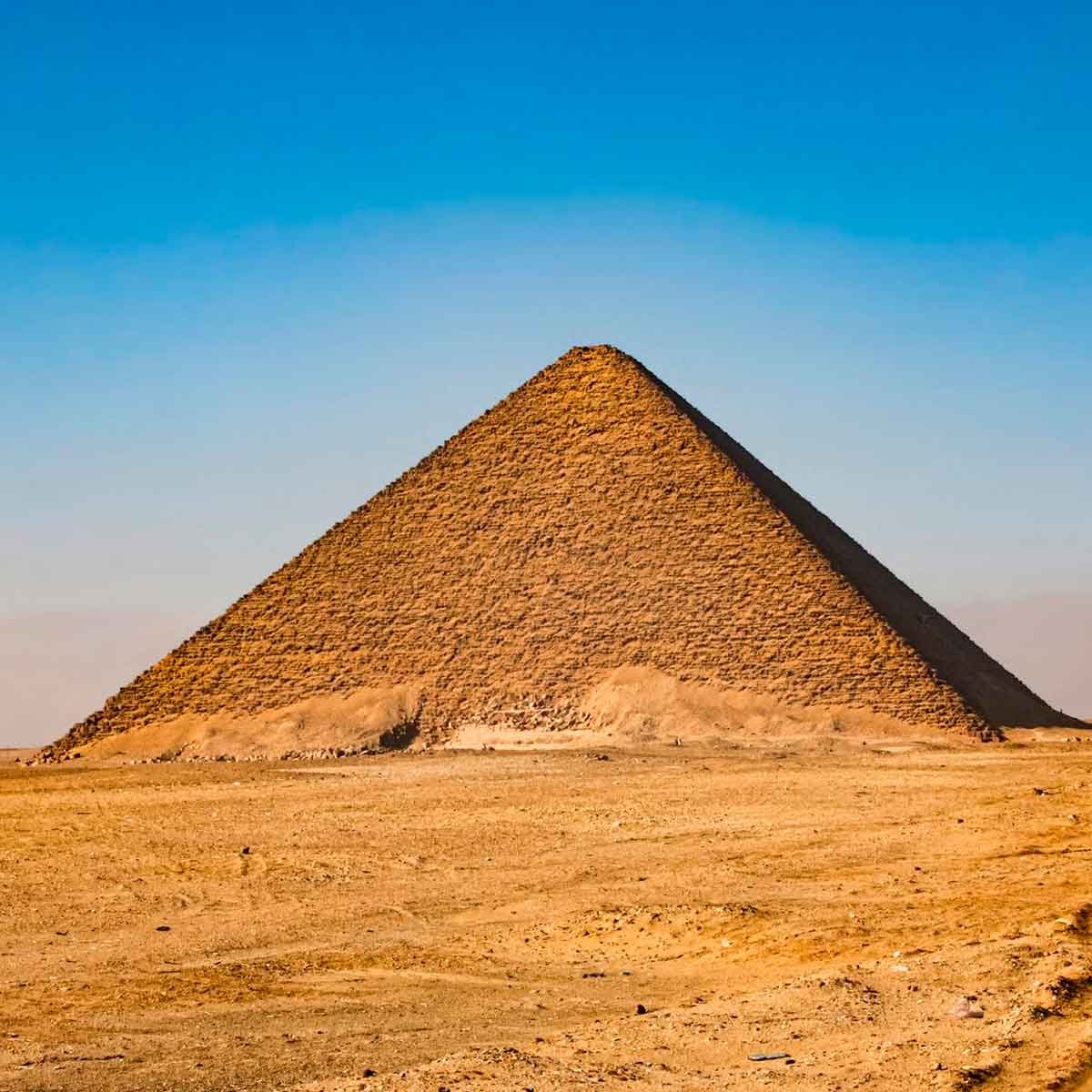
Red Pyramid glowing at sunset

Some independent investigators, analyzing architectural details, argue that the official explanation does not solve all mysteries. They highlight the perfect orientation of the chambers to the cardinal points, the presence of three halls displaced relative to one another, and the lack of sense in duplicating burial rooms. The large-scale dismantling of the floor in the third chamber raises further questions: who could have carried out such a massive task and for what purpose? Hypotheses also exist about hidden rooms sealed behind finely dressed stones. Some suggest that Sneferu’s cartouches could have been added later when stones were reused.

The pyramid has three chambers with corbelled vaults reaching 12–15 meters in height. The walls are built of massive blocks, some weighing many tons. The acoustics are astonishing: any sound turns into a resonant echo. Inside, there is a constant smell of ammonia, which scientists explain as chemical processes within the limestone or gas emissions from the bedrock. No remains, sarcophagi, or inscriptions were found in the pyramid, which makes it stand apart from the richly decorated tombs of later periods. Egyptologists regard the Red Pyramid as the forerunner of all smooth-sided pyramids of the Old Kingdom and a decisive step in the evolution of ancient Egyptian architecture.

The Red Pyramid remains a mystery that combines strict geometry, technical mastery, and inexplicable features. For some it is the first successful royal tomb, for others it is evidence of forgotten technologies. Its silent chambers and monumental form continue to inspire debate and admiration, leaving unanswered the questions that its ancient builders never explained.

Where is the Red Pyramid located?
The Red Pyramid is located in Dahshur, an ancient necropolis south of Cairo. It is considered the third largest pyramid in Egypt and stands out for its reddish limestone blocks. The site is less crowded than Giza, making it an attractive stop for tourists interested in ancient monuments without the usual crowds.
What makes the Red Pyramid unique compared to other pyramids?
The Red Pyramid is unique because it is the first true smooth-sided pyramid ever completed in Egypt. Unlike earlier step pyramids, its design introduced the classic triangular shape. Its reddish stone gives it a distinct color and name, setting it apart from the famous pyramids at Giza.
Are there Red Pyramid photos available for visitors?
Yes, travelers can find numerous Red Pyramid photos both online and at the site itself. Visitors are allowed to take pictures outside and, with certain restrictions, inside the monument. These images capture the striking red limestone, massive corridors, and interior chambers that reflect the ingenuity of ancient Egyptian architecture.
Can tourists enter inside the Red Pyramid?
Yes, the Red Pyramid is one of the few pyramids in Egypt that allows tourists to enter. Visitors descend a narrow passage that leads to large interior chambers. The experience gives a close view of the ancient construction techniques and the unique atmosphere of this monumental structure.
How can visitors reach the Red Pyramid from Cairo?
The Red Pyramid is about 40 kilometers south of Cairo in Dahshur. Visitors can take a taxi, hire a private guide, or join an organized tour to reach the site. The journey usually takes less than an hour and can be combined with visits to other nearby pyramids, such as the Bent Pyramid.
Comments

There are no comments yet.

Be the first to comment “Red Pyramid”

Your email address will not be published. Required fields are marked *