Roman Soldier Tomb

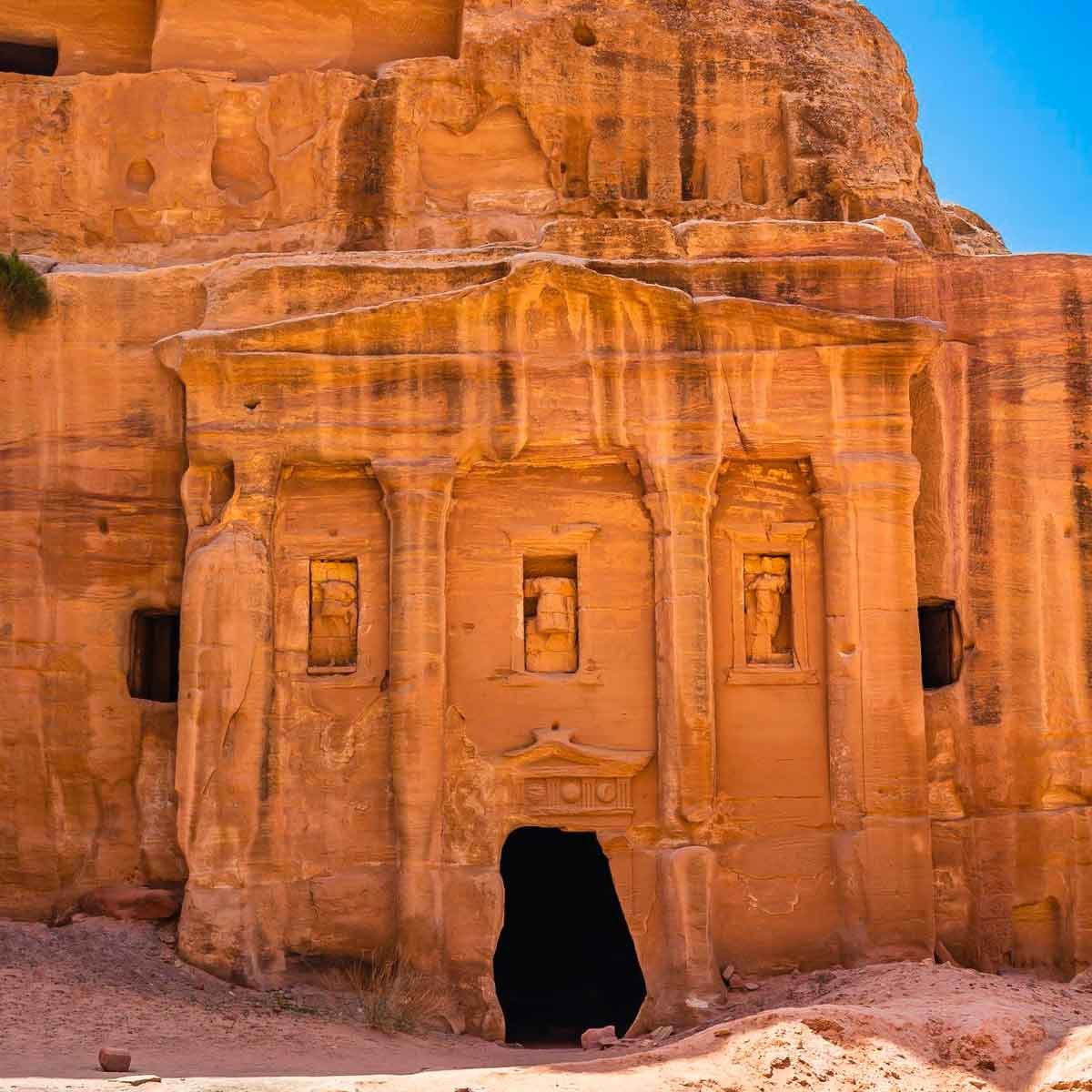
The Tomb of the Roman Soldier in Petra stands out with its carved facade featuring columns and niches. The interior chamber is hewn directly into the rock, preserving an atmosphere of mystery. This monument has survived in relatively good condition and continues to attract the attention of both researchers and visitors.

Category:
Overview

The Tomb of the Roman Soldier in Petra stands out for its strict and monumental composition. Its facade is carved into the solid rock and decorated with niches containing the remains of reliefs. It was precisely because of the central figure of a warrior, only partially preserved, that the monument received its name.

According to the official version, the history of the structure dates back to the 1st–2nd centuries AD, during the peak of the Nabataean Kingdom. It is believed to have been a family mausoleum of a noble lineage, with decorative elements meant to emphasize grandeur and strength. Yet the technique of execution remains a mystery: smooth surfaces, precise proportions, and impressive scale are difficult to explain with the tools supposedly available at that time. These details make one doubt the traditional explanations and encourage the search for alternative interpretations of how this monument was truly created.

What is the Roman Soldier Tomb in Petra?
The Roman Soldier Tomb is one of Petra’s monumental rock-cut structures. Its facade resembles Roman architectural style, with carved columns and niches. Inside, there is a main chamber and side rooms, whose purpose is still debated among researchers. This tomb remains a fascinating site for tourists and historians alike.
Why is it called the Roman Soldier Tomb?
The name comes from a relief of a figure in military attire on the facade, which early explorers associated with a Roman soldier. However, scholars note that the figure might symbolize a Nabataean elite dressed in Roman fashion, reflecting the cultural exchange between the civilizations. The exact identity of the figure remains uncertain.
What architectural features distinguish the Roman Soldier Tomb?
The facade stands out with its combination of Nabataean and Roman elements. Carved columns with capitals, decorated niches, and a pediment frame the entrance. The precision of the cuts and the scale of the work raise questions about the techniques used. Visitors often admire its monumental proportions and the detailed stonework preserved through centuries.
Can visitors enter the Roman Soldier Tomb?
Yes, the tomb can be approached by tourists exploring Petra’s vast archaeological park. Inside, visitors find a main rectangular chamber with additional side rooms. Though largely empty, the space offers a unique view of ancient rock-carving skills. Entry is usually possible on guided tours along with nearby monuments such as the Garden Triclinium.
What mysteries surround the Roman Soldier Tomb?
The function of the tomb remains debated. Some believe it was a burial site for an important Nabataean family, while others see it as a ceremonial monument. The mixture of Roman motifs and local traditions adds to the intrigue. Researchers continue to study the monument, as many questions about its origin and purpose remain unanswered.
Where is the Roman Soldier Tomb located in Petra?
The Roman Soldier Tomb is located near the heart of Petra, close to the Garden Triclinium and other major monuments. It is part of a cluster of elaborate facades carved into the sandstone cliffs. Tourists usually reach it while exploring the trails beyond the main Siq and Treasury, making it a highlight of extended visits.
Comments

There are no comments yet.

Be the first to comment “Roman Soldier Tomb”

Your email address will not be published. Required fields are marked *