What is the Sphinx Temple and why is its masonry considered unique?
The Sphinx Temple is an ancient megalithic structure located next to the Great Sphinx and the Great Pyramids on the Giza Plateau.
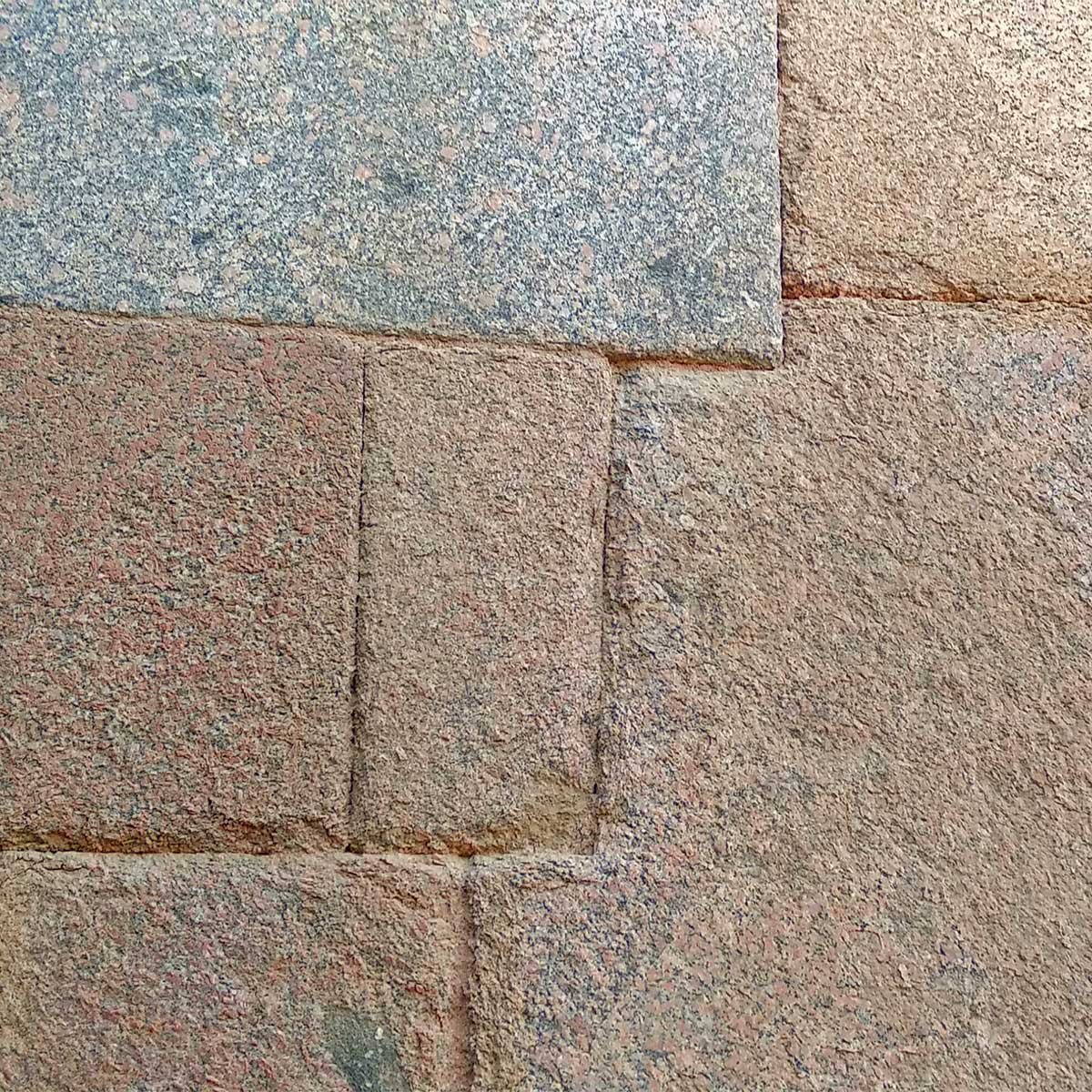
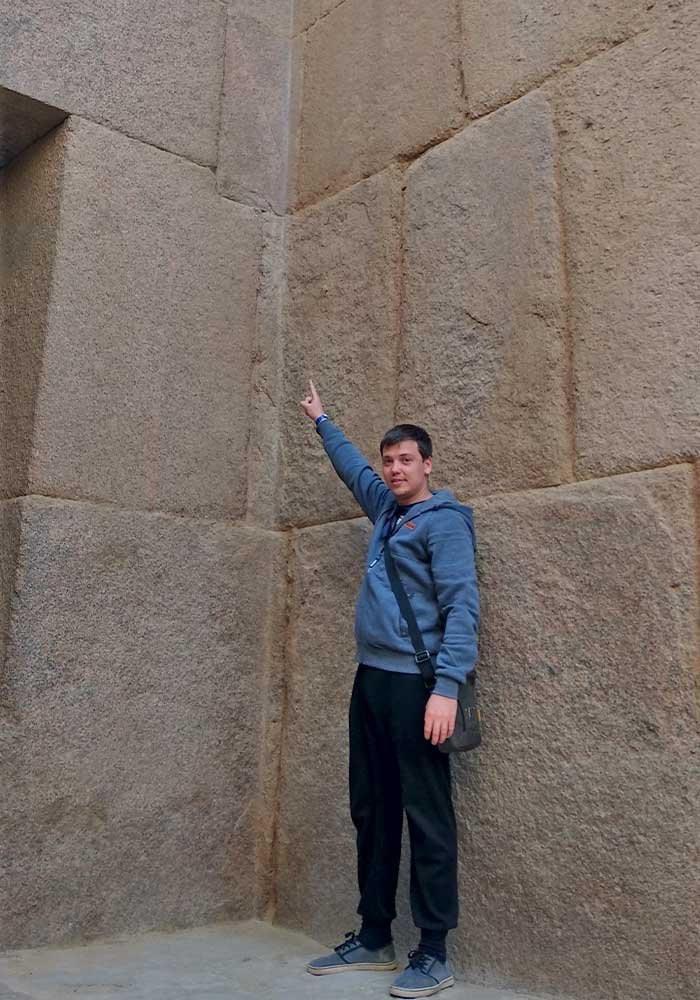
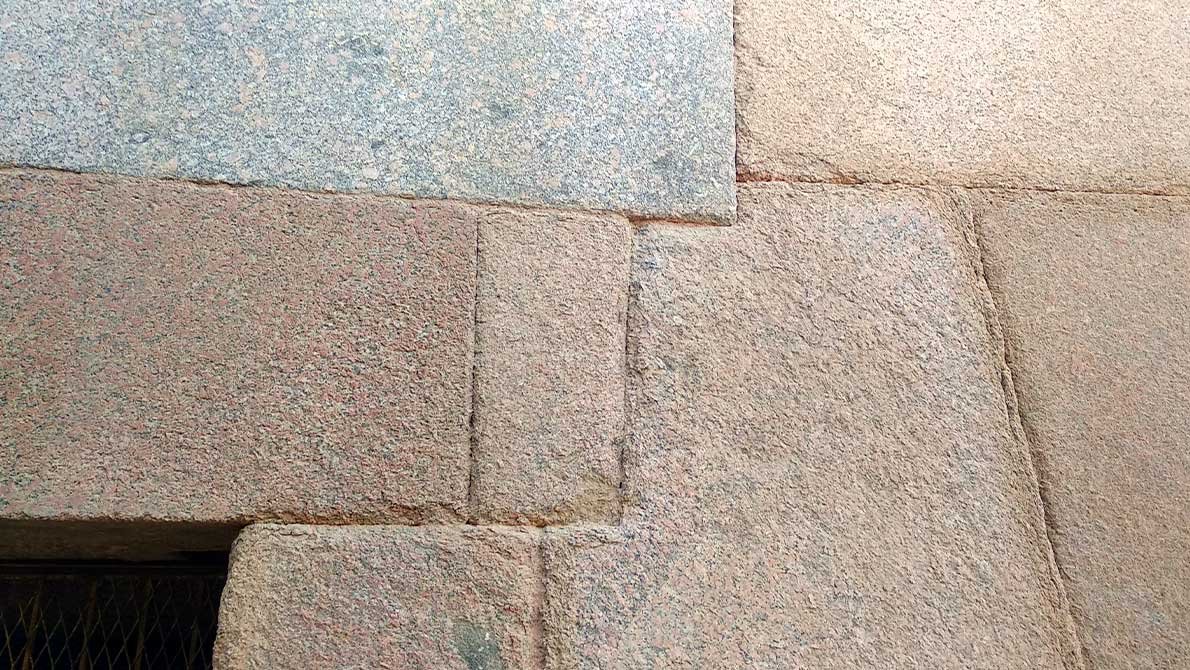
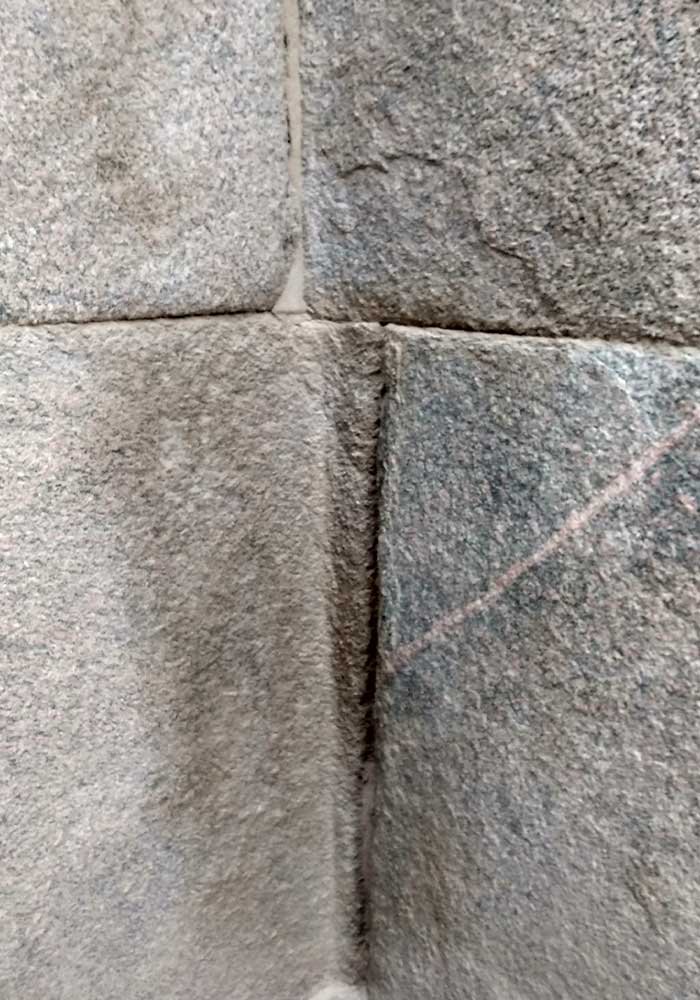
Its walls are made of enormous pink-granite blocks fitted with astonishing precision, forming a type of megalithic polygonal masonry seen in very few places around the world.
The absence of mortar, the tightness of the joints, and the massive size of individual blocks make the Sphinx Temple one of the most technically impressive stone structures in Egypt.
How were the granite blocks of the Sphinx Temple shaped with such accuracy?
The masonry displays joints so tight that a needle cannot be inserted between the blocks, and many stones weigh hundreds of tons.
This level of precision challenges the idea that copper tools were used, because copper cannot effectively cut pink granite.
Researchers propose several hypotheses — from high-precision cutting methods to the possibility that the stone was shaped while still softer — but no confirmed explanation exists.
What is special about the wrapped corner joint seen in the Sphinx Temple Egypt?
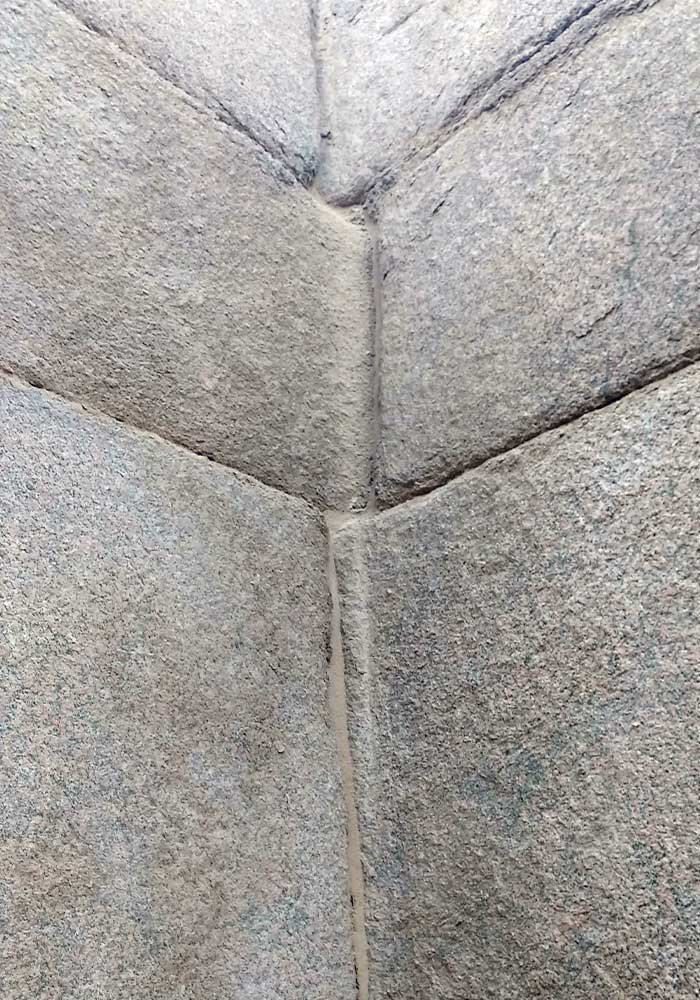
One of the most striking details of the Sphinx Temple Egypt is the corner where a course of blocks “wraps” around the angle of the wall.
Instead of ending at the corner, the stones extend and lock seamlessly into the adjoining side, suggesting an extremely advanced technique of shaping granite.
Such continuity of stone courses is rarely found even in modern masonry and raises serious questions about the construction technology used.
Is there anything inside the Sphinx Egypt inside the temple structure?
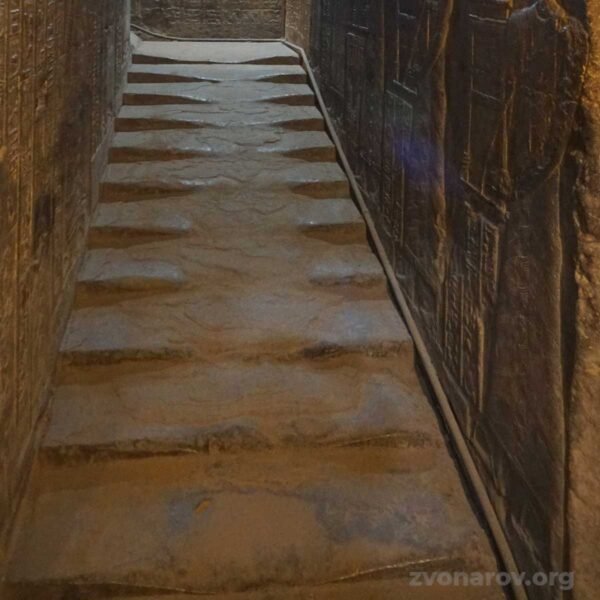
The interior of the area known as “Sphinx Egypt inside” includes corridors, storage spaces, and foundation chambers that connect to the larger Sphinx complex.
Many internal elements remain inaccessible to tourists, and some chambers beneath the Giza Plateau are closed to researchers as well.
Although not all compartments have been studied, existing observations confirm that the Sphinx Temple platform is part of a much larger and more complex subsurface system.
Why do some researchers compare the Sphinx Temple platform with other megalithic sites?
The Sphinx Temple platform uses the same principles found in polygonal masonry at sites like Sacsayhuamán or Ollantaytambo, where massive blocks fit together with multi-angled precision.
Such comparisons arise because both traditions demonstrate technical skills far beyond what is commonly attributed to early civilizations.
This similarity fuels debates about lost technologies, unknown engineering knowledge, or a shared architectural approach across ancient cultures.
Why do some texts refer to the structure as “sphinx tempel”?
The phrase “sphinx tempel” is a spelling variation often used in non-English search queries or by visitors from countries where “tempel” is the standard spelling.
Although incorrect in English, this variation still refers to the same monumental structure near the Great Sphinx.
Its presence in search statistics shows strong public interest in the temple, regardless of spelling differences.
What construction technologies might have been used to build the Sphinx Temple?
No established theory explains how such enormous granite blocks were quarried, transported, and shaped with such precision.
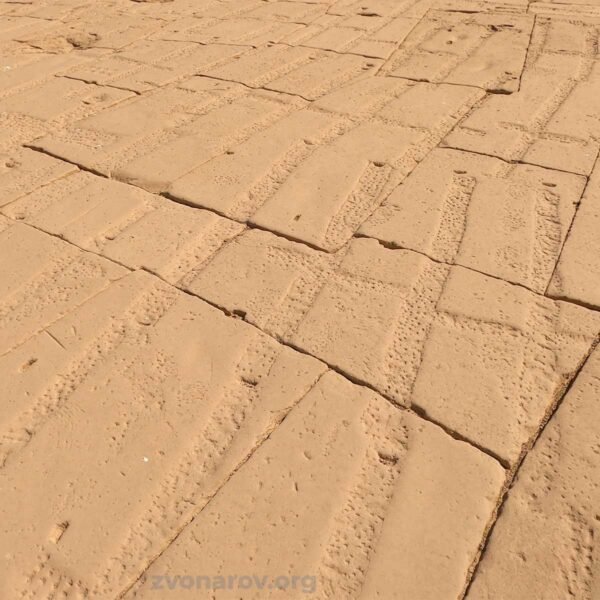
Excavation marks, surface smoothness, and the accuracy of joints have led some researchers to propose the use of high-energy cutting, stone-softening techniques, or advanced machinery.
While these ideas remain speculative, they underline the fact that the construction methods behind the Sphinx Temple are still not fully understood.





There are no comments yet.