Valley of the Kings Egypt
This visual journey presents the Valley of the Kings inside, showing detailed scenes that raise questions about their true meaning. The monument in Luxor preserves remarkable artwork whose purpose remains a mystery, inviting visitors to interpret the symbols for themselves.
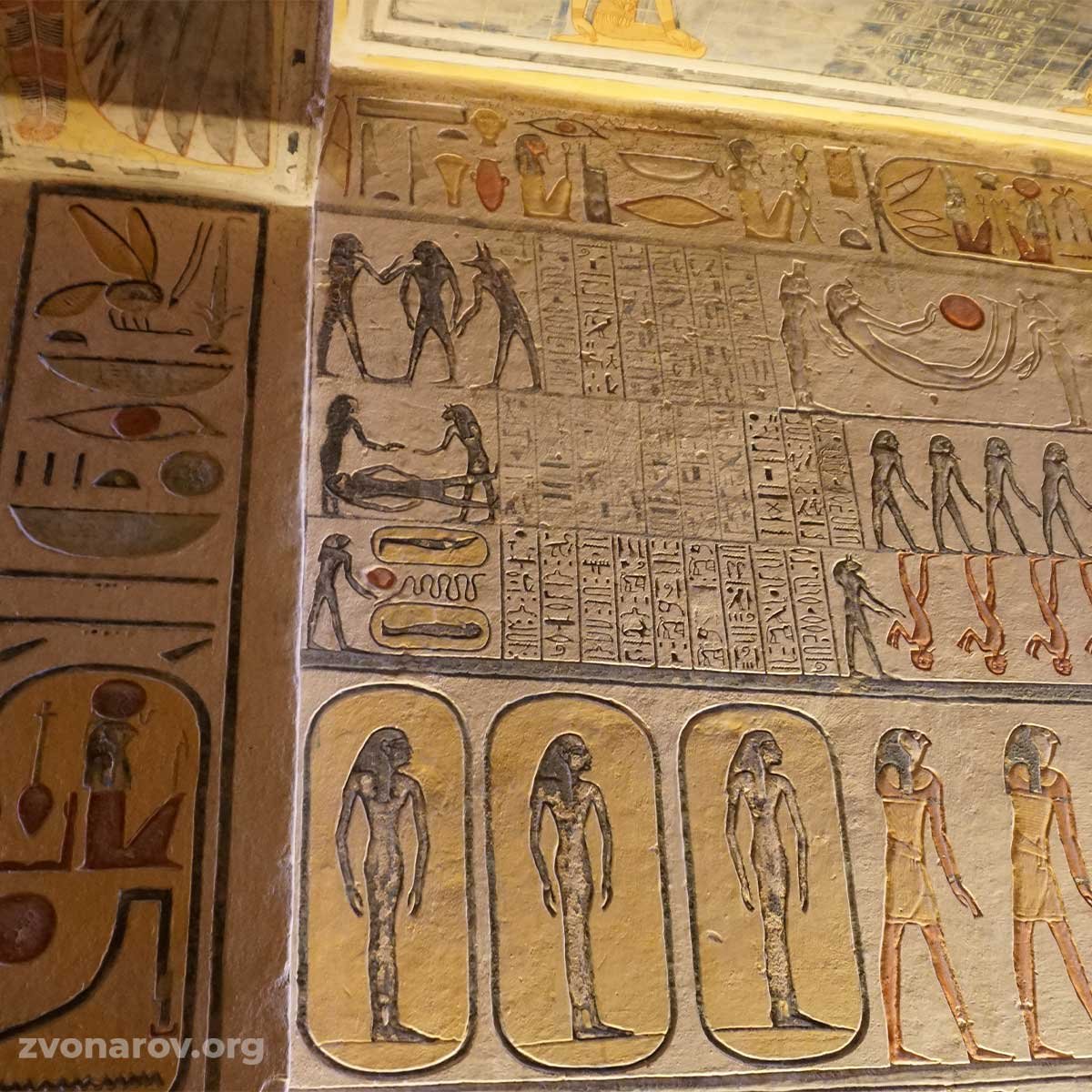
In this publication, I want to share the visual content of the tombs in the Valley of the Kings, in the City of the Dead, Luxor, Egypt. I’m not trying to prove or impose anything — I simply invite you to look at these photographs and form your own conclusions. Your reflections are just as valuable as those of professional Egyptologists, because no one truly knows what exactly is depicted on these walls, when it was created, or for what purpose. Many claim that these scenes represent ritual ceremonies, but this is the standard explanation offered by official science for almost any unknown object. Personally, I do not support the idea that these were tombs — just as I don’t consider dolmens, pyramids, or the structures of Petra to be tombs. So let’s simply look at the photographs.
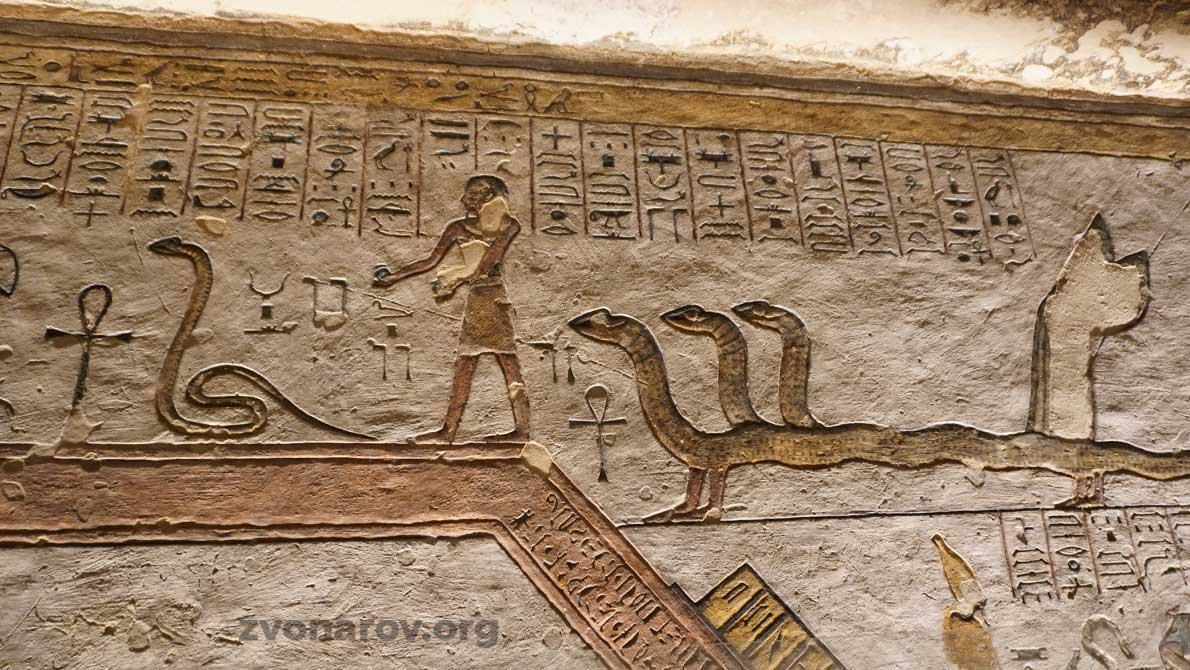
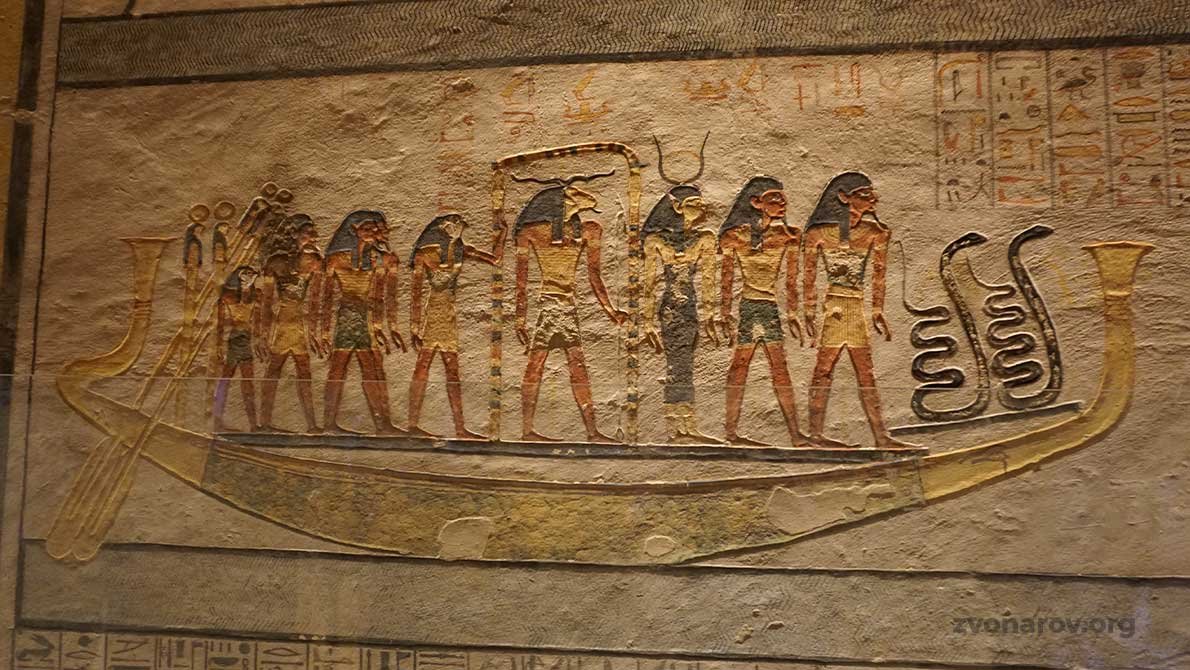
It’s hard not to notice the huge number of snakes — they appear in practically every tomb.
There is yet another fragment of wall paintings. I continue to show the photographs in the order in which I took them inside different tombs.
Snakes with human heads are found throughout Egyptian paintings — this is not an exception but a recurring motif.
Most of these images were restored in modern times, as many tombs were discovered in severely damaged condition.
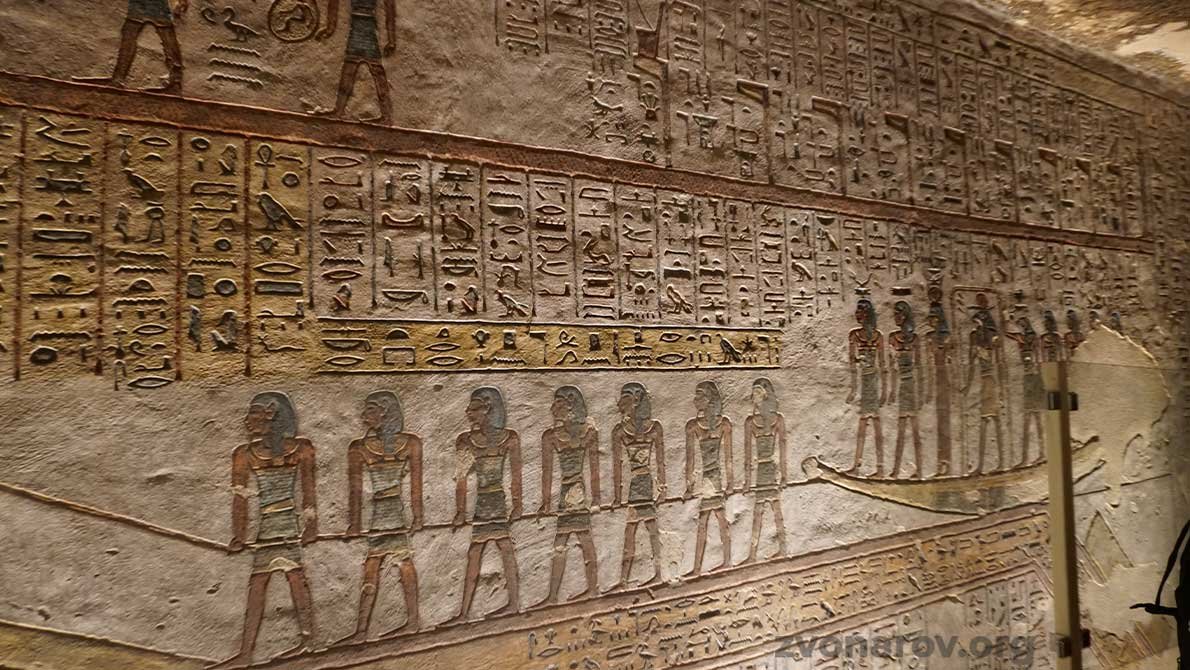
On the next wall, you can see rows of hieroglyphs, many of them repeating, especially in the upper lines. A question arises: how should they be read — from left to right or from top to bottom? The vertical alignment suggests they may be read top to bottom, at least in my view.
Why was all this left behind? Who were these images intended for? The ancient artisans must have understood that someone would look at them eventually, and perhaps believed the meaning of these scenes would be obvious.
Here we see a scene whose meaning is difficult to explain unambiguously. It’s not easy to understand what exactly is happening — and this ambiguity appears on thousands of kilometers of painted walls throughout Egypt.
This photograph shows extensive restoration. Much of it was redrawn over the surviving fragments, and some details may have been interpreted by modern artists.
Still, it’s better to have a reconstruction like this than to lose the image entirely. It’s unlikely that restorers invented such scenes — they worked from whatever remained.
The images show boats, snakes, human-headed beings, and other figures. These are extremely unusual and enigmatic compositions, often resembling technical devices or processes whose meaning must have been clear to the ancients.
This fragment once again highlights the importance of the theme of snakes and reptiles. These are not just animals: many are depicted as intelligent beings — holding objects, interacting, standing, walking, or even flying.
This concludes the walk. I hope you enjoyed it. Take a look at my other publications — I’ve already shared many materials not only about Egypt but also about mysterious structures from around the world.

There are no comments yet.