Western Wall

The Western Wall in Jerusalem is one of Israel’s most significant landmarks, attracting pilgrims and visitors from around the world. Travelers often search for western wall facts and appreciate authentic western wall images that capture its atmosphere. The massive stone structure carries an aura of mystery, inviting reflection and spiritual connection. This sacred place remains a timeless symbol of faith and history.

Category:
Overview

The Western Wall in Jerusalem officially dates back to the period of the Second Temple, erected during the reign of Herod the Great in the 1st century BC. Its height above the ground is about 19 meters, while a significant part extends deep below. The stones of the lower courses are striking in scale: some blocks exceed 13 meters in length and weigh over 500 tons. Such a level of workmanship and precision in fitting limestone megaliths raises doubts about the exclusive use of primitive tools and simple technologies of antiquity.

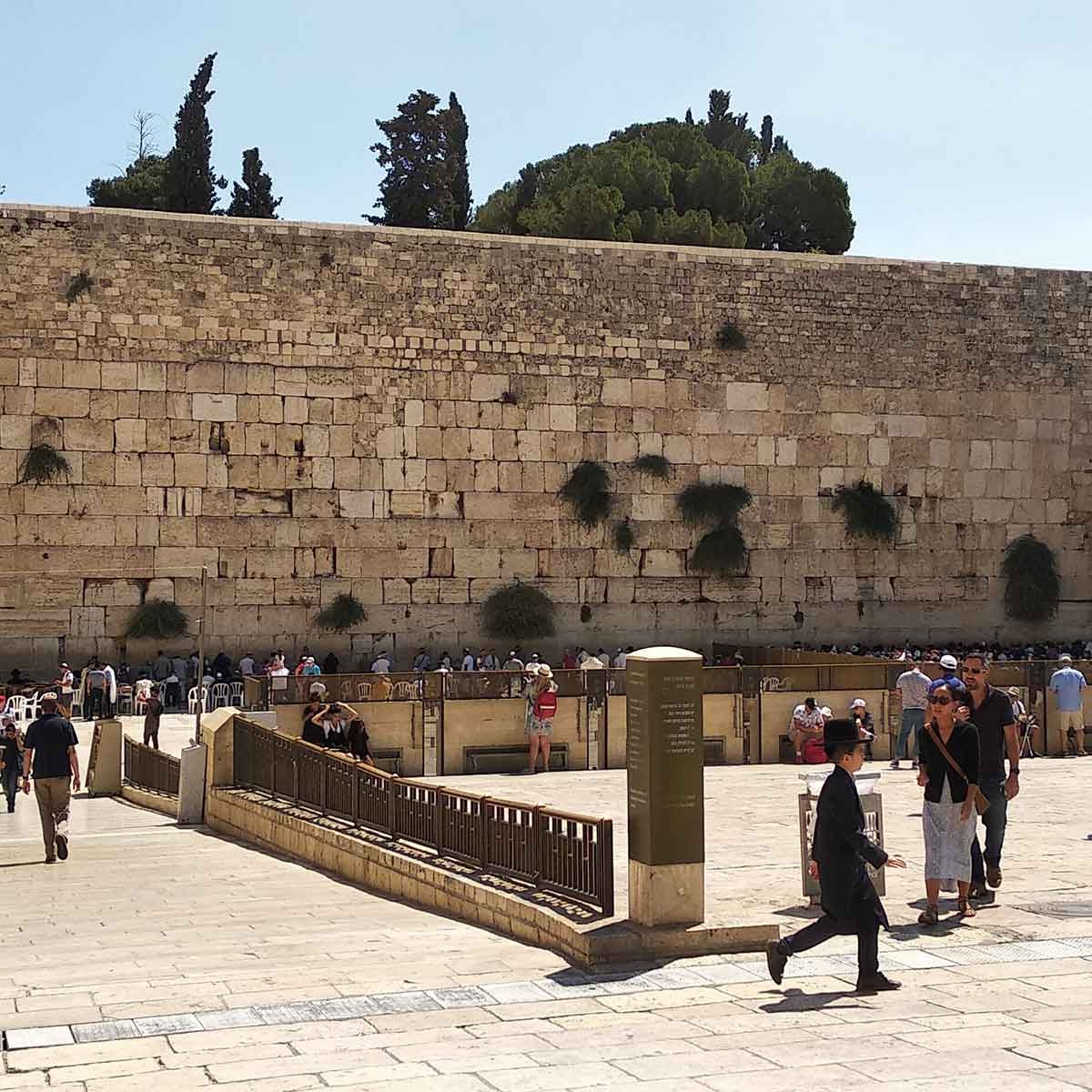
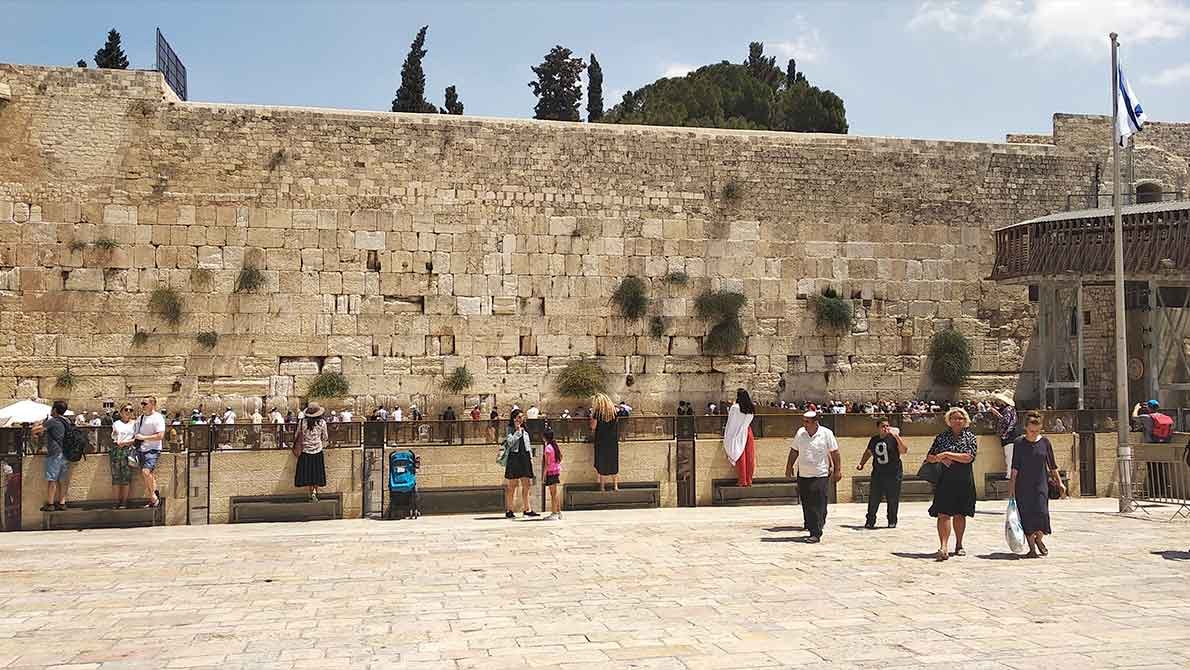
Wide view of the Wailing Wall and plaza

What is unusual here?
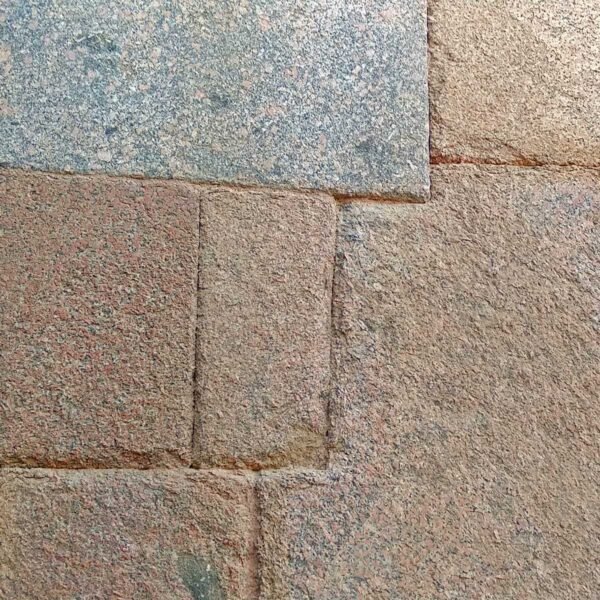
First of all, it is the fact that the stones in this masonry are fitted together with astonishing precision, without the use of mortar. The blocks are of enormous weight, and at one time they were lifted to a height of up to 19 meters. The masonry contains many blocks weighing tens of tons, but there are also some that reach about 500 tons. Even today it is extremely difficult to lift and place such massive stones, especially considering the terrain: bringing construction machinery here is complicated. Only 100–200 years ago humanity simply did not have the technologies that would allow blocks of such weight to be precisely placed at a height of 19 meters. At the same time, each block had to be quarried, processed, and given a chamfer — and this is exactly what we see in the Western Wall and in other parts of the Temple complex.

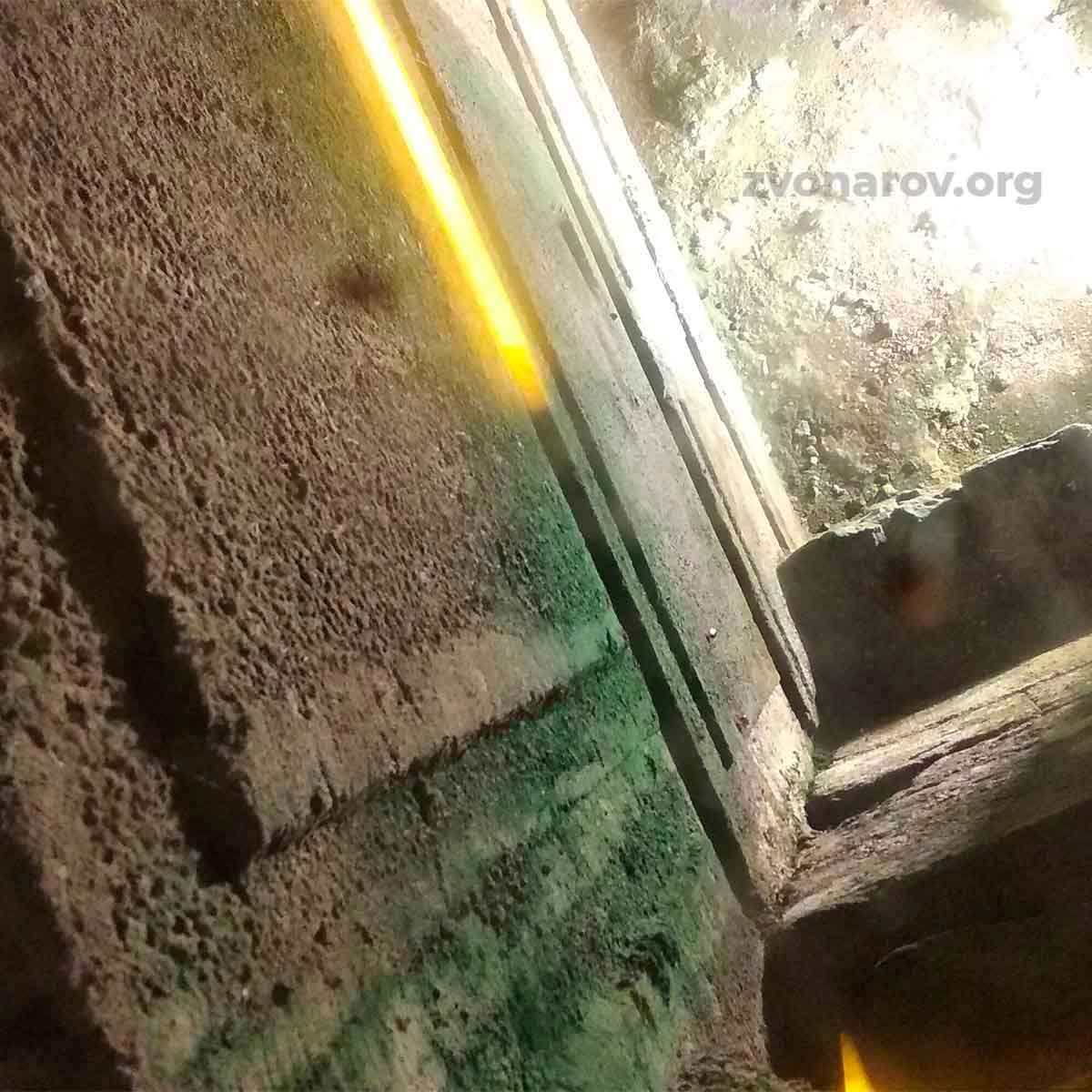
Lighted underground passage beneath the Wailing Wall

It is important to understand that the visible part is only a small fraction of the entire structure. The wall goes deep underground, and in the subterranean areas of the Temple Mount the same type of masonry can be observed, but with even larger blocks. They continue for several levels down into closed chambers, where tourist access is prohibited. Through glass niches in the floor one can see these lower courses, but how far down they extend remains unknown.

Megaliths forming the lower Western Wall

There is another feature as well: the size of the blocks decreases from bottom to top. At the foundation lie the largest megalithic stones; above them are smaller blocks, usually from one to three meters, although truly gigantic stones can still be found.

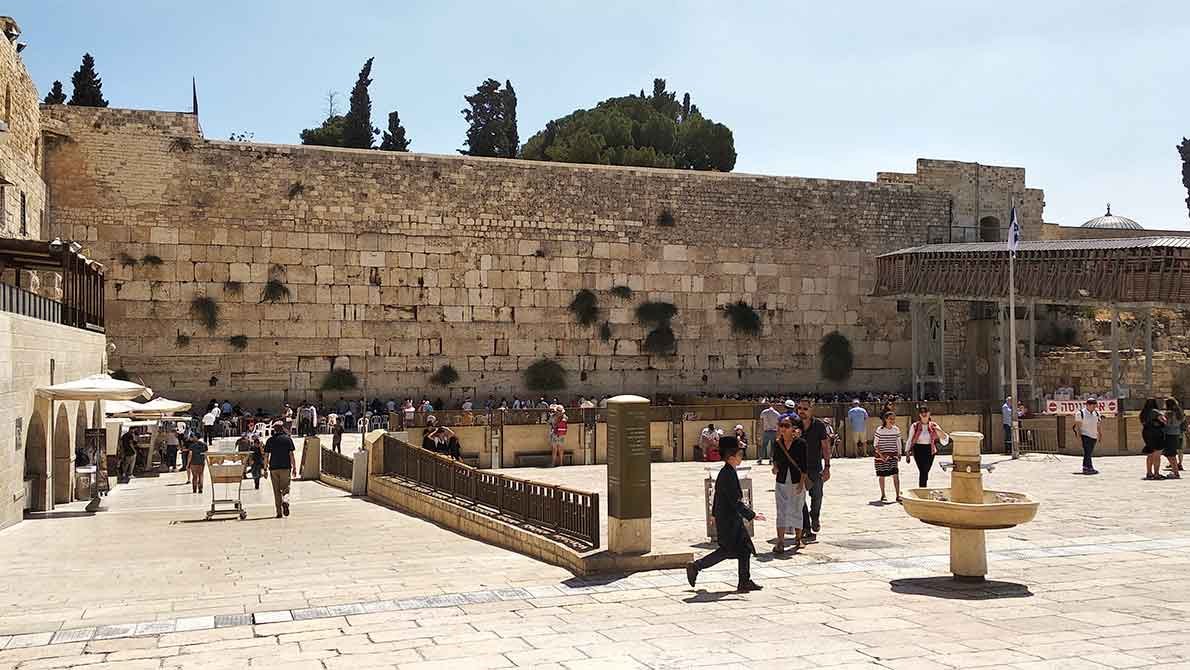
Access ramp to the Wailing Wall site

Of particular interest is modern restoration. This is a sacred site, and no expense is spared on its preservation. However, the upper layer of the wall is built of small stones with a large amount of mortar — this is how construction is done today. Restorers did not even consider continuing the ancient tradition of laying massive blocks without cement. Modern technologies call for mortar layers for the sake of safety and durability, yet this wall has stood for millennia without any cement. And the deeper we begin to study it, the more questions arise.

What is the Western Wall and why is it significant?
The western wall is the remnant of the retaining structure that once supported the Temple Mount, which makes it a focal site for Jewish prayer and remembrance. For many visitors it symbolizes continuity through centuries of upheaval and reconstruction. Its stones are approached with quiet respect, and written notes are traditionally placed in the crevices as private prayers.
Where is it located and how do I get there?
The site sits inside Jerusalem’s Old City, within the Jewish Quarter, with signed pedestrian routes from Jaffa Gate, Dung Gate, and other entrances. Public buses, light rail to City Hall, and taxis connect easily to the Old City perimeters, after which you proceed on foot through security. If you search for “western wall jerusalem,” most maps will guide you directly to the main plaza and checkpoints.
What are must-know western wall facts for first-time visitors?
Expect airport-style security at the plaza entrance and separate prayer areas for men and women, with modest dress recommended for all. The plaza is open year-round and becomes especially busy during holidays, Bar/Bat Mitzvah mornings, and Friday evenings. Out of courtesy, many visitors avoid phone calls and loud conversations near the stones, and photography is avoided by many during Shabbat.
Can I visit the tunnels and what should I expect on the tour?
Guided tours of the Western Wall Tunnels take you along subterranean passages that reveal additional courses of ancient stonework and archaeological layers. Tickets are limited and time-slotted, so it is wise to reserve in advance, especially in peak seasons. Expect narrow corridors, cool temperatures underground, and a historically dense narrative from licensed guides.
Are there photography guidelines, and where can I find western wall images?
Photography is generally permitted in the plaza, but visitors are asked to be discreet and to refrain from shooting during Shabbat and religious services. Always avoid photographing people at close range without permission, especially those in prayer. For reference and planning, many official tourism sources and museum archives host curated western wall images that respect cultural sensitivities.
When is the best time to visit and what happens on holidays?
Early mornings and late evenings offer quieter moments, softer light, and cooler temperatures, ideal for reflective visits. Major Jewish holidays, memorial days, and national events can draw very large crowds, heightened security, and ceremonial gatherings. If you prefer space for contemplation, choose non-holiday weekdays; if you seek collective atmosphere, consider Friday sundown as Shabbat begins.
Comments

There are no comments yet.

Be the first to comment “Western Wall”

Your email address will not be published. Required fields are marked *